

Did you miss CTIA Wireless 2011? We've got you covered

The second really big wireless tradeshow of the year concluded yesterday. Although, for all practical matters it was over a day earlier. My colleague Tim Conneally told me about Day 3: "You should see it down here, it's a ghost town compared to Day 1." Like I said yesterday, there was something missing from this years CTIA Wireless. That's not to say there was no news or no worthy gadgets coming out of the show. I've collected our coverage here into a single post for quick reference.
1. AT&T and T-Mobile USA merger. On March 20, a Sunday and two days before CTIA Wireless, Deutsche Telekom agreed to sell T-Mobile USA to AT&T for a whopping $39 -- $25 million in cash. In an analysis, we looked at how the merger will affect you. In a follow-up post, you expressed your reaction to the proposed merger. Today, we returned back to topic. The U.S. Federal Communications Commission may resist the major merger.
Verizon slashes price of original iPad to $299

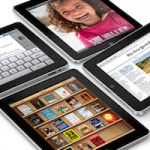
Aiming to clear remaining stocks of the original iPad from their shelves, Verizon on Friday began a sale at its retail stores which lowers the price of the entry-level 16GB Wi-Fi only model to $299. This would be $130 less than AT&T's current offer.
AT&T sells the 16GB model for $399, however it also offers a free month of data to any customer purchasing the tablet. Prices range from $429 to $629 in store (although the 64GB version is on sale for $529 online where it is the only one available), and checks seem to indicate the sale is having its intended effect of clearing out the older models.
AT&T deal to acquire T-Mobile may find FCC approval difficult

An FCC official told the Wall Street Journal that AT&T's effort to acquire T-Mobile may face steep resistance to gain approval from the regulatory body. The comments echo similar concerns of some on the left who are leery of less competition in the wireless market.
"There's no way the chairman's office rubber-stamps this transaction," the source said, declining to be named in the story. "It will be a steep climb to say the least." That said, the FCC has done little to block recent blockbuster mergers -- most notably Sirius and XM Satellite Radio's $13 billion merger in 2007.
Android in-app billing coming next week

In case you missed the announcement yesterday, Google has started testing in-app billing, which goes live next week. It's not exactly loads of notice for developers but still opportunity to test apps before Google turns on the feature.
"In preparation for the launch, we are opening up Android Market for upload and end-to-end testing of your apps that use in-app billing," Eric Chu writes at the Android Developers blog. "You can now upload your apps to the Developer Console, create a catalog of in-app products, and set prices for them. You can then set up accounts to test in-app purchases. During these test transactions, the in-app billing service interacts with your app exactly as it will for actual users and live transactions."
Honeycomb tests Google's 'Open Principles'

Google's decision to withhold Android 3.0 "Honeycomb" from the open-source community is nothing but shocking. From a business perspective, the company's reasons make sense. But Google has put principles before business before, like its stance with China or H.264 support. There is also the broader question of leadership and what the move means, if anything, about Eric Schmidt soon stepping down as CEO and Google cofounder Larry Page replacing him. There's a new sheriff in town. Will he enforce the law differently?
Google dropped the Honeycomb bomb late yesterday. In a statement the company said that Honeycomb "was designed from the ground up for devices with larger screen sizes and improves on Android favorites such as widgets, multi-tasking, browsing, notifications and customization. While we're excited to offer these new features to Android tablets, we have more work to do before we can deliver them to other device types including phones."
Hands on with the Pre-Honeycomb Acer Iconia A501 Android tablet

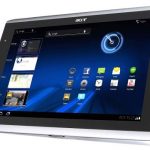
On Tuesday, AT&T announced it would begin selling the 4G Acer Iconia Tab A501 in the second quarter of 2011. Naturally, it became one of the devices on my list to get some hands-on time with.
The tablet, however, wasn't out on the show floor of CTIA this week like it was last month at Mobile World Congress. That's because the devices on display there were running FroYo, and the model AT&T announced this week will be running Gingerbread.
VLC Media Player gets a facelift for Mac OS X


Non-profit organization VideoLAN has released a minor update to its open-source and acclaimed cross-platform media player, VLC Media Player 1.1.8. This release is notable largely for the fact the Mac OS X version sports a subtly redesigned interface, but also includes various codec, demuxer and language updates, some new encoder packages and various fixes that apply to all platforms.
VLC Media Player is renowned for being able to handle most video formats without requiring the installation of additional codec packs. All major formats -- including Windows Media Video, QuickTime, Real and Flash -- are supported by VLC, which is also capable of capturing, playing and even streaming video from external sources. These include online streams, DVD, DVB and supported MPEG encoding devices, making it a popular one-stop solution for video playback.
Use CyberGhost to browse the Internet anonymously

There are numerous reasons why anyone would like to browse the Internet anonymously, and there are various programs available that can clean up traces of Internet activity after the fact. There are also great concerns about IP addresses, which can be used to track users and even restrict access to web sites. CyberGhost 2011 is a free VPN tool that can be used to route web traffic through anonymous servers, hiding users' real IP addresses.
The main purpose of the program would appear to be ensuring that you remain anonymous online, but the 'Video portal' section of the software interface reveals that the tool can also be used to watch online videos that might ordinarily be subject to regional restrictions. With various servers in use around the world, CyberGhost can make it appear as if users are actually located in different countries.
Happy Birthday, Mac OS X!
A decade ago today, Apple released Mac OS X 10.0. But the real celebration should be for v10.1, which released in September 2001. Apple gave birth to a new operating system that spent six months in an incubator, having been born prematurely. How strange that yesterday, a day before Mac OS X's tenth anniversary, Apple announced the departure of Bertrand Serlet, who is regarded as the father of Mac OS X.
Into the Incubator
Color aims to change the idea of the social network

Startup mobile application developer Color Labs launched a new social networking app Wednesday night, while simultaneously announcing that it had secured a staggering $41 million in funding for its project. Called Color, the application shares your photos and videos with those within 150 feet of you.
It's not like other social networking services, where you find and connect to friends on your own. Instead, by using the integrated GPS within smart phones, Color decides what pictures and videos you see based on two variables: your location and how often another Color user is near you.
Microsoft announces Windows Embedded Device Manager 2011
At the Microsoft Management Summit on Thursday, Microsoft announced the release of Windows Embedded Device Manager 2011, an extension for System Center Configuration Manager 2007 that allows IT to manage Windows Embedded Standard and POSReady devices such as thin clients, digital signage, and, of course point of sale terminals.
Microsoft is accelerating the evolution of enterprise embedded devices, and today's announcement of Windows Embedded Device Manager 2011 follows the release of Windows Embedded Standard 7 SP1 earlier this month.
3 things missing from CTIA Wireless 2011
Today, one of the largest wireless tradeshows anywhere comes to a close. Perhaps Consumer Electronics Show in January or Mobile World Congress in February stole some thunder, because CTIA Wireless 2011 doesn't feel as exciting as it should during a year when smartphones and tablets are such hot commodities. Too much of the show is about the future, and that's a problem shared by the other events.
Gartner essentially has declared 2011 the year of the smartphone, while IDC forecasts 50 million tablet shipments, with at least 35 million of them going to Apple. With competition so fierce and demand so hot, shouldn't there be more coming out of CTIA Wireless, particularly as the show takes place when nearly one-quarter of the year is over? Here's some of what I see missing:
Steve Jobs says 'No Interest' in iPhone 4 radiation app, devs release it anyway
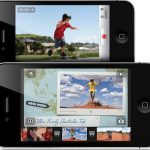
Tawkon, makers of a mobile application that measures cellular radiation, have been blocked from releasing their app for iPhone. In response, the company on Wednesday released the tawkon app for iPhone via the Cydia jailbreak.
Apple's GSM iPhone 4 has been highly criticized for its antenna issues, and the relative ease with which users can completely block its reception with the "death grip." Journalists coyly referred to the resulting fallout from this issue as "antennagate."
Hands on with HTC HD7S: aka the Windows Phone that used to be T-Mobile's
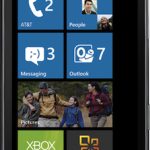
HTC and Microsoft are in their third year of creating smartphones in the "HD" product line, and the two companies look to have finally hit their stride with the new HD7S, which is a slightly revamped version of the four-month-old HD7, completely ready for a world where T-Mobile USA no longer exists.
In early 2009, the HTC Touch HD was unveiled, a 3.8" WVGA touchscreen device which was obviously a post-iPhone device in chassis design, but was powered by Windows Mobile 6.1 which mandated a stylus and resistive touchscreen. By 2009, this was already something of a doomed interface in the smartphone category.
Six must-see Sony Ericsson Xperia Play videos
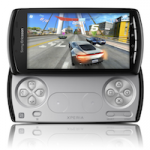
I know this is a frivolous post, but I'm a sucker for good marketing -- and Sony Ericsson's Xperia Play promo videos are among the best seen for a long time. If you haven't tasted the fun, fury and frenzy, now is the time. If these videos can't help sell Xperia Play, Sony Ericsson should pack it up and go away.
Surely the handset manufacturer needs something to liven sales. During 2010, Sony Ericsson fell out of the top-5 cell phone manufacturers, as measured by end-user sales, according to Gartner. Market share fell from 4.5 percent in 2009 to a puny 2.6 percent in 2010. Unit shipments also declined from about 52 million units to nearly 42 million. How the mighty has fallen.
© 1998-2026 BetaNews, Inc. All Rights Reserved. Privacy Policy - Cookie Policy.