

HP will put WebOS on every computer it sells by 2012


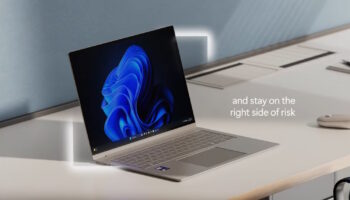
In a bold move likely aimed at bolstering its software business, HP CEO Leo Apotheker revealed in an interview with BusinessWeek published Wednesday that its WebOS operating system will make it on to every HP PC by 2012. Apotheker's comments confirm earlier ones made at the launch of the TouchPad last month.
At the time, the company said it planned to expand WebOS beyond its current home on tablet and smartphone devices. The move would signal a shift in strategy for HP, which currently only sees about two percent of revenues come from software. Compare this to its hardware business, which makes up about 70 percent of all sales.
Microsoft hints at Internet Explorer 10 previews for MIX11 in April


Microsoft on Wednesday confirmed that it will be releasing the complete build of Internet Explorer 9 on Monday, March 14 at 9pm Pacific (Midnight EST), using the South by Southwest Festival as a platform for the browser's worldwide introduction.
Shortly after the first release candidate of Microsoft's new browser came out on February 10th, the company sent out invitations to a SXSW event on March 14th, inviting attendees to "come celebrate the beauty of the Web." Naturally, this caused everyone to predict the 14th would be the browser's launch date.
Google releases stable build of Chrome 10 browser
In mid-February, Google released the first public beta of Chrome 10, which showed off the browser's updated V8 JavaScript engine known as "Crankshaft," it revised the settings interface, and a handful of other features. Tuesday, Google released the first stable version of Chrome 10.
"With today's stable release, even your most complex web apps will run more quickly and responsively in the browser. (For the curious, this boost corresponds to a 66% improvement in JavaScript performance on the V8 benchmark suite,)" Google software engineer Tim Steele said today.
Are mobile developers violating open-source licenses?

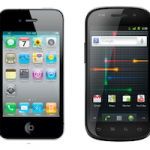
Yes. That's the conclusion OpenLogic reached after scanning 635 representative popular paid and free mobile applications, 66 of which contained open-source code. Among them, 71 percent of Android and iOS apps failed to meet open-source license requirements, by varying degrees. The most egregious violators placed copyrights where they shouldn't be. But the most surprising results came from Android apps, where GPL/LGPL license compliance was 0 percent. You're not misreading -- 0 percent.
Kim Weins, OpenLogic senior vice president of products and marketing, is presenting the results later this afternoon at AnDevCon -- the Android Developer Conference -- in San Francisco. OpenLogic evaluated compliance with GPL/LGPL and Apache open-source licenses, using four, basic criteria. For GPL/LGPL: "provide source code or an offer to get the source code" and "provide a copy of the license." For Apache: "provide a copy of the licenses" and "provide notices/attributions."
Opera's device-agnostic app store could have widest reach of all

Opera Software on Tuesday launched its browser-based app store which carries applications for all of the mobile platforms that Opera Mobile and Mini support, with the exception of Apple's iOS.
Mobilestore.opera.com was built on Appia's white-label app store plaform (formerly known as PocketGear) and can be accessed by any browser on any platform.
Adobe releases Flash-to-HTML5 conversion tool to developers

Some may see it as capitulation to Apple's longstanding position on Flash, others as acceptance of trends in digital media. Either way, Adobe has apparently decided to insulate itself from the threat of HTML5 by releasing a Flash-to-HTML5 converter codenamed "Wallaby." The free application is built on its Adobe AIR platform.
Adobe says that the application will be able to convert most Flash files by simply dragging and dropping into the Wallaby interface. The release of the tool is especially significant for iOS users -- meaning developers will now have an easier way of making their Flash sites compatible with the iPhone and iPad devices.
Google Instant Preview comes to Android 2.2 and iOS 4+

Last year, Google unveiled Instant Preview a feature which lets users view a full-page preview of search results without actually navigating away from Google's results page. Today, Google has made this feature available on mobile devices running Android 2.2+ and iOS 4.0+.
Instant Preview pops up a thumbnail view of search results on the main Google results page. It works quite well in full-sized desktop browser situations, but would not work on screens between 3.5" and 4" in size.
Facebook moves into movie rentals with Warner Bros. deal

In a move that highlights Facebook's ever increasing presence in our daily digital lives, the social networking site announced with Warner Bros. that it would begin offering streaming movie rentals. The first movie to be offered would be The Dark Knight, available to those who liked the movie's page.
The title would be available for 30 Facebook credits or $3 USD, and the movie would be available for immediate viewing following purchase. Warner said that it plans to offer additional titles in the coming months, although it did not specify which movies would be sold.
Signatures by finger on touchscreen: still not carved in stone

Have you noticed the paper signature has all but disappeared from transactions where goods and money are exchanged? In common day-to-day commerce, you're far more likely to sign your name on a credit card terminal's touchscreen than to put a pen down on an actual slip of paper. Likewise, if you deal in the transport and exchange of packages or heavy shipments of materials and supplies, you're increasingly likely to apply your signature only to digital signature capture pads.
Yet when it comes to legally binding contracts, similar practices have not become nearly as common. As a member of the press, I frequently get emailed nondisclosure forms or loaner agreement forms which I have to print out and physically sign, and then either fax, or re-scan and return, despite the fact that I have five touchscreen devices at my disposal at any given time, and could easily apply a digital signature.
WinRAR 4.0 improves decompression performance by 30%


After four months of intensive testing, WinRAR 4.00 finally gets to drop the "beta" tag, with its first full public release appearing today.
The new build benefits from significantly improved RAR decompression speeds, although this does depend on data type. Text unpacking is unchanged, but more complex file types will see decompression performance improve by up to 30 percent.
CyberDuck quacks its way from Macintosh to Windows

David Kocher has announced the final release of CyberDuck 4.0 for Mac and Windows. CyberDuck is a FTP client that is also capable of providing access to various cloud-based storage providers, including Google Docs, Amazon S3, WebDAV and Windows Azure (but not Windows Live SkyDrive) through a desktop application.
Version 4.0 represents the first official release for Windows users -- the version number has jumped straight to 4.0 to provide synchronicity with the Mac client, which was developed first.
TeeWee: Twitter for iOS without the annoying Quick Bar

There was a murmur of excitement when an official Twitter client was released for iOS and it quickly gathered a loyal following despite the huge number of alternative tools that are available. A recent update to the app, however, annoyed many users due to the inclusion of the Quick Bar that displays trending topics in a ticker at the top of the app interface. TeeWee is a replacement client that closely mimics the official app but does not feature the Quick bar.
As there is no easy way to downgrade apps in iOS, the recent update annoyed many Twitter users to the point of looking for an alternative client. TeeWee fits the bill perfectly. The app includes support for multiple Twitter accounts, URL shortening and features such as geotagging of tweets.
You will buy iPad 2
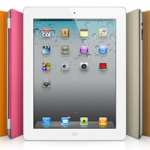
Yesterday I asked Betanews readers "Who will buy iPad 2?" -- wondering is it you? Readers who took time to email are much more likely to buy iPad 2 than those who commented. Based on readers' answers to questions about iPad 1 or iPhone 4, I expected that most Betanews readers wouldn't buy Apple's second-generation tablet when it goes on sale this Friday. Surprisingly, many respondents say they will buy iPad 2. The majority of people who wouldn't buy iPad 2 aren't interested in any tablet.
"I plan on buying," Scott Adams writes by email. "I did not buy iPad 1. I wanted one but knew that if I had waited it would be much improved. I knew it would have FaceTime. I had thought that it would have Retna [display] also. I have been waiting for about 7 months now. So, I knew at launch unless I really hated it that I would buy it." Contrary to widely blogged rumors, iPad 2 doesn't have Retna display.
Windows Thin PC: because budgets are shifting to tablets

When Microsoft announced the release of Windows 7 SP1 in early February, the company also released some information about a couple of upcoming products: Windows Thin PC (WinTPC) and Microsoft BitLocker Administration and Monitoring (MBAM.)
Monday, Microsoft shared the first round of information about WinTPC, how it will fit in with volume licensing somewhere between Windows Virtual Desktop access (VDA), and Microsoft Software Assurance (SA), and why it is coming out in the first place.
Whose iPhone data is faster, Verizon or AT&T?

Amongst all the other things that Verizon and AT&T can lob at each other in the ever increasingly bitter battle for iPhone subscribers is this: Mean download speed for iPhone 4 on AT&T is twice that on Verizon. This is according to Metrico Wireless, a Maryland-based independent wireless performance research firm. That said, Web pages load in about the same amount of time on iPhone 4's running on either network.
Metrico took thousands of measurements to gauge wireless data on both carriers. While AT&T's iPhone was faster at downloading data, results were notably mixed elsewhere. AT&T performed about 10 percent better in moving vehicles at downloading data. Conversly, when uploading data while stationary the Verizon iPhone performed about 10 percent better in terms of completing data transfer sessions.
© 1998-2026 BetaNews, Inc. All Rights Reserved. Privacy Policy - Cookie Policy.