

Tip: Troubleshoot Mac problems with atPurpose Monitor


If you're looking to monitor your Mac's system resources, then your first thought will be to access the built-in Activity Monitor tool. It'll list all running processes, plus reveals the state of play with key hardware components, namely CPU, memory, disk activity and usage, and network traffic. That's fine and dandy for the average user, but what if you need more information -- or want more control over those running processes? The solution lies in the free system monitoring tool, atPurpose Monitor.
atPurpose Monitor lists everything Apple's own Activity Monitor does, but it does it better: processes are split off from hardware monitoring into their own dedicated window, while the Activity Viewer, which can sit in the menu bar or float on-screen, displays all of the key hardware information you need without having to switch tabs to view it all. It also displays the three most demanding system processes, letting you see which programs are currently hogging system resources, and it can be configured to display both CPU and GPU temperature too. Roll the mouse over the RAM entry, and you can flush the disk caches and reclaim physical RAM -- choose Purge RAM to do so.
AOL's schizophrenic media strategy continues with Huffington Post buy


These days, it's hard to tell what AOL is trying to accomplish with its acquisitions. From its purchase of Engadget and Weblogs, Inc. in 2005, to TechCrunch last September, each time the company appeared to be attempting to buy its way to the top of the digital media heap.
The acquisition of Huffington Post announced early Monday morning was no different. AOL paid $315 million for the site, and put its figurehead Arianna Huffington as the president of its media division, which now would include all the disparate blogs that the Reston, Va. Based company has amassed over the years.
Microsoft adapts product support lifecycle -- 'to the cloud!'


I've always thought that one of the keys to Microsoft's success in business computing is its support lifecycle policy. When you buy a Microsoft product for your business you can count on a long period of support and bug fixes and an even longer period of security updates. Now Microsoft is adapting its support lifecycle policy to the cloud.
Click here to read Microsoft's main page on its support lifecycle. I'm running Windows 7 64-bit on a ThinkPad. The OS shipped October 22, 2009 and "mainstream support" ends January 15, 2015. After that (for business products) there are 5 years of "extended support" in which free (well, no such thing, let's say included with the software price) Microsoft support ends (other than security updates), and you can't request feature changes anymore. But you can at least buy all other support options. After 10 years, usually the "in the wilderness" phase of support starts, but at least Microsoft keeps support info on its web site. This is the phase into which, for example, Windows 2000 recently entered.
Gadget geeks say 'No way' to $800 Motorola XOOM tablet pricing

This morning I asked: "Would you pay 800 bucks for the Motorola XOOM?" The answer is a resounding "No fraking way, Jose!" A leaked Best Buy advert suggets the Android 3.0 (e.g., Honeycomb) tablet will be available on February 24 for $799.99. The price sure surprised me and incensed some of you. All I can say: The pricing won't cause Apple CEO Steve Jobs to lose any sleep over potential iPad competition. But Mobile World Congress convenes in one week, and Samsung already has hinted that the Galaxy Tab's successor will be announced there. So Jobs shouldn't blissfully dream yet.
"Never in a million years," writes ezryder in Betanews comments. "The right price, as noted by others, is about $300-$400. No contract. WiFi only. Because really, do you need the damn thing fully connected all the time? And even if you do, turn your phone into a hotspot and WiFi tether the thing to it. The best value right now, by far, is a rooted Color Nook -- $250, and it has a screen with the same res as the iPad, only it's 7 inches instead of 9.7 inches."
31% of EU Internet users were infected by worm or Trojan in 2010


Eurostat, the European Union's office of statistics, Monday said that 31% of all Internet users in the 27 EU member nations had contracted a computer virus that resulted in "loss of information or time" in the second quarter of 2010.
Eurostat found that 3% of all users suffered some kind of financial loss related to phishing/pharming attacks or fraudulent credit card use, and 4% of all users reported an abuse related to personal information and privacy.
Would you pay 800 bucks for the Motorola XOOM?
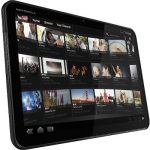
Motorola, or is that Best Buy, sure knows how to dampen enthusiasm for what should otherwise be the hottest Android tablet and iPad's strongest competitor (that is, ahead of Samsung announcing the Galaxy Tab successor). I'm not paying $799.99 for the Moto XOOM? Would you? Oh, yeah, there's fine print: One month Verizon 3G data to, get this, activate the WiFi.
In business, pricing and perception are everything. Little does more to create unwanted negative perceptions than high pricing. In mass-marketing there are pricing thresholds that trigger sales, and these are particularly important when bringing new products to market against a successful and dominant competitor. For digital singles, 99 cents was it. For Amazon's Kindle: $139.
Why Microsoft has to open Windows Update to third-party developers

There's a lot of confusion out there about when attacks against computers occur as a result of vulnerabilities in software as opposed to some other weakness, usually social engineering. Considerable progress has been made in protection against vulnerabilities on Windows, and we can make exploitation even harder if Microsoft can be talked into my scheme: open up Windows Update to third-party applications.
My own opinion is that social engineering is far more important than vulnerabilities and has been increasing in importance. One reason for this is that vulnerabilities are a harder target than they used to be, and that's in large part because of the work Microsoft has done over the last 6 or 7 years.
It's Super Bowl Sunday, do you know who's watching you watch the game?

The Super Bowl is as much about advertising, in some respects more, than the actual game. Advertisers are paying as much as $3 million a commercial spot, which is perplexing in this era of targeted advertising on the web. Super Bowl ads hit a mass of people, more than 100 million expected for today's Green Bay Packers and Pittsburgh Steelers face off, but advertisers don't know who you are. Or do they? It's a question I've been asking, following several unusual events occurring over the past 10 days or so. I'm talking about your privacy and how much less of it you have this Super Bowl Sunday than the last one and how much more advertisers will know about you by next year's playoff.
I've been thinking lots more about advertising and privacy this week because of Google allegations that Microsoft copied search results and because of a personal experience with targeted advertising. I'll start with the latter. Early last week, I saw banner ads on several tech sites for two different sites where I occasionally buy WordPress themes and cell phones. A few days before seeing the splash banners, I visited both sites -- the one looking for new WordPress themes and the other to buy a case for my Google-branded, Samsung-manufactured Nexus S smartphone.
HyperDock 1.0 brings Windows 7 desktop features to Snow Leopard

Are you looking to combine the best bits of Windows 7's desktop with your Snow Leopard-powered Mac? HyperDock 1.0 aims to fill in the gaps by bringing two of Windows 7's best features -- pop-up thumbnail previews of open windows and programs, and the ability to quickly and easily snap two windows side-by-side on-screen -- to the Mac desktop.
Once installed, the program adds itself to the System Preferences pane, making it possible to bring order back to a cluttered collection of windows simply by rolling your mouse over a program and window icons in the dock. A small pop-up window displays thumbnails of all open windows; select a window to view it full-screen or close it directly from the pop-up.
Tip: Save money with Google Shopper

If you're looking to save money or want to check out reviews of a product before making a purchase, Google Shopper may just be the app you've been looking for. Previously available for the Android platform, the app is now available for iPhone and iPod touch, making it possible to check prices and product details when on the high street.
The app takes full advantage of the iPhone and iPod touch camera, as it can be used to scan barcodes to speed up the process of performing searches. Once a product has been found it can be added to an ever-growing wishlist that can be shared with others -- great for when your birthday is imminent.
Google makes it easier to build sites for Google TV

Friday, the Google TV team published a couple of new design templates, as well as a still-in-beta Web UI library that Web designers can use to optimize their sites for Google TV.
"While existing websites can be displayed in Google TV, the user experience isn't always ideal within the context of a living room," Steve Hines and Daniels Lee of Google TV Developer Relations Team wrote in the Google TV blog today.
New Android market shows the future is in device-agnostic app stores

Google on Thursday finally launched a renewed web-based Android Market that integrates with a user's Google account and lets him shop for applications and send them to the various Android-powered devices linked to the account. This new shop marks the industry-wide trend toward comprehensive device-agnostic software shopping solutions.
Amazon's Kindle store was the first major shopping outlet to take such a step. Users can shop for Kindle-formatted e-books on Amazon.com, and push their purchases to their Kindle device, regardless of whether it's a dedicated e-paper reader or a software application.
Nokia's experimental 'Bubbles' lets Symbian^3 users pop their way through common tasks

Nokia Labs today revealed a new user interface motif called "Bubbles." It's one the many odd little research projects Nokia pops out. Some of them become real products, while many others do not. But I often see lots of creativity and invention in what these Nokia researchers dream up.
Nokia Bubbles is just that -- bubbles that move around the handset's display. They're essentially shortcuts to other functions, such as unlocking the phone, viewing missed calls, accessing e-mail or viewing text messages.
Hacking Chrome? Google Bets $20,000 you can't

Google has donated $20,000 to a yearly hacking competition to be awarded to the first researcher able to crack its Chrome browser. The Mountain View, Calif. company's move marks the first time a browser developer has contributed money to the contest.
The Pwn2Own competition is in its fifth year and is held at the CanSecWest security conference. Participants are tasked with cracking a variety of other browsers too (Apple's Safari, Microsoft's Internet Explorer, and Mozilla's Firefox) on computers supplied by the contest creators running Windows 7. Those that perform a successful crack win the computer it was done on as well as a $15,000 cash prize.
Does a Microsoft-Nokia mashup make sense, or are its supporters just nuts?
I disagree with TechFlash's Todd Bishop, who today writes that a "wholesale shift by Nokia to Windows Phone 7 from Symbian would be a huge change, similar in magnitude to, say, Apple adopting Intel chips." Oh, no, it would be much bigger than that and way riskier. [Editor's Note: Quote corrected for transposed "by" and "to"; I make that kind of mistake all the time.]
Bishop responds to yet another call for Nokia to enter an unholy operating system alliance with Microsoft or to merge -- this one from Berenberg Bank analyst Adnaan Ahmad. As the TechFlash managing editor rightly observes: "Ever since he went to Nokia, [Stephen] Elop's connection to Microsoft has been viewed as a possible prelude to a tighter relationship." Elop left Microsoft in September 2010, as president of the Business division, to become Nokia's chief executive. As I expressed nearly six months ago, Elop wouldn't be my first choice to run Nokia.
© 1998-2026 BetaNews, Inc. All Rights Reserved. Privacy Policy - Cookie Policy.