

A week with Google's Chrome OS laptop, Day 4: Who is the cloud for?

Few months ago, while walking around Apple Store, minutes after leaving Microsoft Store, I suddenly thought: "My next laptop will run Chrome OS." Well, almost. I ended up with 11.6-inch MacBook Air first. But four days into using the unbranded Google Cr-48 laptop running Chrome OS, I can see living in the cloud as a reasonable future -- not just for me but many other computer users. Problem: It's a residence not quite finished. There's a roof overhead and enclosed walls, but rooms are drafty, electricity works only in some places and the appliances are portable temporaries.
Running Chrome OS on Cr-48 reminds me of testing Windows NT 4 and Mac OS X 10.0 as beta and final release. Windows NT 4 debuted ahead of its time. The hardened security model meant problems connecting peripherals and running many applications. NT 4 was a lonely domicile -- analogous to the first house finished in a new community. Mac OS X 10.0 was similar. Apple made the outrageous decision to ship the operating system before there were adequate drivers for optical drives on existing Macs. Mac OS X also was a new platform for which there were few applications and for which Apple's low PC market share gave developers little incentive to write native ones.
Justin Bieber's World Cup iPad: 2010 in keywords


The end of the calendar year is a time to reflect on our experiences of the last twelve months, and to look ahead to what the next twelve have in store. For many, this means getting together with the family, exchanging gifts and sharing stories of the year's adventures.
For the technology and information industries, it doesn't mean sitting around the fireplace and getting nostalgic over a cup of hot cocoa, though. It means year-end statistics; and for the rest of us, this is far more exciting.
Somasegar gets it, do you?

The end-of-year retrospectives are popping up everywhere as Christmas and New Years approach. This morning, Soma Somasegar's walk down 2010 memory lane caught my attention. He posted "A Year of Excitement" late-day yesterday (Eastern Standard Time). Whether or not there is any Microsoft "excitement" is topic for discussion in comments. But the tone of his post and emphasis is something other Microsoft bloggers -- and employees from other tech companies -- should try to imitate as they look back on the year or even ahead to 2011.
Somasegar writes: "I'm always impressed with the work we do here at Microsoft -- you can see how unbiased I am :) -- but this year I'm especially proud to see some of the work having a real impact in my house and with my family members." Stop right there. Somasegar is senior vice president of Microsoft's Developer Division. He's not a consumer evangelist but a developer. He works for a company selling most of its products to businesses, and he engages developers among them.
Yahoo to terminate 8 web properties in restructuring effort

Following a reported four percent staff reduction announced this week, search engine and web portal Yahoo! will also be restructuring its large roster of sites by terminating some, merging others, and turning still others into "features."
According to a presentation slide leaked from an internal Yahoo product meeting on Thursday, Altavista, Yahoo Picks, Yahoo Bookmarks, Yahoo Buzz, Delicious, MyBlogLog, Alltheweb, and MyM are all slated to be shut down for good. Additionally, Yahoo says its Traffic APIs will be shut down as well.
A week with Google's Chrome OS laptop, Day 3: Living with Flash
I've spent the last six weeks living the serene computing life, like being back on a Maine farm, with dusty roads, upward-reaching pines and Milky Way spanning night skies. Switching from the 11.6-inch MacBook Air to Google's Cr-48 brought back city congestion and bursting neon signs. Adobe Flash is back in my life, and it's hurting my Chrome OS experience.
"Whether or not Flash?" is topic for Day 3 of my week-long usage experiment, and it's a question many other people are sure to ask. Previous posts in this series: "A week with Google's Chrome OS laptop, Day 1: Getting acquainted" and "A week with Google's Chrome OS laptop, Day 2: Becoming a cloud citizen."
Opera 11 final version published

Opera Software Thursday released the completed version of the Opera 11 browser, which has been available in various states of pre-release since October. This version of the browser breaks new ground for Opera, and includes support for extensions and introduces a new tab management system.
If you have been using the beta version of Opera 11, which was last updated on November 23, there isn't going to be a tremendous amount of change that is immediately visible aside from a few changes to the search dropdown, speed dial background, and extension installer UI, but a handful of usability improvements have been made.
It's the holidays, how do you use your phone to shop?
I ask because of a surprising mobile shopping report made available today. What caught my interest was methodology -- survey by mobile phones -- and sample size of 12,533. Briabe Media put together the survey, conducted on MocoSpace's mobile network of 14 million registered users. Among the 31-page PowerPoint report's findings: 62 percent of respondents used their phones to research products or pricing before going shopping. Forty-six percent used their phones to comparison shop once in the stores.
Can you say personal shopping assistant? What the report doesn't reveal is where mobile users do their comparison shopping. Is it using the Amazon app or perhaps Google Googles? Something else? I rarely buy anything selling for more than $20 without comparison shopping in the store. What about you?
Nokia takes Apple patent fight to British, German & Dutch courts
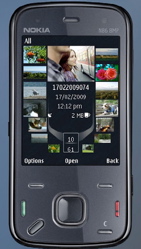
Finnish mobile phone maker Nokia on Thursday announced it had filed claims against Apple in the UK High Court, Dusseldorf and Mannheim District Courts in Germany, and the District Court of the Hague, Netherlands. The three new complaints join those already filed with the US International Trade Commission, and US Federal Courts in Delaware and Wisconsin.
Nokia had already accused Apple of 24 patent violations; 10 counts in its 2009 complaint, and 14 more in its 2010 complaint that responded to Apple's countersuit. The action announced today piles 13 more patents on the case; 4 in the UK, 7 in Dusseldorf, 5 in Mannheim, and two in the Hague.
Apple crashes CES party with Mac App Store

Suddenly, Microsoft CEO Steve Ballmer's Consumer Electronics Show keynote is a heavier burden. Ballmer will open CES, with a 9:30 pm EST keynote on Jan. 5, 2011. On January 6th, Apple will officially launch the Mac App Store, exclusively for Mac OS X 10.6 (aka Snow Leopard). Earlier this morning, Apple announced the store opening date, and you can be sure timing is deliberate.
For years, Apple has played a game of oneupmanship with CES, timing announcements so that they would suck away some of the excitement and press coverage around products debuted or updated there -- iPhone in 2007, MacBook Air in 2008 and iPad in 2010. Then there are the rumors, often obviously from internal leaks, ahead of big Apple announcements. Apple has a knack for marketing manipulation -- controlling the message and perception. Blogs' and news sites' ever quest for pageviews makes every Apple rumor worth another story. Then there is clear media bias favoring Apple.
Free Software turns DisplayLink docking stations into Linux client PCs
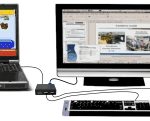
DisplayLink, maker of graphics-over-USB solutions, has partnered with Canadian company Userful to turn Displaylink-powered docking stations into Linux-driven CPU-less client PCs.
Userful makes a virtual PC solution for classrooms called Userful Multiseat Linux 2011. With this, a single PC can drive ten independent client machines running Edubuntu. Now that Userful has partnered with DisplayLink, owners of consumer docking stations with DisplayLink's USB Virtual Graphics technology (such as those made by Targus and Asus) can do the same thing for free, except in a more limited fashion.
Google taps networking expert Medin to build out fiber network


As Google moves ever closer to its fiber-optic network plans, it has hired networking engineer Milo Medin to oversee its rollout. Medin is widely viewed as an expert in Internet networking, and is credited with pushing TCP/IP in the 1980s as a standard for Internet connectivity.
Medin will manage the fiber team and serve as vice president of access services. Google said in February that it planned to build its own fiber network. Hundreds of communities nationwide have vied to be the location where the planned 1 gigabit network will be built -- Google says it will announce a winner early next year.
A week with Google's Chrome OS laptop, Day 2: Becoming a cloud citizen
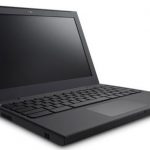
I've long prided myself on being a good cloud citizen. I seemingly live in the browser. But using the Cr-48 laptop running Google's Chrome OS, I discovered the number of important but small apps that are vital to my daily computing. I have been living a double life, meandering as nomad between two computing domiciles, never really settling into one or the other.
All the blogging or reporting I do takes place in the browser. It's where I use Twitter and collect RSS feeds. But I rely on clients for instant messaging and email. I run Skype, too, and most importantly a media client -- right now iTunes, with 90GB of music stored on an external hard drive. The biggest challenge on Day 1 got unexpected relief on Day 2: Gmail. How do you manage separate Gmail accounts -- I've got four of them -- when each requires separate sign-in? I used a different account to set up the laptop than the domain attached to Google Apps. I'll answer the question in a few paragraphs.
Bing Maps gets another graphical overhaul, feature upgrade
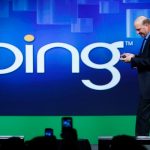
Wednesday, the mapping component of Microsoft's search engine Bing got another significant UX upgrade and new features for both the desktop and mobile versions of the service.
Last August, a new style of the Bing Maps was unveiled, which focused on providing a cleaner visual experience for users. Today, that new style has been updated even further with subtle changes to color contrast and brightness, as well as to the density of information and size of text to help in overall legibility and usability.
MetroPCS takes on mobile's 'big four,' expands 4G LTE presence further
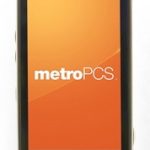
MetroPCS may be the fifth largest wireless network operator in the United States, but it is the first in LTE, the next-generation wireless standard that will eventually be used by market leaders Verizon Wireless and AT&T. Wednesday, the company expanded its LTE network footprint to three more major markets: New York City, Boston, and Sacramento.
In September, MetroPCS opened the first commercial LTE network in the United States in Las Vegas, and a little more than a week later switched on the second deployment in the Dallas/Fort Worth metropolitan area. Since then, the company has activated LTE networks in the Lehigh Valley and Philadelphia metro areas in Pennsylvania, in Los Angeles and San Francisco, California.
Google releases Chrome IT deployment tools
Google just announced availability of IT deployment tools for Chrome in a blog post (I also received email from the PR team). The deployment tools step up Google's assault on Internet Explorer turf, earlier with Chrome Frame.
"We've created an MSI installer that enables businesses who use standard deployment tools to install Chrome for all their managed users," according to the blog post. "We've also added support for managed group policy with a list of policies and a set of templates that allow administrators to easily customize browser settings to manage security and privacy."
© 1998-2026 BetaNews, Inc. All Rights Reserved. Privacy Policy - Cookie Policy.