

Microsoft unveils 10 new Windows 7 Phones, sets 1GHz as the baseline

Monday morning, Microsoft revealed the first handful of Windows Phone 7 devices. These nine new handsets will be available in North America on November 8th, and in Europe, and Asia on October 21. As a bit of a bonus, HTC announced an additional WP7 phone which will arrive a little bit after the first batch, some time early next year.
Microsoft has set a pretty high bar in terms of a baseline device specs. They are all on par with the top-of-the-line devices on Google's Android platform, offering 1GHz Qualcomm Snapdragon processors, five megapixel cameras, and each with a price around $200 US.
How should Microsoft open the curtains on Windows Phone 7?

Microsoft's launch of Windows Phone 7 is a turning point for the company. Either Microsoft will turn back to its enterprise applications stack past or turn a page that opens a new chapter for future expansion. Should Microsoft fail to deftly execute, its computing and informational relevance will likely decline, much like IBM in the 1980s and 1990s. Windows Phone 7 is Microsoft's IBM PC moment, but the course doesn't have to be the same as Big Blue three decades ago. Much depends on Microsoft marketing and how much the company embraces the cloud connected mobile device applications stack rather than clings to the Office-Windows-Windows Server app stack.
Microsoft CEO Steve Ballmer officiated today's Windows Phone 7 launch in New York. The locale was meant to reassure Wall Street that Microsoft has a viable and even winning mobile strategy. Ballmer asserted that Microsoft "built a different kind of phone." He said that Windows Phone 7 isn't so much about what users are going to do with the phone but how they're going to do it. Windows Phone 7 will be available on "nine different phones" when WP7 "ships here in the United States in November." Official device availability is November 8th. Windows Phone 7 handsets will be available from operators in 30 countries, making the phones "wonderfully mine," Ballmer asserted. Microsoft's marketing position: Windows Phone 7 is a "fresh start for the smartphone." But is it a fresh start for Microsoft mobile? Ballmer obviously took the position of yes.
Ford releases SDK to pair smartphone apps with SYNC voice command
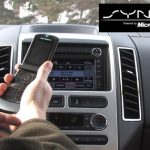
American automobile company Ford today announced it is now releasing its software development kit to developers looking to make their smartphone apps compatible with Ford SYNC's voice command system.
SYNC debuted in the 2008 Ford Focus, and after it proved to be much more than a sales gimmick, discussion that cars could be the next big platform for apps began to arise.
You WILL NOT buy Windows Phone 7
Who will line up to get a new Microsoft-powered handset when Windows Phone 7 officially launches on Monday? Betanews readers answered the who will in my previous post. They responded to an earlier question: "Will you buy Windows Phone 7?" About 70 percent of the e-mail respondents will buy. The naysayers, while fewer in number, give some very good reasons why not Windows Phone 7.
I expected more of a fifty-fifty split between the respondents, perhaps with even more Betanews readers saying no to Windows Phone 7. Well, hell, what do I know? To be clear, a few hundred readers, whether responding by e-mail or in comments, is no measure of WP7's sales potential. But both groups' reasons for buying or not are meaningful,
You WILL buy Windows Phone 7

Perhaps Windows Phone 7 won't come dead on arrival after all. Maybe the analysts and naysaying pundits don't give Microsoft the respect it deserves. Maybe there is enormous pent up demand for Windows Phone 7. Maybe the silent majority that loves Microsoft products has waited for this day -- ah Monday, when Windows Phone 7 officially launches.
Three days ago, I asked: "Will you buy Windows Phone 7?" The response was immediate and overwhelming: More than 150 comments to the post and more than 3 times the usual number of e-mail responses I normally get to buying questions. Among the e-mail respondents, the majority plan to buy a Windows Phone 7 device. Even among those saying nay, many expressed interest if circumstances were different, such as Microsoft getting the product to market faster (they couldn't wait and already got something else) or limited carrier availability (in the United States, no Verizon. Yet.). Most of the e-mail respondents who chose something else bought or will buy an Android handset -- that's a painful dig for Microsoft, because Android more directly competes with potential Windows Phone 7 developers and smartphone buyers than iPhone.
BlackBerry dodges ban in United Arab Emirates
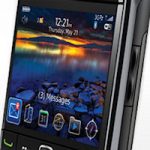
Just days before the October 11th deadline, the United Arab Emirates' Telecommunications Regulatory Authority today announced that Research in Motion's BlackBerry services are now compliant with local law and will not be blocked.
Research in Motion's BlackBerry services have stirred controversy in a number of countries due to the fact that they communicate only with offshore servers and do not allow any backdoor surveillance. In addition to the United Arab Emirates, Saudi Arabia, Indonesia, Lebanon, and India have all asked for RIM to alter the BlackBerry messaging structure to conform with local laws. A common complaint is that illegal activity could be discussed and planned securely on BlackBerry and local authorities would have no access to such communications.
Fennec gets renamed Firefox 4 with latest beta update

After almost two years in alpha, Mozilla today finally upgraded its mobile browser Fennec to beta 1 on Android and Maemo. With the upgrade to beta, it sheds the name "Fennec" altogether and grows into full-blown Firefox.
On Android, the .apk is still called Fennec and will replace the alpha installation and cute icon with a shiny new Firefox icon. In our initial runs through the beta, it does appear to be faster handling and less prone to crashing than the alpha build, but we haven't put it through its paces yet. No Earth-shattering changes so far, we'll updateif any turn up.
Microsoft rolls out beta 2 of Web development kit WebMatrix

Back in July, Microsoft opened the public beta of a new version of the WebMatrix Web development tool. Yesterday, the second beta of the software launched, and rolled in a few new shortcuts and tools in the software.
This new beta includes support for the new ASP.NET syntax called "Razor" for simplifying inline coding; it adds template projects for common usage scenarios, including a new Wishlist project; it integrates with open source package manager NuPack; and adds support for a NuPack toolkit that includes Helpers for Analytics, Facebook, GamerCard, Gravatar, LinkShare, Captcha, Twitter and Video scenarios.
LightSquared announces hardware partners for upcoming LTE network

North America's 4G footprint is beginning to take shape. MetroPCS now has two LTE networks open in Las Vegas and in the Dallas/Ft. Worth metroplex, yesterday Verizon Wireless announced that it will have LTE in 38 U.S. cities and 60 commercial airports by the end of 2010. Also this week, AT&T announced its first LTE-capable device, and Canadian carrier Rogers announced its first 700MHz LTE trial in Ottawa, Ontario.
LightSquared, the still-in-development wholesale LTE network built in the 1-2GHz L-band, announced several important partnerships today for equipment, chips, and consumer devices as well.
Retro style, modern features: Vinyl ripping with the Crosley Revolution

When the Walkman portable cassette player revolution had firmly gripped the world in the early 80's, Audio-Technica produced a unique product that capitalized on the portability trends, but applied it to vinyl records. It created tiny, clamshell-style record players that stripped away the big turntable in favor of one with a 3.5" diameter that could still play 12" LPs.
The most notable versions of this turntable were the AT-727 "Sound Burger," and the AT-770 "Mister Disc." And though these devices weren't commercial breakthroughs in their time, they now fetch significant sums on eBay, and have enjoyed a massive resurgence in consumer interest.
The First Google TV device, Logitech Revue, gets unveiled, goes up for sale

As expected, Logitech today officially launched the first piece of Google TV hardware, the Logitech Revue set-top box. While a lot was already known about the product, today's announcements filled in all the gaps, and revealed some additional surprise features that were heretofore unknown.
In June 2010, Logitech first presented the Revue, showing off the box, its integration with the home theater as a Harmony-powered IR blaster, and its support for Android applications. But this didn't really tell consumers what kind of device it would be, such as an over-the-top streamer like Roku or Apple TV, or home media manager like WD TV or the Boxee Box. Later, it was shown off controlling a DVR and offering Google-powered searches, but still it looked like a device without an absolutely clear identity.
Motorola sues Apple, claiming infringement of 18 patents


Motorola subsidiary Motorola Mobility sued Apple on Wednesday, claiming the Cupertino company infringed on 18 patents it holds covering a range of wireless technologies. The suit was filed in two US District courts: one in the Northern District of Illinois and the other in the Southern District of Florida.
Among the technologies covered are those related to GPRS and 3G, as well as 802.11 wireless Internet. Other functions that the patents cover include technologies which have become staples of the iPhone including multi-device synchronization, proximity sensors, and location based services.
In the name of privacy, Facebook revamps groups, dashboard, data portability

As more people put more sensitive information on Facebook, it's becoming increasingly important to give users better ways to control who sees that data and how it's used. At a press conference in Palo Alto today, Mark Zuckerberg and company unveiled three big enhancements to the way users interact with their Facebook accounts, with the underlying theme of privacy.
First, users can now download everything they've ever posted on Facebook, including all correspondences between friends, all photos and video they've been tagged in, and their friends list as a single zipped file.
Cisco unveils Google chat-compatible video conferencing product for HDTVs
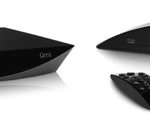
Network hardware company Cisco today introduced umi telepresence, its first HD video conferencing product designed for consumer televisions.
Consumers now have access to the TelePresence technology humorously product-placed on NBC's 30 Rock last year; Cisco umi includes an HD camera and a broadband-connected console that users hook up to their television. Once the unit is connected, they can then make video calls to other umi users or Google video chat users, record video postcards for Facebook and YouTube, or manage contact lists and profiles via remote control. When users receive a video call or message when they're away from their TV, they can receive text message alerts that a video message awaits them. Video messages can be checked on remote PCs as well as on the console.
Trouble sorting out Microsoft's project codenames? Check this out

With such a large catalog of software and solutions, it's often a task remembering the names of Microsoft's products, especially when they are prone to changing as new versions come out. Unreleased products and betas are a whole other affair altogether.
Fortunately, Mary Jo Foley, Microsoft expert over at ZDNet and author of Microsoft 2.0: How Microsoft Plans to Stay Relevant in the Post-Gates Era, has released the latest Whitepaper that sorts out all of Microsoft's currently known project codenames called All About Microsoft: CodeTracker.
© 1998-2026 BetaNews, Inc. All Rights Reserved. Privacy Policy - Cookie Policy.