

Hey, Apple, Microsoft, mobile multitasking is a necessity


Apple's "Get a sneak peak into the future of iPhone OS" event, in two days, is reason enough to re-raise the thorny topic of multitasking on smartphones. Apple's iPhone OS 3.x -- on iPad, iPhone and iPod touch -- limits running background applications. Microsoft is taking a similar approach with Windows Phone 7 (Thank God, the company dropped "Series" from the name).
Here's where I whack aside the head my former analyst colleague, Michael Gartenberg -- or you can whack me (in comments) if you agree with him. Gartenberg and I are polarized on the topic of mobile multitasking. He thinks it's unnecessary, I say it's a necessity. In March 25 post "Windows Phone 7 Series imitates Apple's iPhone in the worst ways," I asserted: "People take multitasking for granted on the PC, which will make its absence more noticeable on the smartphone." I'd argue that because of applications' or features' contextual appeal, running background applications will increase in appeal over time. There are reasons why Google, Nokia or Palm operating systems allow multitasking, and seem to do so without any major hit on battery life (I've tested Android, Maemo and Symbian devices, but not WebOS).
First look: Rhapsody for Android (beta)

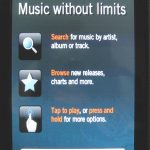
Since Rhapsody has spun off from RealNetworks and Viacom/MTV, the subscription music service has gone down in price from $14.99 to $9.99, and its first app for Android has been released.
The service has thus far proven to be extremely popular on the iPhone/iPod touch, and has been downloaded more than 1.5 million times since debuting just about eight months ago. That application lets subscribers access Rhapsody's 8 million song database for streaming over 3G or Wi-Fi connections, they can make their own playlists or listen to commercial-free Rhapsody Radio programming.
Court rules that FCC can't stop Comcast from throttling traffic

In August 2008, the Federal Communications Commission issued a cease and desist order to cable company Comcast, demanding it stop throttling BitTorrent traffic. It was considered the first citation ever for the violation of net neutrality rules.
Comcast then filed suit against the FCC, contesting that the Commission overstepped its boundaries because net neutrality guidelines were not a law. They're not.
Xbox 360 system update finally adds USB storage
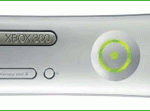
As expected, Microsoft has pushed out a mandatory update to the Xbox 360 today, which adds support for USB storage devices, expanding the memory capacity of the five-year old video game console.
The update will ostensibly allow any FAT32-formatted USB storage device between 1GB-16GB in size to be used to save profiles, game saves, and downloadable content. There are, however, a number of caveats, which mean users can't just plug anything in and have it work.
A bill too far: With iPad, AT&T attempts a triple-dip

Do you ever get the impression your wallet is being relentlessly sucked dry? Or that consumers are being expected to pay for an ever growing list of subscription-based services that, in a less profit-mad world, would likely be free?
Apple's gotten quite enough publicity from me and my colleagues over the last little while. So while I hate to harp on the iPad yet again this week, I can't let go of the fact that this particular introduction represents yet another step toward the deepening fiscal enslavement of consumers.
Live TV on the iPad coming soon

Qualcomm's mobile broadcast television service called FLO TV existed for about five years under different wireless carrier brand names: Sprint TV, Verizon V Cast TV, and AT&T MediaFLO TV. But the carriers didn't push it very hard, so it did not break through into the public's consciousness.
But then Qualcomm began advertising FLO TV on its own, with its own smartphone-sized pocket TVs made by HTC, and it looks like it is finally beginning to stick.
Is iPad really just a proof-of-concept device?
Today, Apple announced modest launch-day iPad sales of 300,000 units, which include preorders. On March 26, in post "Of course media bias favors Apple," I put launch sales at about 330,000 -- based in part on over-widely reported rumors. Five days earlier, in post "Be smart, don't buy into iPad hype," I warned that bloggers, journalists and Wall Street analysts had gone bonkers over the device, losing some common sense along the way. Piper Jaffray analyst Gene Munster is among them. Over the weekend, he revised first day iPad sales to 600,000-700,000, leading to today's admission he got it wrong. Munster also lowered full year sales estimates to 4.3 million from 5.6 million. Forrester Research forecasts 3 million iPad shipments.
Modest initial sales aren't surprising, even though some Apple watchers will wonder if 300,000 units live up to the hype. As I explained on April 2, modest early sales follow the pattern of most other new-category Apple products, including Macintosh, iPhone, iPod and iTunes Store. Distribution is limited to the United States and the 3G model isn't yet available, which also mitigate early sales.
Second site: Making the Web more accessible to the visually impaired

As the population ages, financial institutions and other service providers will have to learn to adapt their marketing approaches to appeal to a sector that has high disposable income and substantial spending power. In some cases, they will also have physical limitations that will impede online activities, including vision loss.
Besides the fact that an aging population brings with it a growing number of people with vision loss, the business and legal case for making Web content accessible to the visually impaired is becoming increasingly strong.
End of the road in sight for Windows on Itanium


It was perhaps one of the most drawn-out, painful launches in Intel's long history: the introduction last February of Tukwila, the latest generation of its Itanium 64-bit processor architecture. Not everyone in the Itanium Solutions Alliance hung on for the five-year ride, with Unisys having been its most prominent drop-out last year, citing competitor HP's dominance in the field. Microsoft held on for the entire stretch; but last week, the company announced it would not lend its support to whatever the generation after Tukwila might become.
In a blog post last Friday, Windows Server Senior Technical Product Manager Dan Reger said that his company will continue to support existing Itanium architecture, including Tukwila, for another eight years. But Windows Server 2008 R2 will be the last version of the operating system to support IA-64.
Skyfire is coming very soon to Android
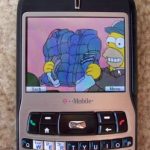
Third-party mobile browser Skyfire is regarded by many to be the best way to consume the Web on the go. With its support for all of the major browser plug-ins, and full server-side rendering, it can provide access to more sites than any other mobile browser, and do it quickly.
It was officially released a little less than one year ago on Windows Mobile and Symbian S60, and has seen one major update since that time. It has not, however, managed to be released on any new platforms, there has been a very early version for BlackBerry, but that has not progressed to the release stages.
Less than a week after launching iPad, Apple to show iPhone OS 4
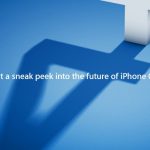
Now that the iPad is no longer a mystery, Apple is sparking up its magic machine to get people talking and rumoring again.
In classic fashion, Apple has sent out invitations to an event it will be holding this week, which contain only a little detail but a lot of room for speculation and excitement.
California Inventor who sued Apple over the iPhone sues over the iPad

In October 2008, Californian Elliot Gottfurcht was granted a patent for
"Apparatus and method of manipulating a region on a wireless device screen for viewing, zooming and scrolling internet content."
One month later he sued Apple for infringing on that patent.
Obama vs. Congress on radio's royalties exemption

Perhaps the word that best describes the atmosphere in Washington this year is "showdown," with respect to every political issue imaginable -- even those around which there's technically no disagreement. The debate continues over whether terrestrial radio broadcasters (the ones with the big transmitters and the public airwaves) should begin paying the same performers' royalties as Internet broadcasters like Last.fm and Pandora, even though it often seems drowned out by the noise over the just-passed health care reform act, and ongoing legislation on jobs protection and banking reform.
Now, the US Commerce Dept. has come down squarely on the side of the recording industry and rights holders. In a letter sent April 1 to Senate Judiciary Committee Chairman Patrick Leahy (D - Vt.), Commerce Dept. General Counsel Cameron F. Kerry urged Congress to pass legislation that would apply Pandora's royalties to radio stations.
Apple announces first day iPad sales
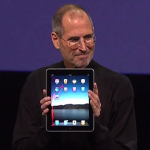
If you were sucked into the black hole of iPad hype, you may have guessed that Apple sold half a million or more of its new tablet on the first day, but really it was about average when compared to iPhone launches.
Piper Jaffray analyst Gene Munster first predicted Apple would sell between 200,000 and 300,000 iPads on its first day of availability, but then after his team gathered data and compared it to previous Apple device launches, he bumped up his first day sales estimate to between 600,000 and 700,000.
Could this be the rarest video game of all time?
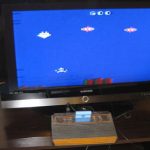
In February, the mainstream news media picked up a story about a rare 8-bit Nintendo game called Bandai Stadium Events that sold for $13,000 on eBay. The story was widely circulated mostly because the seller had no idea that the game was special in any way. The North Carolina mother who put the auction up was apparently unaware that she was selling a game that was only released in a handful of U.S. markets before it was quickly recalled, making it one of the rarest games for the Nintendo Entertainment System.
Then another copy of the same game turned up on eBay less than a month later from a seller who heard about the huge bids on the last auction. The copy that he put up managed to be an even rarer version, because it was sealed in its original box. That seller reportedly earned a whopping $41,300 for it.
© 1998-2026 BetaNews, Inc. All Rights Reserved. Privacy Policy - Cookie Policy.