

Things to look for at CTIA: America's first 4G smartphone


Sprint is making the bold first move into 4G smartphone market next week, a Wall Street Journal report said today. At that time, the carrier is expected to show off its new WiMAX-enabled HTC Supersonic.
The Supersonic has been a pretty big blip on the Android community's radar for several months, after a whole list of HTC device names was uncovered in a leaked Sense UI ROM last December. Since that time, a few more details have been discovered, and a few blurry spy camera shots and renders have surfaced; but as far as official specs go, there are none. It looks to have the same massive 4.3" screen that the HD2 has, run on the Android platform, and possibly contain a Snapdragon processor.
Microsoft loses another jury verdict, this time over obviousness of VPN patent


Usually the purpose of a virtual private network is to establish a secure, tunneled route between two points in an IP network. Is the idea that such a network could be secured using two encryption layers rather than one, and without the need for a user to log in first, worthy of a patent? These were questions central to the latest Tyler, Texas patent infringement case for Microsoft to lose: VPN technology provider VirnetX was awarded $105.75 million yesterday, in a case closely followed by the Seattle P.I.'s Nick Eaton.
It's clear from a reading of VirnetX's key patent on VPN technology, issued in 2002, that it is an attempt to go one step further with the VPN concept. The firm calls its system Tunneled Agile Routing Protocol (TARP). Here, the communications between VPN hosts are encrypted at one level, but then the routing information is hidden behind a second level. The intent is to hide not only what's being talked about or shared over a VPN, but who is sharing it, and what route it's taking to get there.
Two months after the Nexus One, Motorola Droid to get Android 2.1

Motorola's Droid has been by far the most popular Android smartphone to hit the US market, selling at a faster pace than the first generation iPhone, and making up, by some accounts, at least 15% of all Android phones in use.
It was the first handset to launch with Android 2.0, a significantly redesigned version of Google's mobile operating system, and it was the first Android device on Verizon, making it a popular choice for the wireless provider's huge subscriber base.
Internet Explorer 9, the HTML 5 browser: Better than half-way there

Download Microsoft Internet Explorer 9 Platform Preview via Fileforum now.
[Today's delay in Betanews bringing you Internet Explorer 9 news was brought to you as a public service by the Cable Modem: Your Best Friend When It's Crunch Time. Remember, where there's smoke, there's a Comcast cable modem. Smell one today.]
Microsoft's Bill Buxton tells UI developers to 'do it naturally'


Microsoft should make Bill Buxton its front man -- the main spokesperson. Buxton, principal researcher for Microsoft Research, has style, great enthusiasm and vision. In an alternate universe, Buxton founded a company like Apple; only better. Buxton is more visionary than Apple CEO Steve Jobs, has better sense of good design (he is a designer, after all) and understands great design in context of the flow of history. Perhaps if Buxton had more ego, he would run a company as successful as Apple, or Microsoft. But humility is part of his appeal.
Buxton stormed the Microsoft MIX10 stage today, bringing along hearth of wisdom and loads of energy. His energy is simply intoxicating. Last year, Buxton kicked off the MIX keynotes. This year he ended them -- and not with enough stage time. The first keynote, yesterday, started with sedate Scott Guthrie, Microsoft corporate vice president, talking Windows Phone 7 Series. Today's keynote began with Internet Explorer 9 team leader Dean Hachamovitch debuting the new browser, which is available as developer preview.
In light of news that it has 'flopped,' Google's Nexus One lands on AT&T and Rogers

Google's first attempt at directly selling an Android-powered mobile phone is already being called a flop thanks to reports from mobile analytics company Flurry that estimate sales to have been around 135,000 units in the first 74 days on the market (compared to 1.05 million Motorola Droids, 1 million iPhones.)
However, Google's approach to selling the device is vastly different from the more common methods employed by wireless carriers: it has been primarily sold unlocked for $529 directly from Google, or for $179 with a special T-Mobile plan. Since the device was released, there's been a "Coming soon: Spring 2010" section that shows Verizon Wireless and Vodafone as the next US and European carriers.
FCC: Wireless spectrum 10x more valuable for wireless broadband than for TV

The 300+ page National Broadband Plan that the Federal Communications Commission submitted to Congress today contains some logical goals, some ambitious ones, and some that are sure to cause a good deal of conflict between industries.
One of the most contentious issues also happens to be the most important aspect of the broadband plan: the re-allocation of wireless spectrum for the use of mobile broadband.
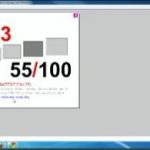
IE9 technology preview goes live, Microsoft claims scores 55% on Acid3
Download Microsoft Internet Explorer 9 Platform Preview via Fileforum now.
This afternoon, Microsoft lifted the curtain on the first Internet Explorer 9 technology preview for developers. Initial demos at MIX 10 in Las Vegas by IE9 team leader Dean Hachamovitch reveal a minimum of end user features at this point -- the preview is described as a lightweight frame on top of a highly improved chassis.
UK Lords pass bill to create Internet anti-piracy enforcement office

The British House of Lords has passed a bill that might, if enacted into law, put the UK's Parliament at odds with the European Commission over how best to enforce copyright anti-infringement laws. Called the Digital Economy Bill, it would charge Internet service providers with the task of keeping track of suspected file sharers and copyright violators, and reporting on them to copyright holders as well as to the country's Office of Communications (OFCOM).
As the bill is currently written, OFCOM would be charged with determining the "initial obligations" of Internet service providers with respect to suspected infringers, provided those obligations meet the specific guidelines. It would be up to OFCOM, should the bill be enacted, to determine all the specifics -- the "fiddly bits" -- such as how ISPs monitor their customers ("subscribers"), at what stage it becomes necessary to report on their activities, how long they retain information on those customers, and what else they do with that data. In the UK, regulations enacted by a regulatory body such as OFCOM are called codes.
The National Broadband Plan is complete, now the hard part starts

The Federal Communications Commission is expected to deliver the National Broadband Plan to Congress tomorrow, and today the commission released an executive summary of what the document will contain.
FCC Chairman Julius Genachowski called it, "An action plan, and action is necessary to meet the challenges of global competitiveness, and harness the power of broadband to help address so many vital national issues."
Windows Phone 7 Series actually looks pretty good

Zune -- along with Expression Blend, Silverlight, Visual Studio and XNA -- may yet save Windows Phone 7 Series. During the kick-off MIX10 keynote earlier today, Microsoft product managers showcased features, development scenarios and, most importantly, user experiences derived from Zune HD. Perhaps Windows Phone 7 Series isn't a hopelessly lost cause after all. Microsoft's competitive postion would actually look good, if phones were shipping now and not in six to eight months.
In September, I asserted that Zune HD should have been the Microsoft phone. The user interface and user experience (some of that derived from Zune 4.0 software) is exceptionally good -- particularly coming from Microsoft. Finally, Microsoft is carrying forward and extending a great user interface motif. Better: Windows Phone 7 Series is inheriting and extending the social sharing concepts imbued into Zune 1.0.
Windows Phone 7 Series has Netflix streaming, Xbox Live gaming

One year can change a lot.
Today, Microsoft used the MIX '10 stage in Las Vegas to show off a lot of the applications that are currently being prepared to launch with Windows Phone 7 Series, and they are a far cry from the poor Windows 6.5 showing at last year's MIX event.
Google: No word yet on China pullout, negotiations continue

Despite an erroneous headline crossing wire services early this morning, which led blogs and even news services to believe Google had already begun a pullout from China, a Google spokesperson has clarified for Betanews today that no announcement has yet been made about any such pullout.
Declining to speak further on the matter, the spokesperson reiterated an earlier statement, which the spokesperson says remains true as of this moment: "We are in active discussions with the Chinese government. We have also been clear that we will no longer self-censor in China."
Silverlight 4 RC, the Windows Phone 7 platform, downloadable today
Download Windows Phone 7 Series Developer Tools Customer Technology Preview from Fileforum now.
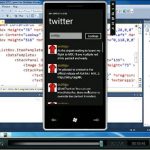
As expected, Microsoft is opening the gates for the first (probably the only) Release Candidate for Silverlight version 4 today, for developers who have been playing with the beta in Visual Studio 2010 since last November. The message of the day for Monday from Microsoft is Silverlight 4 as the functionality platform for Windows Phone 7 Series. (The "other series," for now, isn't being mentioned -- at least it wasn't as of 10:20 Pacific Time this morning.)
Microsoft unveils a host of Windows Phone 7 Series developer tools

Now that Microsoft has effectively restarted its mobile strategy afresh with Windows Phone 7 Series, third party developers need a way to dig into the platform. So today, Microsoft announced Windows Phone Developer Tools are now available as a free download at developer.windowsphone.com
The tools include: Visual Studio 2010 Express for Windows Phone, Windows Phone 7 Series Add-in for Visual Studio, a Windows Phone 7 Series emulator, and XNA Game Studio 4.0.
© 1998-2026 BetaNews, Inc. All Rights Reserved. Privacy Policy - Cookie Policy.