


Mozilla: No, Firefox XUL add-ons are not an endangered species


Last May, Aza Raskin and the team at Mozilla Labs introduced Jetpack, essentially an extensibility model for the organization's Firefox browser that enables new JavaScript apps to modify the functionality of the browser on the fly. The goal is that anyone who could create a Web page could use exactly the same tools (HTML, CSS, and ordinary JavaScript, plus the appropriate APIs) to build a Firefox add-on. Now on version 0.7, Jetpack is slowly gaining momentum.
But where will that momentum lead? Is Mozilla seriously considering the Jetpack development model as an eventual replacement for XUL (XML User Interface language, pronounced "zool" like the refrigerator-based creature from Ghostbusters)? That was the question ZDNet blogger Adrian Kingsley-Hughes asked earlier this week, in a blog post entitled, "Is Mozilla preparing to ditch add-ons as we know them?"
Microsoft: We weren't talking about Windows Mobile 7 at CES


A Microsoft spokesperson contacted Betanews today requesting we clarify a story we brought you during the tail end of CES 2010. Specifically, we presented an interview with Windows Phone Senior Marketing Manager Greg Sullivan entitled, "Finally, what to expect from Windows Mobile 7 and Windows Phone."
At the time, we were under the impression that the interview was providing us with a taste of what we could expect from Mobile World Congress in February, and I suggested that Windows Mobile 7 was "only two months away," even though "Microsoft really [wasn't] talking about Windows Mobile 7 specifically."
Verizon Wireless demands data plans for non-smartphones

Mobile telephony used to be about voice communications first and foremost, but not any more.
As we head toward the 4G era, and smartphones take the leading share of mobile phones sold, data plans will ultimately take precedence over voice plans.
Amazon opens DIY Kindle publishing to world, but does not improve language support

Amazon Kindle may be the go-to brand when someone considers buying a new e-reader in the U.S., but the popular device line is still only just getting its feet wet in the international market.
Last October, Amazon released a version of the Kindle 2 that is compatible with the wireless networks in more than 100 countries, but the content available in the Kindle Store is still mostly aimed at English speakers.
Hybrid cellular companies could enhance AT&T with satellite service this year
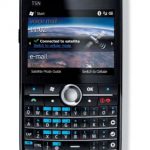
In July, I wrote an article called "Hybrid satellite cell phones aren't far off," in which I talked about Terrestar Networks and SkyTerra Communications, two companies that have reached the point of satellite launch in their hybrid MSS/cellular networks.
It looks like those launches could be even closer to becoming a reality.
Droids, iPhones, and RFID to drive new mobile shopping and transit apps in 2010

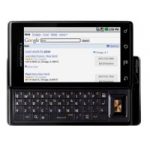
An offshoot of RFID known as near field communication (NFC), along with the latest Android phones and Apple's iPhone, are now helping the US to catch up to Europe and Asia in mobile shopping and mass transit applications, said analysts and other experts at this week's National Retail Federation (NRF) conference in New York City.
Among the ever escalating numbers of smartphones available in the US, Apple's iPhone still leads the way in those as well as other mobile application areas, noted David Dorf, director of retail technology at Oracle.
The Google attack: Human rights threat or IE browser exploit?

On Tuesday, Google described an alleged series of attacks on its servers and others' as an apparent effort by an unknown China-based source to gain access to private information about human rights activists in that country. No less than Secretary of State Hillary Clinton acknowledged her staff being briefed by Google on the matter -- this after almost five years of apparent silence toward government officials from Google regarding its business arrangement with the government of China.
But in a blog post today which officially dubbed the alleged attack "Operation Aurora," McAfee CTO George Kurtz, in revealing his company worked with Google in investigating the attack, suggested a completely different motive. Specifically, Kurtz alleged that a new and heretofore unseen malware turned up during his investigation, appeared to be designed to search for a specific type of company intellectual property.
Google Nexus One owners share their likes and gripes

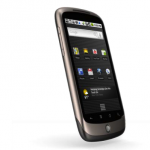
Earlier this week, I asked Betanews readers who had purchased Google's so-called "superphone" to offer up early impressions. You responded in comments and by e-mail. Thank-you. I apologize for taking so long getting your responses posted. For anyone with a Nexus One, in most states the return policy is 14 days (30 days here in California). Others' opinions could weigh heavily in your decision to keep the device. Then there are those of you considering plunking down a budget-busting $529 for the unlocked device. Ouch! I did!
I am generally satisfied with the Nexus One -- in part because of how Google has extended Android 2.1 to cloud services. While I find value in the hardware, software and services are where I find the greater reward, and it's why I have switched from the Nokia N900, which also runs on T-Mobile's 3G network.
Eight days later, Google acknowledges 3G problems on Nexus One

At 2:22 pm Eastern Standard Time today, some eight days after a support thread was first launched by a Google Nexus One user who noticed his phone kept flipping back and forth between 3G and EDGE services, a fellow named Ravi whose job description in his Google profile is listed as "Google Employee, Doofus Maximus" wrote in to assure customers the company was working with its partners to investigate the issue. The problem may affect several hundred Nexus One phones, though evidently -- and thankfully -- not all of them.
"Hey Folks, this is your friendly neighborhood Google Guide here to clear some up some confusion around all these 3G shenanigans!" Ravi's post began. "We (by 'we' I mean Google, although HTC and T-Mobile are both getting reports as well) are getting reports from some users who are having problems maintaining a 3G data connection on their device. We're actively working with our partners to investigate these issues and identify what's going on. Most people don't seem to be running into this issue, but for those of you who are, we understand your concern and appreciate your patience."
Texas Instruments networks its calculators

Anyone who has taken a calculus class in the last 20 years is sure to also have a great deal of experience plugging figures into a TI-8X graphic calculator, and I'm sure I'm not alone in feeling a certain pang of geeky nostalgia for the TI-85, a standard-issue tool for high school kids in the 1990's.
Technology has come a long way since the 6 MHz Zilog Z80 processor, but Texas Instruments isn't retiring the popular calculators just yet. Instead, it has moved a significant number of those old devices into the wireless age.
Towards a single, reliable system for identity management

In this age of phishing, hacking, identity fraud, and other forms of cybercrime, answering two simple questions -- "Who are you?" and "How can you prove it?" -- is fast becoming a critical requirement for all online business activities.
Moreover, solving this "identity management" challenge has become quite complex as the increasing need for cross-organization collaboration, concerns about security, and the problem of user password management suggest that the traditional company-issued username and password approach is no longer adequate. As a consequence, federated identity management, in which a third-party identity provider plays a key role, is rapidly emerging as a preferred approach.
Now, the great Facebook security giveaway ...literally

Facebook wants to be your new security maven.
Go ahead. Have a good laugh. I certainly did, after I first learned about Facebook's plan to partner with security provider McAfee to boost end-user security on the often-attacked social media platform.
Kodak sues Apple and RIM over iPhone and BlackBerry cameras

Today, Eastman Kodak filed a complaint with the US International Trade Commission and a suit in the Western District Court of New York that claims Apple's iPhone and Research in Motion's BlackBerry devices both violate Kodak's digital imaging patents.
Equipped with a fresh legal precedent from the suit it won against Samsung last month, Kodak spokesmen say the company isn't trying to disrupt sales of the iPhone or BlackBerry devices, but rather, it's seeking compensation for use of Kodak's patented technology.
On second thought, maybe the RIAA did conspire to fix prices, appeals court finds

Did the United States' major record labels, as early as 2001, conspire to establish a system for the distribution and sale of digital music that would have seen subscribers paying up to $240 per year for the right to download up to two songs per artist per month, even then at a retail price indexed at the wholesale cost of $0.70 per song, with restrictive and unwanted DRM schemes attached? That was the assertion of a group of former customers of two music services that launched in 2001. Now, a US appeals court has ruled that the dismissal of their case in 2007 was in error, and that the entire recording industry can indeed be brought to court on antitrust charges.
The original case involved two of the music industry's first "legal download" services, created just months after the founding of iTunes. One was called MusicNet, the original music publishing service from RealNetworks, years before it first started Rhapsody. MusicNet was the culmination of a joint agreement between Real and three of the nation's five major music publishers: EMI Group, Warner Music (then part of AOL Time Warner), and Bertelsmann (now Sony Music). The other was Pressplay, formed by the other two publishers: Universal Music Group (formerly MCA) and the original Sony Music Entertainment.
Google's change of heart on China draws attention from Congress

Yesterday afternoon, citing what it described as "cyber attacks" -- incursions into its own systems it said originated from China -- Google said it would review its business arrangement with the government of China that enables it to operate a search engine under the domain name google.cn. The company said it believes the alleged attackers were searching for information on Chinese human rights activists.
This morning, US Secretary of State Hillary Clinton acknowledged that Google had briefed the State Dept. on these attacks, prior to yesterday's announcement. Though the extent of those briefings were not divulged, they could represent a break of the unofficial embargo the company has imposed on any news of its business dealings with the Chinese government, since their initial agreement was reached in late 2005. Now, Rep. Tim Ryan (D - Ohio), one of the congressmen who had led the unsuccessful effort to compel Google -- along with other American Internet companies, including Microsoft, Yahoo, and Cisco -- to explain the nature of its business arrangements with China, tells Betanews this afternoon that Google may have had this coming.
© 1998-2026 BetaNews, Inc. All Rights Reserved. Privacy Policy - Cookie Policy.