

Steve Jobs recovers from liver transplant


Now that the next iPhone launch is at least a solid year away, the truth behind CEO Steve Jobs' six-month medical leave has finally been released to the Wall Street Journal.
In January, Jobs said he had been diagnosed with a hormone imbalance, and the public speculated it was actually intestinal cancer. Tonight, it was revealed that the "hormone imbalance" was an issue with his liver. According to the WSJ report, Jobs underwent a liver transplant two months ago in Tennessee, and has been in recovery since that time. A statement from Apple to the paper said the CEO is still looking forward to a return to work at the end of the month.
The truth, the whole truth, and nothing but the truth (are three different things)


This episode of Recovery is brought to you by axial tilt: It's the reason for the season. (What? It's just as funny at Solstice as it is around Christmas, dammit.)
Having lately increased the amount of time I spend around small children, I have gotten a refresher course in lying. No judgment implied, but little kids are still learning how the reality thing works, and if they wish something to be so, most will at least take a shot at saying it already is. (I'm sure it's not fair to blame Walt Disney for all that wish-upon-a-star, wish-and-Tinkerbell-lives stuff, but if those people could slap a trademark on the performative utterance, they'd been richer than... um, Disney. Oops.)
Comparing cameras: iPhone 3G and iPhone 3G S
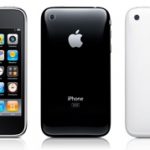
Avoiding the lines of dozens upon dozens who showed up at Apple Stores early this morning, our server engineer Eric Steil pre-ordered his new iPhone 3G S. It arrived at 9:54 am EDT -- early enough today for Eric to catch a few rays of fleeting sunlight on this otherwise dreadfully wet day in the northeast, and capture some test images from the backyard and around the house at just before noon.
Click the cat for more iPhone 3G vs 3G S comparison shots.
Big changes to cellular networks to be demonstrated next week

Next Tuesday at the Femtocells World Summit in London, chipmaker picoChip, packet core vendor Starent Networks, and Continuous Computing will give the first live demo of a new 3GPP standard critical to the deployment of IP Radio Access Network-based femtocells.
What's that again? 3GPP is the Third Generation Partnership Project, the international consortium that lays down specs for telecommunications standards. Femtocell is a system for increasing 3G cellular coverage with small, indoor distributed antenna systems. They are sort of like tiny cell towers, hence the femto- prefix which denotes 10-15, making the name roughly mean "really really small cell."
Harris Poll: More Americans own HD DVD consoles than Blu-ray


No, this isn't an accidentally posted Betanews article from back when we had a capital "N." The findings of a recent Harris Interactive poll released yesterday, whose major headline was to demonstrate the lack of recent consumer uptake for Blu-ray players more than one year after the high-definition format war ended, says that among 2,401 Americans polled last April, 11% own an HD DVD player console. But just 7% own a Blu-ray player console.
Could the pollsters be counting Xbox 360 as "an HD DVD player," or "HD DVD-capable," as some did during the format war's heyday? Apparently not. Some 9% of respondents own a Sony PlayStation 3, all of which are Blu-ray capable. Thus, 9% of citizens polled own Blu-ray players of some sort, whether or not they use them as Blu-ray players -- a gain of 4% over last year. Meanwhile, 3% of those polled own an Xbox 360, which Harris says "plays HD DVDs" even though the drive for doing so was well-known to have been an optional attachment.
Apple iPhone lines: No longer the social event of the season
For fanatics of anything, camping out in line for the latest product or event is a chance to show off their loyalty and devotion to whatever their chosen obsession may be. Waiting for hours in unforgiving conditions creates a real camaraderie between folks, and helps soften a person's judgment of the product they waited for.
I think back ten years when Star Wars: The Phantom Menace came out, when dozens of people I knew, Star Wars geeks or not, waited in a line that extended literally six blocks down the street from Baltimore's Senator Theater just for a ticket to any showing. After we witnessed that cinematographic abomination, we held our tongues and told ourselves it really wasn't that bad. Even harsh critics I knew who I'd followed out of theaters mid-movie in the past gave the movie a longer consideration than it deserved.
Mozilla posts yet another Firefox 3.5 Release Candidate
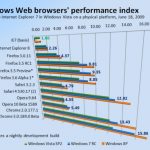
Download Mozilla Firefox 3.5 Release Candidate 2 for Windows from Fileforum now.
It was apparent yesterday, after a test of the organization's latest private daily build of the Firefox 3.5 browser, that Mozilla's developers had discovered a jackpot of performance improvements in some specific areas: JavaScript math, RegEx (regular string expression) searches, and general control flow. Betanews tests yesterday gave the Thursday morning build 8% better overall speed in Windows 7 RC, and a better overall performance index score on that platform of 9.35 versus 8.81, relative to the performance of Microsoft Internet Explorer 7 on Windows Vista on the same physical machine.
Up Front: Ballmer says Bing may be worth investing 10% of Microsoft's income

The Bing marketing push has been a short-term success for Microsoft in that it got people to trying out its search engine, including several of the features Windows Live Search actually already had for a year or more and just never tried...because it was Windows Live Search. But in a speech last night, the man at the top of Microsoft presented what looked like a "moral," like at the end of a bedtime story, the message we're all supposed to have learned...as if Bing's success is a fait accompli. Sometimes when Steve Ballmer starts talking like Tom Osborne, you have to start worrying...and not always for Microsoft.
Search mavens: They've just like us!
Everyone but you is being rude with their mobile gadgets

Self-awareness, etiquette and Internet polling probably shouldn't even appear in the same sentence, but now and then they combine for a good laugh. For instance, Intel this week revealed the results of an online poll they commissioned from the pollsters at Harris Interactive, which asked 2,160 US adults about behavior -- theirs and other people's -- on their mobile phones and other devices one uses in public.
The study defined various alleged etiquette breaches ranging from speaking too loudly on phone calls to being rude to cashiers (by chattering during a transaction) and texting in the presence of others. Some so-called faux pas were the sort of thing it's hard to fathom people actually doing (using a laptop in a public restroom, really?).
Tricky AT&T iPhone 3.0 tethering
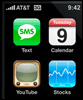
It didn't take long for crafty users to figure out how to enable tethering on their newly-updated 3.0 iPhones, irrespective of carrier regulations. Apple community MacMegasite posted its own method for tethering, and BenM.at's iPhone Help Center provides not only an iPhone-formatted config site for activating tethering, but also a rudimentary means of activating MMS as well.
Betanews is awaiting comment from AT&T on the subject, which may be forthcoming. In the meantime, check out our tethered iPhone speeds and let us know how yours compare.
Lawsuit against US on IP trade agreement dropped for national security
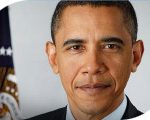
Opposition to a sweeping trade agreement being negotiated in secret between the United States and at least eleven other countries, plus the European Union, is being voluntarily curtailed after an apparently successful effort by Obama administration officials to prevent parties in a lawsuit against US trade representatives from obtaining any information about that agreement.
It's the Anti-Counterfeiting Trade Agreement, the existence of which is about the only thing the government will barely acknowledge. A document leaked last year to the community journalism site Wikileaks.org indicated that intellectual property protections were on the agenda, and may have been part of the reason why the treaty was not ratified by July 2008 as previously planned.
Jammie Thomas-Rasset infringed, says jury; fined $80,000 / song

A Minnesota jury has returned its verdict in the Capitol Records vs. Thomas-Rasset retrial, and they found for the plaintiffs. In addition, the group of seven women and five men levied damages of $1,920,000 -- that is, $80,000 for each of the 24 songs admitted into evidence -- against the 32-year-old mother of four.
Early reports from the courtroom indicate that, in the words of Thomas-Rasset lawyer Kiwi Camara, jury members "were angry" and "didn't believe" the defendant, the only witness presented by her legal team. Camara & Sibley took the case on pro bono, and statements indicate that they plan to stick with Ms. Thomas-Rasset and appeal to the Eighth Circuit Court.
EU regulators call for tighter privacy provisions on OpenID, Facebook

The Article 29 Working Party, the same group that fought with Google over its search log data, could take similar action against developers that utilize open identification platforms such as Facebook Connect, Google Friend Connect, and Microsoft Live ID, which use open identification protocols such as OpenID and OAuth.
According to an "unpublished opinion paper" that Financial Times got its hands on, the group believes third-party developers building apps that use data from sites such as Facebook and Twitter should be subject to tougher privacy and data protection regulations.
Safari 4 for Windows slows down after Apple security update

Download Google Chrome 3.0.189.0 Beta for Windows from Fileforum now.
After Apple yesterday released a bug fix update to its Safari 4 Web browser for Mac OS, reportedly to address incompatibility issues between it and certain features in iPhoto '09, the company also issued a new file for the Windows version as well. Though some in the press have been told there wasn't really a difference, and although the new file still installs with the build number 530.17, it wasn't the same file that Apple issued last week.
New Motorola Bluetooth headsets will cancel more outside noise
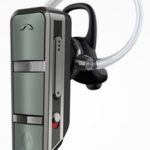
Quick question: What's cooler, a guy with a Bluetooth headset, or a Secret Service agent? If your answer was "neither," you might want to divert your eyes from Motorola's new Endeavor HX1 bone conduction Bluetooth headset. The not-yet-available Endeavor HX1 is Motorola's first attempt at marketing a Bluetooth headset with a bone conduction microphone in addition to its typical noise-canceling audio microphone.
Naturally, when a person speaks, his vocal chords vibrate and disrupt the air, and those disruptions are registered by a microphone, which converts them into electrical signals. With bone conduction, the microphone is not measuring vibrations in the air, but rather vibrations taking place within the speaker's head. It eliminates the need to pass the vibrations through the air, where they'd be subject to noise interference.
© 1998-2026 BetaNews, Inc. All Rights Reserved. Privacy Policy - Cookie Policy.