

The micro-cell era finally has a standard: Is femtocell finally a go?


Today, the Third Generation Partnership Project (3GPP) announced that it has published the first femtocell standard. Covered in the standard is network architecture, radio and interference aspects, management and provisioning, and security.
This new standard is a part of 3GPP's Release 8, and is interdependent with extensions that the Broadband Forum made to Technical Report 069 (TR-069). That document was developed to simplify the connectedness of end user equipment. It defines how hardware can automatically configure the protocols it uses in the application layer (ACS).
The new Nehalem-based Apple Xserves promise a price advantage


This morning's announcement of the first Apple servers to use Intel's Nehalem-series Xeon processors may be a bit more tentative at the core than it seems on the surface. What could be the best performers in Apple's new rack-mount lineup are actually not available yet, although this morning's announcement made it appear -- and some sources are actually reporting -- that the high-end models are available now.
What data centers can get now are Xserve models based on the new 2.26 GHz Intel Xeon E5520. But the performance and power-saving tests Apple cites this morning are focused on the 2.93 GHz X5570, and we don't yet have prices or availability data for those models. Betanews has contacted Apple in an effort to get further details.
Spybot Search & Destroy competitors are trying to force its removal
For years, Spybot Search & Destroy has been one of Fileforum's single most installed pieces of software, with nearly 67 million downloads since 2000 on our sister site alone. It's one of the Web's original anti-spyware packages, independently distributed by Safer Networking Ltd., based in Ireland and developed in Germany.
Despite a user base in the dozens of millions (if not more; Safer Networking doesn't track its users), Spybot S&D hasn't had an easy time establishing itself in the competitive anti-malware field. Because it is freeware (commercial users must purchase licenses), the application is seen as a thorn in the side of larger companies who sell security software with the same functionality.
Google extends search localization to the desktop

Users of Google's mobile services on handsets are familiar with how its search service can assume they're looking for something in its own general vicinity, even using GPS location. That level of detail hasn't always been available through desktop searches, though in recent months, I've noticed Google had been testing the concept off and on. I'd assumed the company was judging my approximate geography using my IP address.
This morning, the company confirmed that suspicion, making official that it will use IP addresses to approximate users' locations when it can, to make desktop searches more localized. In a blog post this morning, Google engineers Jenn Taylor and Jim Mueller wrote, "In most cases, we match your IP address to a broad geographical location. You can also specify your likely location using the 'Change location' link on the top right corner, above the map. We try to make our guesses as good as they can be so...you can just say what you want, and we'll try to find it right where you are."
Sun goes down: Was that IBM's plan?

With the takeover negotiations that neither IBM nor Sun would confirm nor deny having broken down (or not) over the weekend, over a final price that IBM may or may not have offered that could have been too low ($9.40 per share, but that's just everybody making the same guess simultaneously), Sun Microsystems is now being perceived -- and this much we do know -- as a company with less strategic direction than it appeared to have three weeks earlier.
One wonders whether that was the idea to begin with. Last year's captivating semi-negotiations between Microsoft and Yahoo used the press as liaison between the two parties, as a way of maintaining plausible deniability that either party was speaking to one another -- or at least, speaking seriously. The result of that escapade was a Yahoo that, for a time, resembled the residue of a late-night cooking knife informercial, which put Microsoft in a stronger position to build a comeback strategy for its online services.
The clock ticks down for Blockbuster: 35 days and counting

Blockbuster's recent filing with the US Securities and Exchange commission clearly portrays the gravity of the company's current situation.
For the company to maintain day-to-day operations, Blockbuster is in the process of refinancing its revolving and term loans, which will earn it $250 million that will come due in September 2010. However, before the refinancing can finish on May 11, certain conditions must be met before its lenders to fund the credit facility, and even if those are met, Blockbuster still may not make it.
Card skimmer found operating in the wild


It's like finding out there really are monsters under the bed: Over the weekend, a Seattle man visiting a WaMu ATM noticed there was something peculiar about the card-reader slot. There certainly was -- it was covered by a card skimmer with a battery, card scanner, and mini USB port.
The good news, as reported by Consumerist, is that this is pretty much the first time anyone involved has actually encountered a skimmer installed and operating (presumably; the investigation is ongoing) in the wild. The bad news is that the wee beastie was found not on some random gas-station cash machine, but on an actual bank-maintained ATM. Once upon a time we thought those might be safer from such tampering; so much for that security measure.
T-Mobile sharpening its Blade for May?
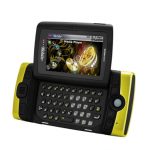
The generally reliable TmoNews is relaying information from "a trusted tipster" concerning the launch dates of various T-Mobile handsets. Eleven phones are mentioned with likely dates (not the G2, sorry). No one's safe trusting too heavily in launch dates much past midyear, but patient Sidekick 2009 (Blade) fans awaiting word on the smartphone release that's not the next iPhone and not the Pre have a date to obsess over: Wednesday, May 13. T-Mobile spokespeople had no comment on any portion of the launch-date list by press time.
Confirmed: Windows 7 users will have XP downgrade option

After a flurry of blog activity over the weekend, leading into today, concerning the extended availability of Windows XP, a Microsoft spokesperson confirmed to Betanews early this evening that general Windows 7 users will be given the option of downgrading right over Vista to Windows XP.
"This is not the first time that Microsoft has offered downgrade rights to a version other than its immediate predecessor," the spokesperson told Betanews, "and our Software Assurance customers can always downgrade to any previous version of Windows."
Zoho invites more cloud app users by embracing more IM protocols

For a number of reasons, some of them indeterminate, despite all the evolutionary pressure to move it to the next level of its evolution, instant messaging hasn't evolved as an application. One reason I've always suspected is that it's difficult for developers to find the impetus to devote the amount of effort required to evoke revolutionary change, on a platform that's offered to most customers for free. The counter-argument to that is that SMS isn't free, and yet it's stuck even further in the Stone Age.
If IM does resemble one ongoing revolution in application architecture, it's "the cloud" -- the nebulous, always-on service built to respond to user requests from wherever. Whereas at the beginning of the decade, services like AOL, Yahoo, and MSN used their respective IM platforms as weapons against one another, today's strategies -- which now includes Google -- have them opening up those platforms for generally unencumbered use by others. That hasn't exactly made Trillian for Windows and other multi-protocol IM clients the most perfect of applications just yet, but week after week, those of us who work in widely-dispersed offices do manage to get by somehow.
US and other 'advanced nations' trail in cell phone use

Denmark, Norway, and the US took the top three spots in the World Economic Forum's latest Global Information Technology Report. Rounding out the top ten were Singapore, Switzerland, Finland, Iceland, Norway, the Netherlands, and Canada, in that order.
Meanwhile, mobile phone penetration has boomed in developing countries in places like Africa and Latin America, "helping them to compensate for an often underdeveloped and flawed fixed telephone infrastructure and offering a promising tool to increasingly lift their citizens out or poverty and improve the efficiency of their markets and economies," said the just released report for 2008-2009.
TiVo Series 3 software update adds ads

In December, TiVo began to include advertisements in fast forward and pause states on its Series 2 DVRs. Yesterday, the ads reportedly began appearing on Series 3/TiVo HD units.
Users will have to upgrade their system software to version 11.0c for the advertisements to show up. TiVo community users who have received the update have not noticed any other changes besides these ads, which place a "more info about..." button on the pause screen.
PlayStation 3 takes top-selling honor in Japan, nowhere else

According to market research firmMedia Create, month-to-month sales of Nintendo's newest handheld, the DSi, have dropped 19.42%, PSP sales declined 17%, both Xbox 360 and PlayStation 3 sales dropped 10%, and Nintendo Wii sales dropped 4.5%.
Even though the PlayStation 3's sales dropped further than the Wii's in March, Sony's console actually outsold Nintendo's by a margin of 47,000 units, according to statistics released by gaming magazine Enterbrain today.
FCC's Copps renews call for a network non-discrimination principle

As first reported by Broadcasting & Cable and confirmed by multiple other sources, in a breakfast-time speech last Friday before a conference of cable TV executives, the acting chairman of the US Federal Communications Commission called once again for the drafting of an amendment of sorts to its 2005 policy framework (PDF available here), adding one new principle to its existing list of four. The "Fifth Principle," as it may come to be known for years hence, would explicitly mandate that carriers provide non-discriminatory Internet access to all available services and applications.
The origins of the "Fifth Principle," as well as the belief that one was needed in the first place, dates back to the debate over the 2006 re-merger of AT&T with its own former "Baby Bell," BellSouth. While many lawmakers were debating how best to avoid the topic of addressing the efficacy of the merger, some were drafting proposed laws that would prevent the merged entity from disabling access to competitive services through its own network.
Suggested Google-Twitter tweets for Biz Stone

Oh, Biz Stone. A blog post about the swirling rumors of Twitter's acquisition by Google? Really? I mean, you were certainly coy enough -- the post is titled "Sometimes we talk" (cue hipster shrug) and includes an emphatically noncommittal "It should come as no surprise that Twitter engages in discussions with other companies regularly and on a variety of subjects."
My dear Mr. Stone, no. This is the brave new 140-character world you created, sir, and millions of Twitterers demand that you be pithier. So let's remove that post from your metaphorical tweetstream and go with something a bit more... in keeping? Naturally I tweeted for suggestions, and received the following:
© 1998-2026 BetaNews, Inc. All Rights Reserved. Privacy Policy - Cookie Policy.