

MySpace expands smartphone support, embraces Symbian


Social network MySpace is now battling back against Facebook by adding more smartphone support to its mobile site, including new applications for both the Palm Pre and Symbian OS-based Nokia S60 phones.
Beyond the newly added Palm and Symbian, the MySpace mobile site already supports the iPhone, BlackBerry, Sidekick, and Google Android mobile platforms.
Nintendo DSi comes to US on April 5


Today, Nintendo announced that the next generation of its DS handheld gaming console will be released on April 5 in the Americas, just one day later than last month's predictions.
The DSi has been available in Japan since November, and within the first two days 170,779 units were sold, amounting to more than 85% of the initial shipment, according to Enterbrain. Both of Nintendo's premier game systems, the Wii and DS, have consistently dominated the video game market in sales, and more than 3.04 million DS units were sold in 2008.
Could Intel stop Nvidia from producing chips for Nehalem?

Last July, Nvidia announced it would make its chipsets and SLI multi-GPU technology interoperable with Intel's latest generation of CPUs, with their highly-advanced Nehalem architecture. Monday, Intel said no to that in court.
In a court filing Monday in Delaware which remains under seal, CPU maker Intel asked for a declaratory judgment against GPU and chipset producer Nvidia, stating that the terms of the companies' existing x86 technology license do not extend to the Nehalem generation. This according to Intel spokesperson Chuck Mulloy, who confirmed the filing with Betanews this morning.
HP joins the Ubuntu Linux bandwagon

HP's Linux support will no longer be limited to Red Hat and SuSE Linux. Through a new partnership with Canonical, HP is becoming one of the latest in a series of huge IT players to hop aboard the Ubuntu Linux bandwagon.
More specifically, HP and Linux distributor Canonical are now working toward full certification of Ubuntu on HP Proliant servers, according to Mark Murphy, Canonical's alliances manager.
The long road to a happy ending for Nokia and Qualcomm on 3G

Handset manufacturer Nokia and wireless chip maker Qualcomm were in and out of court for the better part of two years. Now, after a six-month truce, they'll be working together on UMTS devices for the North American market.
The companies have agreed upon S60 as the operating system, and Qualcomm's Mobile Station Modem (MSM7, MSM8 series) as the 3G chips. The latest Qualcomm MSM chipset -- the MSM7227 -- is a 12 x 12 HSPA solution with a 600 MHz applications processor, 320 MHz application DSP, and a 400 MHz modem processor designed for smartphones below the $150 price point.
New Sidekick, Pre spotted 'in the wild'
Sightings of both the Sidekick 2009 and the Palm Pre -- both wildly anticipated smartphones not yet available to the masses -- have been inflaming the gear-gossip blogs for days in the wake of the the Mobile World Congress event in Barcelona.
The Pre, rumored in some highly optimistic circles to be hitting the stores on February 15 (hint: that didn't happen), turned up in sighting, conveniently showing a Monday date on the (apparently larger!) screen. The image shows only the front of the device with the screen flipped up, so it's hard to see much in the way of changes, though one does notice that the buttons look slightly different and the body's a bit curvier along the edges.
Sun gives key management an open-source twist

Key management standards may not be the most glamorous aspect of IT security, but when you're trying to get your encryption-using devices to interoperate with your network, it matters. Now Sun's offering an open-source option.
The Crypto KMS Agent Toolkit is Sun's version of a KIMP (Key Management Interface Protocol) is, according to the company, the world's first generic communication protocol between a Key Manager and an encrypting device. It's available as part of the OpenSolaris Project.
Facebook backpedals on terms snafu, seeks advice

Switching it up a bit from its usual privacy-undercutting changes to their Terms of Service, Facebook's recently changed ToS slipped in new language that many users identified as a violation of personal privacy and copyright... and, after mass uproar, promptly rolled them back again.
Controversial Facebook head Mark Zuckerberg described the changes to the ToS as an attempt to "clarify a few points for our users," but close reading of the new terms indicated it might not be that simple. (Of course, Zuckerberg claims in the same post that "In reality, we wouldn't share your information in a way you wouldn't want," an assertion that anyone who's attempted to quit the service and remove all their information can easily refute.)
RIM settles options kerfuffle with SEC
An SEC inquiry into whether their options-granting practices were on the square has concluded for Research In Motion, which has -- jointly with four of its senior executives -- entered into two settlements over the matter.
Co-CEOs Jim Balsillie and Mike Lazaridis, former CFO Dennis Kavelman, and former VP of finance Angelo Loberto, along with the company as an entity, were accused of backdating stock options -- a situation that got them into hot water with both Canadian and American regulators. Last week the Ontario Securities Commission announced that it had reached a deal with the company and the four named execs plus other members of the board of directors.
Some analog TV stations have already thrown the switch

It was supposed to be a day of reduced confusion, but in many places around the US today, some major affiliate stations have gone dark on their old analog frequencies...while others go on.
Back in 1953, a family whose name would come to be synonymous in Oklahoma with two things -- broadcasting and waffle syrup -- launched a cottage television institution in what was surprisingly one of the most competitive markets in the country. For most of the time from then until now, it has been the standard-bearer for weather alerts, even to the point where its over-the-top advertising was parodied by The Daily Show's Jon Stewart. Still owned by the Griffin family today, KWTV in my old hometown of Oklahoma City has already said goodbye to Channel 9 -- what we Okies might call, "the lady that brung you."
NPD: 2008 was a bad year for operating systems

Market research company NPD released its non-game software sales figures for 2008, which showed a nearly 10% overall decline, with operating systems taking the greatest hit, selling 40% less than the previous year.
While the data does not take enterprise software deployments into account, the numbers are quite dramatic when considering the lifespan of the operating systems in the consumer market. Though due consideration can be given to the various Linux operating systems, any changes within their 1% collective market share would have only a minimal effect on the health of the OS market overall.
HTC rolls out 'Magic,' the world's second Android phone
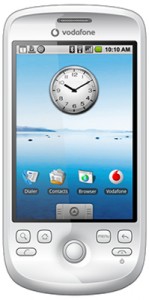
HTC today unveiled a second Android phone to follow the G1/Dream. It's a tablet-style device called "Magic," first announced for several European markets although not yet for the US.
Set for availability this spring, HTC's Magic is slimmer than HTC's original Dream phone, but it adds new features driven by new "Cupcake" firmware.
A fighting chance for EchoStar against TiVo

Today marks the resumption of what has become a remarkable showdown between satellite TV provider EchoStar and its one-time subsidiary Dish Network, and store-and-forward TV pioneer TiVo. Last October, in what appeared to be the final chapter of a long story, the US Supreme Court declined to hear EchoStar's appeal of a judgment declaring it and Dish in violation of TiVo's patents regarding its "Time Warp" functionality. The $105 million settlement fee has already been accounted for by TiVo.
A hearing scheduled for today in US District Court in Texarkana was originally supposed to feature EchoStar's presentation of a software-based "workaround" that would enable its and Dish's set-top boxes to implement a live recording feature similar to Time Warp, but without using TiVo's methodology. But last month, the US Patent and Trademark Office decided it would re-examine the validity of TiVo's patent -- a decision which doesn't necessarily call into question the validity unto itself.
FCC white space device rules to take effect next month
The FCC's final Report and Order regarding the use of radio spectrum (including the portion freed up after the DTV transition) was made public today, revealing that the guidelines for developing white space devices will take effect March 19.
These guidelines are regarded as the first step toward the actual production of new communications devices that capitalize on the newly vacated spectrum. Though the document was finalized in November, before the DTV transition was delayed,
Jake Ward of the Wireless Innovation Alliance informed Betanews this afternoon that the actual rulemaking will likely be unaffected by the transition's delay.
iPhones will be among first to get Yahoo Mobile service

Yahoo's announced Mobile service for smartphones, which goes into beta today, will be available in March for iPhones, but not until May for hundreds of other models running Windows Mobile, as well as other major brands.
Those brands that will have to wait it out include Motorola, Nokia, RIM, Samsung and Sony Ericsson.
© 1998-2026 BetaNews, Inc. All Rights Reserved. Privacy Policy - Cookie Policy.