

Review: Apple's 800MHz PowerBook G4

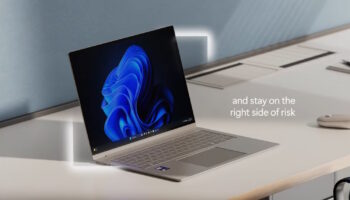
Many computer manufacturers are hawking thin-and-light notebooks as the next big thing. Dell Computer, Gateway, Hewlett-Packard, IBM, Sony and Toshiba are some of the big name companies delivering small portables, some weighing under 3 pounds. But none of these companies has achieved notebook nirvana, a slim-and-light model with a beefy display and enough power to replace a desktop computer. Consumers that want desktop power must buy heavy-set portables, many weighing as much as 8 pounds or more. Those people looking for true portability have had to accept less computing power and smaller displays.
Until now.
Microsoft Ships Freestyle Beta PCs to Testers

The lucky few selected to beta test Windows XP's new Freestyle technology have a new toy to play with. Microsoft shipped to Freestyle testers a beta version of the multimedia interface designed to be used with a remote control from across the room.
"The Freestyle beta release kit will include a PC and all the necessary equipment required to setup and run Freestyle, along with support and bug reporting information," Microsoft beta coordinators wrote in an e-mail to testers. "As a reminder, you will need to provide a monitor that can support 1024 x 768 resolution."
Microsoft Preps Age of Mythology Alpha
Microsoft and Ensemble Studios are looking for 10,000 testers to participate in an multiplayer alpha trial of the upcoming real time strategy game, Age of Mythology. An extension to the popular Age of Empires series, Age of Mythology casts players as one of nine civilizations sent to battle with the help of mythological creatures and mighty gods.
"By using a new state-of-the-art 3-D engine, our designers are able to do more than what was ever possible with the previous Age of Empires games," said senior game designer at Ensemble Studios Bruce Shelley, in the initial Age of Mythology announcement. "We are now able to produce stunning visual effects, wild mythological beasts and hundreds of on-screen units."
MS Pushes Standardized DVD Writing for Longhorn
With Longhorn set to enter beta testing next year, Microsoft has begun to make plans for supporting new hardware technologies in the upcoming version of Windows. At the top of the list is the inclusion of native DVD write capabilities, with floppy-like drag and drop writing support. But multiple non-interchangeable DVD formats may lead Microsoft to back a single technology and force manufacturers to reach a consensus on standards.
Writable DVDs are beginning to catch on for backup purposes, transfer of multi-gigabyte files, storing video from a camcorder and other areas where CDs do not provide enough space. And as prices continue to drop, many computers are shipping with the new drives. However, disagreements between industry leaders have led companies to back different formats and thus fragment the growing consumer market.
MSNBC Plays With 'Corona' Beta
Microsoft revealed Wednesday that MSNBC.com, the company's joint venture with NBC News, has been running a beta version of Corona to deliver streaming video for the last two months. MSNBC is utilizing the technical beta of Windows .NET Server to deliver over 10 million streams per month.
The next-generation Windows Media Services in .NET Server provides for the foundation of the Corona platform that is expected to up the ante in Microsoft's quest for digital media dominance.
AOL Releases 8.0 Beta, Omits Gecko
UPDATED America Online this week released a beta version of its upcoming AOL 8.0 client, code-named "Spacely." Version 8.0 sports slight enhancements over its predecessor, but lacks the company's Gecko browser engine that was expected to be included in lieu of Internet Explorer. The update instead puts an emphasis on broadband support as more users make the switch from dial-up Internet connectivity.
AOL has been aiming to integrate Gecko, which lies at the core of Netscape, into its client ever since an agreement with rival Microsoft to include IE was not renewed in early 2001. The company began testing a browser agnostic technology dubbed Komodo shortly thereafter, which allowed CompuServe to switch between Internet Explorer and Gecko.
PalmSource Ships Palm OS 5
PalmSource, Palm's software unit, announced Monday that the next version of its handheld operating system has gone gold and is now shipping to developers and licensees. Palm OS 5 adds security enhancements, wireless capability and support for the more powerful ARM-compliant processors. The new OS will be backwards compatible with current software titles, allowing developers to make use of the same tools they currently utilize.
Palm is expected to release an ARM-based handheld running Palm OS 5 this fall. Sony will also integrate the next release, which improves multimedia support, into its upcoming CLIE line of handhelds.
SONICblue Seeks Beta Testers
With a slew of new products planned, digital media firm SONICblue is looking for beta testers to trial their next generation hardware. Because some of the beta programs run concurrently, the company is looking to build a large pool of testers of all types - not just those with tech savvy.
Upcoming beta tests could potentially include SONICblue's replayTV line, OEM versions of Rio flash memory players, the Rio Riot hard disk player and multiple Go-Video products.
Commentary: Digital Media Moguls
Analog is dead. Long live digital.
Digital media is storming the consumer market, unleashing new territory to would-be DJs, movie makers and photographers. The rise in popularity of digital music, photos and movies naturally has led to a new class of personal computers that bring once expensive music, movie or photo technologies into the home. These are the ultimate entertainment computers--and not for those with feint-of-heart wallets. While entry-level systems for doing most digital media tasks sell for under $1,500, the real exciting stuff costs nearly twice that.
Microsoft 'TrustBridge' to Secure Identity Sharing
Redmond today unveiled the Federated Security and Identity Roadmap outlining plans for standards-based security in Microsoft products, and announced an upcoming set of technologies code-named "TrustBridge" that will enable the sharing of user identity information between applications and organizations.
TrustBridge technologies will run on Windows .NET Server and build upon Web services protocols including the WS-Security specification introduced in April.
Windows XP SP1 Beta 1 Released to Testers
Microsoft on Wednesday made available to testers the first beta of Service Pack 1 for Windows XP Home and Professional editions. Company officials downplayed reports of a radical upgrade, calling SP1 "in most ways a traditional service pack" that is slated to include security fixes, compatibility updates and new drivers issued since XP's launch last October. Over 10,000 beta testers will be given access to download the SP1 beta starting today.
"Of note, included in the security updates will be fixes developed during the security push done by the entire Windows division as part of Microsoft's renewed emphasis on security for customers," a Microsoft spokesperson told BetaNews. "In addition to these traditional elements, Microsoft is fulfilling its commitment to implement the changes required by the consent decree signed with the Department of Justice and nine settling states."
Beta Test USB 2.0 Storage Device
Centercode is looking for people to beta test an innovative and new storage product designed for operation with USB 2.0. Applicants must have USB 2.0 support embedded on the motherboard or via adapter card. The next-generation USB connection increases available bandwidth for devices to 480Mbps, thus making the technology ideal for attached storage. Testers must run Windows 98 or later, or Mac OS 8.6 or later.
Qualified applicants must:
Mozilla 1.0 Hits the Streets
An announcement that has sent many venturing outside to look for the passing pig, mozilla.org today released the final version of Mozilla 1.0. In development for over four years, the open source cross-platform browser suite was built by a community of thousands of programmers. At the core of Mozilla lies Gecko, a powerful rendering engine that is already used in many third party applications. A notice on the Mozilla Web site summed up what the masses have been waiting to hear: "Stick a fork in it. It's done."
Mozilla includes a Web browser, e-mail reader and chat client. It additionally serves as a cross-platform toolkit that can be utilized by developers to create Internet-centric applications - from Web browsers to anything that uses HTML or XML. Netscape, the company that founded mozilla.org, has based its own browser around the open source project and Netscape version 7.0 will mark the commercial release of Mozilla 1.0.
Apple Announces QuickTime 6 Public Beta
Despite ongoing negotiations with MPEG LA over MPEG-4 licensing fees, Apple on Tuesday issued a Public Preview of QuickTime 6 - the first mainstream media player to support MPEG-4. For both Windows and Mac, the beta includes instant-on streaming and support for AAC, the next generation MPEG-4 audio format.
"QuickTime 6 delivers the world's first complete media solution for creating, streaming and viewing MPEG-4 content," said Apple CEO Steve Jobs in the announcement. "MPEG-4 is an open standard being adopted by wireless, computer and entertainment companies around the world because it delivers the highest quality digital video, and allows content creators to scale the quality/bandwidth tradeoff all the way from MPEG-2 quality to dramatically lower bandwidths for streaming over the Internet."
Microsoft Eases Java to C# Transition with New Beta
Microsoft today released the second beta of the Java Language Conversion Assistant (JLCA), designed to automate conversion of Java source code to its .NET-based C# language. Microsoft hopes to ease the transition for Java developers looking to build XML Web services by migrating existing language syntax and library calls. Redmond has been working hard to lure developers away from Sun's Java technology and establish .NET as the dominant platform for Web services.
"Microsoft is committed to providing a path for developers to build XML Web services in the programming language of their choice," said Tom Button, Microsoft's vice president of the Developer Platform, in today's announcement.
© 1998-2026 BetaNews, Inc. All Rights Reserved. Privacy Policy - Cookie Policy.