Microsoft brings Azure, Surface, and Lumia to the Special Olympics


Everybody deserves the opportunity to compete and feel good about themselves. The Special Olympics is a great example of this; people with intellectual disabilities compete against each other in sports to build confidence, and most importantly, have fun. The non-profit organization is essential for many people the world over.
Today, Microsoft announces that it is partnering with the organization to modernize its technology with a big focus on the cloud. The Special Olympics will be getting all kinds of cool stuff, like Lumia smartphones and Surface tablets.
Microsoft is the tenth most profitable company in the world


Just a few days ago Microsoft released its financial data for Q1 2015 (yeah, the timescale is weird) and we learned a little about where the company's money is coming from. According to data compiled by FactSet and published by USA Today Microsoft is in fact the tenth most profitable company in the world.
The list has been put together by taking into account companies' "net income before discontinued operations and extraordinary items for their latest fiscal year", and it finds Microsoft in interesting company. Sandwiched between oil giant BP and banking behemoth Wells Fargo & Company, Microsoft just managed to sneak into the top ten with $86.8 billion in revenue.
Beat that Google! Office 365 subscribers get unlimited OneDrive storage
Microsoft just stoked the fires of the cloud storage wars once again. There have been various updates to OneDrive in recent months. Microsoft lifted the 2GB file size limit all the way up to 10GB, and we showed you how to up your free storage to 15GB. But if you’re an Office 365 subscriber, things just kicked off -- storage limitations are a thing of the past.
Starting today, Office 365 Home, Personal and University plan subscribers have unlimited OneDrive storage. Store as much as you like in the cloud for free. Well, free if you ignore the subscription you've paid, or continue to pay each month. The roll out to the consumer level subscriptions starts today, but you'll need to take action if you're interested.
Hungary proposes taxing internet usage -- will other countries follow suit?

You might think that you've already paid enough to get online. You bought your computer (or phone, tablet, whatever...), you pay line rental to your phone provider, you pay your monthly broadband charges, you pay the bill for electricity all of this requires. How does the idea of an extra charge on top of this sound? No? That's the general feeling in Hungary where an "internet tax" has been proposed by Viktor Orban's right wing government.
The Prime Minister proposes taxing internet usage in a similar way to mobile phone companies -- by tracking traffic levels. How much could this end up costing? Well, it could very quickly add up. The draft law suggests a fee of 150 forints (around $0.60) per gigabyte. To put that in perspective, it would cost more than $2 to download the Windows 10 Technical Preview, and around the same amount to upgrade to the latest build 9860.
How to make Windows 10's Search and Task View buttons die, die, die!
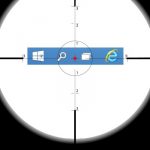
There's a lot to like about Windows 10, particularly if you're already a fan of Windows 8.x -- there isn’t all that much that's new at this stage. It's not all good news however, and there's also quite a lot to dislike. One thing that has cropped up time and time again in user feedback is the fact that the Search and Task View buttons that appear in the taskbar cannot be removed.
At least, there is no built in option to remove them. Where there's a will, there's a way and some enterprising users of the Technical Preview have found ways to banish the buttons that are seen by many as being pointless.
Microsoft ditches Nokia brand for Windows Phones

Microsoft officially announced today that the Nokia branding will not be used in conjunction with its future Windows Phones. The software giant will sell its upcoming smartphones as Microsoft Lumias. However, it will continue to make use of Nokia's name for dumb phones.
The tech media may act surprised, but, in fact, we have known that this was bound to happen for more than a year. In early-September 2013, when the sale of Nokia's Devices & Services to Microsoft was announced, the terms revealed that the software giant would eventually have to drop the Nokia branding.
Surface generated almost $1 billion revenue for Microsoft last quarter
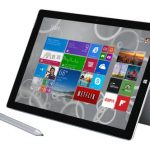
Anyone who was under the impression that Surface was a failure for Microsoft need look no further than the latest earnings release for proof that they're wrong. In the quarter ending September 30, Microsoft pulled in $23.20 billion in revenue, and $908 million of this came from the Surface division.
All told, FY15 Q1 represents record first quarter revenue for Microsoft, and it can be at least partly attributed to the influence of Satya Nadella, as well as the restructuring surrounding Nokia Devices and Services. There was a strong performance in the Devices and Consumer divisions, with revenue increasing 47% to $10.96 billion, while commercial revenue rose 10% to $12.28 billion.
Microsoft co-founder Paul Allen pledges $100 million to tackle Ebola

Saying "the Ebola virus is unlike any health crisis we have ever experienced and needs a response unlike anything we have ever seen," Paul Allen, co-founder of Microsoft, pledged millions of dollars to help tackle the virus. The billionaire philanthropist increased his commitment to "at least $100 million" and called on others to contribute as well.
Ebola has now claimed the lives of more than 5,000 people, and Allen is keen to help fund not only heathcare professionals and treatments, but also the evacuation of international aid workers. Allen's #TackleEbola website is being used as a hub to raise money for a number of individual projects and causes such as household protection kits and hand-washing stations.
42 percent of American PC users suffer daily or weekly attacks on personal data

A new survey conducted by Microsoft shows that more than one in four PC owners in the US is suffering weekly, or even daily, attempts by criminals to gain access to their private data. Microsoft found that 22 percent of tablet users suffered similar data access attempts, and that general levels of concern about scams has increased. While "traditional" scams -- such as those asking for upfront payments or relating to fake lottery winnings -- have actually decreased, there are now more social media-based scams than a couple of years ago.
It's not all bad news. While scams might be on the increase, web users are seemingly more aware of the risks involved in using the internet and take proactive steps to protect themselves and their data. As more people use mobile devices to get online, more phone and tablet users are taking precautions.
Microsoft launches lockscreen apps for Android, Windows Phone

Microsoft app launches are usually predictable. Most are offerings which aim to get us hooked on the software giant's most-prominent products, like Office, OneDrive, Outlook.com and Xbox. But, every once in a while, Microsoft does something out of the ordinary, like it wants to tell the world that, much like startups, it too is capable of intriguing and exciting things.
After launching a lovely keyboard for Android Wear, Microsoft just released a whole bunch of apps for Android, iOS and Windows Phone, made by an in-house team of "hackers, makers, artists, tinkerers, musicians, inventors" called Microsoft Garage. The most interesting offerings are Torque, which my colleague Brian Fagioli just covered, and two lockscreen apps, for Android and Windows Phone.
Forget Facebook, Microsoft now has a 'share with Yammer' button


Okay, that may be a bit over the top. I doubt most users will be forgetting Facebook anytime soon, but it isn't the only social network. Don't forget Microsoft owns Yammer, which is geared more towards business than personal use. That doesn't mean it should be left out of the equation though.
In an effort to cash in on the social sharing craze, Microsoft is bringing Yammer to web sites. Yes, the business network will be included with Facebook, Twitter, Google+ and the rest of the set, allowing users to share stories.
Windows 10 to include built-in two-factor authentication

We've looked at the two public builds of the Windows 10 Technical Preview -- the initial, disappointing, embryonic build 9841, and the very slightly less disappointing build 9860 -- but of course the best is still to come. There are many features we expect to find their way into the final build, such as Cortana, and there are sure to be many surprises. One interesting inclusion is built-in two-factor authentication.
The presence of this valuable security feature is revealed by Jim Alkove in a post on the Windows blog in which he talks about the importance of identity protection and general security. He explains that Windows 10 will start to move users away from single factor authentication -- the humble password -- in favor of more secure options.
Microsoft is killing Xbox Music free streaming

Microsoft is pushing music fans towards Music Pass by cutting off one supply of free streaming music. On December 1st, the free streaming feature of Xbox Music will be no more, leaving Windows 8, Windows 8.1, and web users looking for new ways to satisfy their music streaming cravings.
In an announcement posted on the Xbox website, Microsoft explains that it wants to encourage music fans into signing up for a paid Xbox Music Pass. The posts explains that there is a free 30 day trial available, but once this is up, the charge is $9.99 per month. Is this likely to fly with users who have been enjoying music for free? That remains to be seen...
Kinect apps come to the Windows Store, Kinect SDK 2.0 and adaptor kit launch

Kinect has moved on. Once a peripheral that encouraged gamers to dance manically in front of their consoles, it has now evolved into something rather more sophisticated. As part of Kinect's on-going development Microsoft today released Kinect SDK 2.0 following the developer preview program from last November. Developers not only have scores of improvements to enjoy, but they now have the ability to deploy Kinect apps to the Windows Store.
This news goes hand in hand with the release of a new Kinect adaptor. The adaptor makes it possible to take an Xbox One Kinect and connect it to a PC or tablet. There's no need to choose between a Kinect for Windows v2 and Kinect for Xbox One as they both now perform identically.
IBM and Microsoft team up to offer greater hybrid cloud choice


One of the problems that enterprises often see in implementing cloud computing is that they risk getting tied into a single supplier for software and platform.
This is leading to more interest in 'hybrid cloud' solutions which allow the mixing and matching of features from different suppliers. Today industry giants IBM and Microsoft announce that they're working together to provide their respective enterprise software on Microsoft Azure and IBM Cloud.
© 1998-2026 BetaNews, Inc. All Rights Reserved. Privacy Policy - Cookie Policy.