Everything you need to know about the Windows 10 Start menu

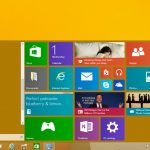
I switched from Windows 7 to Windows 8 from day one, and although I’ve dabbled with Start buttons, Classic Shell being the preferred choice, I learned to live with the Start screen, something that became easier once Microsoft released Windows 8.1 and 8.1 Update. But now that Windows 10 Technical Preview is here, it’s time to once again embrace the Start menu.
Windows 10’s Start menu is the perfect blend of Windows 7 and Windows 8.x. Click the Start button and the menu appears, displaying icons on the left and tiles on the right.
Windows 10 Technical Preview is live -- download it now
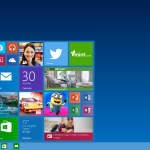
Microsoft surprised everyone yesterday by announcing that the next version of Windows would not be Windows 9, as was widely expected, but Windows 10. The new name makes little sense really, but that doesn't matter because the new operating system looks good, and should please current users of both Windows 7 and 8.x.
Before it launched Windows 8, Microsoft released preview versions of the OS, allowing people to test what was a radically different UI. With Windows 9, the tech giant is taking the same approach, but with one fundamental difference -- it promises to listen to what users think of the OS, and this feedback will help shape the direction of Windows 10. If the company had done that with Windows 8 there's a very good chance things might have worked out differently for the tiled OS. If you're keen to get your hands on the technical preview, the good news is the wait is over and it's now available.
Microsoft launches Sway -- Office's new idea collection tool


Having unveiled Windows 10 yesterday, Microsoft today welcomed a new addition to the fold in the form of Sway. This is the latest member of the Office family and it's being billed as a way to "reimagine how your ideas come to life". What does this actually mean? In many ways, Sway is an extension of OneNote. It's a web-based way to collect content, store images and text, add videos, and generally piece together everything you might need for a presentation, project, or idea. Sway is currently a preview product and, in keeping with Microsoft's "mobile-first, cloud-first world" there's a strong focus on cross-platform compatibility and cross-device syncing.
Sway is an interesting blend of existing Microsoft products, but it also brings in some new ideas. It's integrated with OneDrive, and has the note-taking features of OneNote. The various templates that can be used to present the data that is collected gives it something of a feel of PowerPoint, but it could also be used for very simple planning and project management like a cut-down, accessible version of Microsoft Project. It's all web-based and Microsoft is touting it as a "new way for you to create a beautiful, interactive, web-based expression of your ideas".
Nokia Lumia 830 now available


Nokia Lumia 830 is meant to act as a gap-filler in Microsoft's Windows Phone 8.1 line, slotting in-between the Lumia 930 flagship and the Lumia 735 budget-friendly offering. It's a mid-ranger, in both hardware features and price. It is also the successor to the two year-old Lumia 820, as its name implies.
Microsoft has high hopes for Lumia 830, calling it "the first affordable flagship" and marketing it as cheaper alternative to the likes of Apple iPhone 5s and Samsung Galaxy S5. It's a strategy which could pay off in emerging markets, where consumers want premium devices but cannot afford the cost premiums. We will have to see how the market reacts to Lumia 830, which goes on sale starting this week.
Windows 8.x goes back into reverse gear, losing the most usage share yet

Windows 10 really can’t come soon enough for Microsoft as its predecessor is continuing to tank. In August the tiled OS actually gained usage share -- according to web analytics firm NetMarketShare -- which was unusual as 8.x had lost users in the previous two months. But any suggestions of a recovery are swiftly crushed looking at September’s figures. Both Windows 8 and 8.x lost a load of usage share last month, while Windows 7 reached an all-time high. It’s Windows 7 users Microsoft really needs to be aiming for with Windows 10 (and if it can tempt XP users too, so much the better). In August, Windows 8 managed a 6.28 percent share of the desktop operating system market, but lost 0.69 percent in September. Windows 8.1, an OS which really should be growing, went from an all-time high of 7.09 percent to 6.67 percent, a drop of 0.42 percent. In total, Windows 8.x lost 1.11 percent share. Windows 7 on the other hand went from 51.21 percent in August to 52.71 percent in September, a gain of 1.5 percent. That’s its highest point ever. Windows XP, which should be losing share, dropped just 0.02 percent, going from 23.89 percent to 23.87 percent. So September was another dreadful month for Windows 8.x. It’s no wonder Microsoft decided to skip ahead to Windows 10 in an attempt to really distance its future OS from the current one.
// Photo Credit: i3alda/Shutterstock
Watch the Windows 10 presentation
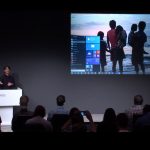
Microsoft disappointed a lot of people yesterday by not livestreaming its Windows 10 reveal. It was a strange move considering that most tech companies offer a stream these days (and even a bad livestream, as Apple gave us for the iPhone 6 launch, is better than none at all).
The reason why Microsoft didn’t offer a stream is that it wasn’t a product launch as such, or even a presentation aimed at consumers. The company revealed the name -- Windows 10! -- talked about the benefits for the enterprise, and then quickly ran through an early build of the product. But while there was no livestream, the event was recorded, and it’s now available to watch.
With Windows 10, Microsoft leaves lots of questions unanswered

So… we now know that Windows 9 is by far the least successful version of Windows ever, grossing Microsoft a total of $0. But Microsoft is as keen as ever to look to the future, and it's pinning its hopes on the newly revealed Windows 10. At the unveiling in San Francisco we learned quite a lot about the upcoming version of the successor to Windows 8.1 (yep... it's going to sound weird for a long time), but there were also a lot of unanswered questions. It was interesting to see that the demonstration used build 9841 which we have already seen in leak, and in this regard there were few surprises. Between the release of Windows 10 Technical Preview Microsoft still has a lot of work to do, and a lot of people to convince to upgrade.
What do we not yet know? We don’t have a release date, at least nothing that has been pinned down. We know it will be some time in the second half of 2015 -- if everything goes to plan -- but that's quite a big Window. We also don’t know what costs, if any, might be associated with the operating system. It has been suggested that Microsoft would make Windows 10 available free of charge, but nothing official has been said on this front. We have no idea what sort of upgrade path may be available -- would this be Microsoft's opportunity to usher everyone away from Windows XP once and for all? Simply offer a free upgrade to an operating system that addresses the issues users have raised and the security problems associated with an ancient version of Windows should diminish.
Microsoft takes the wraps off Windows 10 -- No, seriously
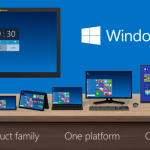
Microsoft has finally announced its new OS. The Wi-Fi password at today’s intimate San Francisco event was "Windows 2015", leading some to speculate that Microsoft might have chosen to return to naming its OS after the year of launch (a nod to Windows 95/98), but that turned out not to be the case -- a wise move. So what name would the tech giant choose? Not Windows 9, the obvious and expected pick, nor Windows One, the rumored alternative.
No, to the surprise of everyone, Microsoft has revealed that the next version of its operating system will be called… drum roll… Windows 10! Wait, What? Way to confuse consumers Microsoft. I guess Windows X was too close to OSX. Or maybe Microsoft choose Windows 10 because 7 8 9 (seven ate nine)? Infoworld's April Fool's joke got it right.
Windows 10 -- What to expect from the new OS [updated]
Microsoft has announced its new OS today, and although we’ve already seen various leaked images and videos, this was our first official look at Windows 10 (not Windows 9, as everyone was expecting), Microsoft's successor to the much maligned Windows 8.
The demo itself was very short, and the technology preview isn't yet available, but we already have a good idea of what the new operating system will offer. Here's a guide to the main features.
Microsoft rolls out the new MSN, rebrands Bing apps for Windows, Windows Phone

Microsoft did something rather unexpected earlier this month. The software giant unveiled a revamped MSN, saving the online portal from oblivion -- its biggest merit lately is being the default website for Internet Explorer. The new MSN looks great, connects users to Microsoft's consumer-facing cloud services, and can be tailored to suit their preference. It also makes it easy to trigger a search across the InterWebs. Heck, I have even said it might work as the Bing landing page.
Fast forward to today and Microsoft announces that more than 10 million users have tested the new MSN, with more than 80,000 of them also submitting feedback. Those numbers look really good. And they should, considering the online portal's Microsoft-focused audience. The feedback it has received must have been good also, as Microsoft announces it is rolling out the new MSN in the next three days.
Chromebooks are in trouble -- HP unveils $199 Windows laptop and low-cost tablets

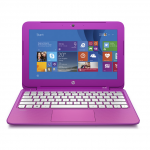
When I bought my first Chromebook, the 2012 Samsung model, I did it mostly for one reason -- price. I drove down to my local Best Buy and was blown away by how inexpensive it was; at $249 it looked like a MacBook Air and promised good battery life. Even though I knew the limitations of Chrome OS beforehand, I still handed over my money thinking I could find a place for it in my home. For the most part it was OK; I mean, it changed the way I thought about computing, but it soon became apparent that it could not replace my Windows machine. I didn't return it; I kept for basic typing on the go, but I later sold it as it collected dust. You see, my iPad Air when coupled with a keyboard-case was a better portable machine.
Now, in 2014, Chromebooks are making huge strides in homes, schools and the enterprise, but Windows still reigns supreme. While I do recommend Chromebooks for people low on cash that only have basic computing needs, today this changes. You see, HP announces the $199.99 Stream 11 laptop, and with a price that low, why would you bother with Chrome OS?
CallTower Cloud-Hosted Lync: PSTN-enabled VoIP UC without the mess [review]


A few weeks back, I finally had a really good chance at stress testing our company's still-fresh hosted Lync solution from CallTower. Merging calls. Transferring calls. Starting ad-hoc conference calls with clients. All the while IM'ing my internal staff and fellow clients, and checking voicemails that were coming through as MP3s in my email along with associated text transcriptions.
If you think I was sitting at the comfort of my desk with the power of a desk phone at my side, you guessed wrong. I was nearly 900 miles away from our home base in Park Ridge, out in the beautiful city of Stamford, CT helping clean up a messy VoIP rollout for a customer who needed some dire help.
Windows 9 download link leaks ahead of Technical Preview launch

This week we should finally be able to get our hands on Windows 9 code direct from Microsoft. There are only a couple of days to go until the Technical Preview is officially unveiled at an event in San Francisco, and excitement has been mounting. Slightly ahead of schedule, a page has appeared on the Microsoft website that includes a download link to the 32- and 64-bit versions of the Windows Technical Preview for Enterprise. Intriguingly, the page refers to a version of Windows named Windows TH, but it's not clear that this is actually the name that will be used.
Before you get too excited about grabbing the latest Windows bits, it seems that the page is just a placeholder for now. The download button currently links to a non-updated version of the TechNet Evaluation Center, but a link to the download page that will be used was live briefly. It revealed that the US version of the Technical Preview weighs in at 3.16 GB and 4.10 GB. We've already got a pretty good idea of what to expect from the preview as there have been numerous build and screenshot leaks over recent weeks.
Apple tests the iPhone 6's durability using Windows XP

Apple has been under fire this week over claims that the iPhone 6 and 6 Plus bend when carried around in a tight jeans pocket, or someone making a YouTube video exerts a lot of force on the device. In an effort to counter this bad press, the tech giant has announced that just nine customers (to date) have contacted Apple with a bent iPhone (out of ten million), and it even went so far as to give CNBC an exclusive look inside its testing labs.
Anyone worried about how rigorously Apple tests its phones will have been calmed by the news that the iPhone 6 was exhaustively tested 15,000 times before being released, and the video showing that Apple uses only state-of-the-art equipment when testing for endurance and durability was reassuring too. Although CNBC then tweeted a picture from the labs revealing test results being recorded on a less-than state-of-the-art Windows XP system.
Microsoft lights up Seattle music festival with experimental dance Cube


Microsoft has created a four-foot high interactive art installation for Seattle's Decibel music and arts festival.
The Microsoft Cube is essentially a projection system that uses five PCs, five projectors and four Kinect sensors to create a dance party that invites onlookers to become part of the art display.
© 1998-2026 BetaNews, Inc. All Rights Reserved. Privacy Policy - Cookie Policy.