Swapping 'Surface' for 'Lumia' -- is Microsoft really about to commit branding suicide?


Boneheaded. That’s the first word that comes to mind when I think about Microsoft abandoning its Surface branding in favor of Nokia Lumia.
You see, successful branding is a tricky business. Getting people to internalize your brand or product name as part of their everyday vocabulary is a herculean task. Coke did it. So did Xerox and Kleenex. I’ve lost count of the number of times I’ve gone to "Xerox" something, or asked the person next to me to pass me the box of "Kleenex".
Windows 8.x goes into reverse gear -- loses market share as both Windows 7 and XP show growth


I’ll be honest, although Windows 8.x losing market share is a shocking state of affairs -- and a new low for an operating system which has struggled since launch -- it’s something that’s been coming for a while. Windows 8 has been dropping share since Windows 8.1 arrived, and Windows 8.1 has been growing at such a glacial pace it was only a matter of time before the losses outweighed the gains, and that’s exactly what happened in June according to NetMarketShare.
In a month where Windows 7 and Windows XP -- the OS that refuses to die -- both gained market share, "new Windows" shifted into reverse gear and began shedding users.
10 things Microsoft should do with Nokia

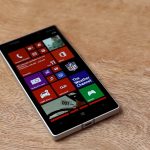
In April, Microsoft concluded acquisition of Nokia's Devices and Services division, announced in September 2013. With ownership comes responsibility, which starts with Microsoft preserving and reviving an iconic brand. Before the phone maker fumbled touchscreen smartphone market, the brand dominated the world -- commanding overwhelming cellular handset market share across Africa, Asia, Europe, and South America.
Some competitors strayed from the path Microsoft follows. For example, Google wrongly sold Motorola to Lenovo, which is reason for big smiles up Redmond, Wash. way. Hardware's research and development value to software and services cannot be overstated. Apple gets it, and I thought Big G did, too. Nokia is a vitally important asset to Microsoft that goes way beyond Windows Phone.
Windows Phone 8.1 to get folder functionality

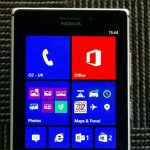
In the absence of proper folder support, a number of Windows Phone developers -- including Nokia -- have decided to take matters into their own hands, by releasing apps that give users the option to group live tiles on the Windows Phone 8 homescreen. The results are not folders, however.
The live tiles that are created are just shortcuts which open the app enabling the feature. The grouped items are displayed within that app. Welcome to Windows Phone-style faux-folders. The reason why the feature is missing out-of-the-box, even in Windows Phone 8.1, is because Microsoft has decided not to implement it, likely because the tiled operating system is meant to be experienced without folders.
Windows Phone 8.1 rolls out in July

As you may already know, Windows Phone 8.1 was showcased by Microsoft in early-April. The presentation was shortly followed by the introduction of three smartphones running the new tiled operating system, namely Nokia Lumia 630, Lumia 635 and Lumia 930, of which only the first has launched.
Because Windows Phone 8.1 is a huge upgrade over its dated predecessor, Windows Phone 8 users, naturally, want to know when the upgrade will officially roll out. The latest iteration is already offered to members of the Preview for Developers program, but, believe it or not, not to the Windows Phone 8-toting public, who makes up for the large majority of Windows Phone customers.
NSA under the microscope -- agency releases "transparency" report


NSA, Snowden, spying, yadda, yadda, yadda. This story is old, I know, but it goes on. The activities of the NSA and other government agencies have forced the online world to look very closely at how its data is being used, and how the companies handling it operate. Just about every online company worth its salt has gone out of its way to bemoan the NSA, their need to comply with data requests from the agency, and their inability to reveal everything they want to about what the NSA is asking about.
We have seen "transparency reports" from Google, Microsoft, LinkedIn and numerous other companies. But as suggested by my use of quotes, and as alluded to in the opening paragraph, there have been (severe) limits to the levels of transparency we have seen. "Quite opaque" might be a better description. Still, with the world and its dog falling over one another to release the most details, most comprehensive, and most self-congratulatory report, we probably should have predicted that pressure on the NSA would reach a point at which it felt forced to show its own hand. That time has come. The microscope has been turned around, and the security agency is now laying bare its own facts and figures.
The most popular stories on BetaNews this past week: June 22 -- 28

The battle for dominance between Microsoft and Google continued, with Microsoft offering a huge storage boost for Office 365 and OneDrive users. This was quickly trumped by Google later in the week at 1/0 2014, when the company announced unlimited storage for Google Drive for Work users. Microsoft is basking in the glory of being heralded as cooler than Apple by Joe -- and stunts like offering cashback deals to sway MacBook Air owners into switching into Surface Pro 3 certainly helps. Microsoft opened a new store on Long Island, while Google branched out into new territory with a trial run of a new domain registration service. Microsoft also ventured into new waters with its first Android smartphone, the Nokia X2.
In something of an interesting twist, Microsoft opted to use Opera Mobile as the default web browser. Opera is also returning to Linux after the surprise release of Opera 24 Developer. Linux Mint 17 "Qiana" KDE was also released. Linux also managed to hit the headlines for facilitating the hacking of Google's Nest thermstats. If this hasn’t put you off, Logitech added support to its Harmony remotes.
Windows Phone scores more premium apps -- Adobe Photoshop Express and Roku

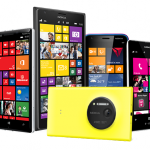
Being number three can be good. In the Olympics, it is good enough for a bronze medal. However, there are different levels of third place, as it depends on how many competitors there are.
When it comes to smartphones, Windows Phone is a distant third in a race that only has three legitimate competitors, with iPhone and Android being the other two. Microsoft’s platform however, is making huge strides and today gets two premium apps -- Adobe Photoshop Express and Roku. Apple and Google should be worried.
Google I/O 2014 Day 1: What you need to know
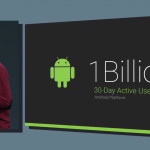
Google I/O 2014 started yesterday and, thanks to a lengthy first-day keynote, the search giant has already made plenty of headlines one after another. And for good reason, as it unveiled new software, new hardware (albeit none of it was Nexus-branded) and a number of sweeping changes to its portfolio. Say what you will, but Google sure had plenty of interesting things to show without even announcing a new Nexus tablet (as we were used to in the past two years).
The amount of information from the conference is overwhelming, so here is the tl;dr version.
Google brings out the big guns -- unlimited storage for $10 per month and Office editing

At I/O 2014 Google announced that more cloud storage will be made available to space hungry users. Google Drive for Work has a price tag of $10 per month and includes not just more cloud storage, but unlimited cloud storage. Well, there is one limitation; individual files cannot exceed 5TB, but this is, for all intents and purposes, a deal that is unlimited by most people's understanding of the word. As the name suggests, this is a product that is aimed at businesses, but at this price it is hard to imagine that there won’t be swathes of home users looking to take advantage of the package.
A few months back, Google slashed the cost of its cloud storage packages, but today's news is something quite different. Worries about security may be allayed by the news that Drive, Gmail and Calendar data will be encrypted at data centers. IT admins will also be able to audit and control options, that means internal security policies can be implemented as required.
Microsoft selects Opera as default browser for its Android phones
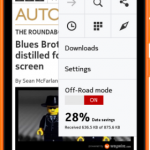
Earlier today, my colleague Wayne Williams reported that Microsoft is releasing its first Android phone. While not the first smartphone from Nokia to be powered by Google's operating system, it is the first under Microsoft's leadership. Let that sink in for a minute -- Microsoft is releasing a device powered by Linux. Has hell frozen? Are pigs flying? Surely, this is the sign of the apocalypse.
Every smartphone needs a default browser however, and the Nokia X2 is no exception. Sadly, Microsoft has not ported Internet Explorer to Android -- I would welcome that in the future though. No, it has chosen a different browser as default and it is not Chrome or Firefox, but Opera.
Microsoft launches its first Android smartphone -- the Nokia X2
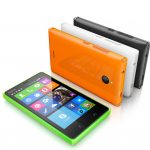
At the Mobile World Congress (MWC) back in February, Nokia surprised people with a new Android-powered smartphone series. The Nokia X line consists of the X, X+ and XL, with the devices designed to fit somewhere between Nokia's low-end Ashas and high-end Windows Phones. There was speculation that once Microsoft had taken over the Finnish manufacturer's mobile business that this new line would be killed off -- keeping the focus solely on Windows Phone devices -- but that turns out not to be the case.
Today Microsoft announces the Nokia X2, which the tech giant introduces "as the newest addition to the expanding Nokia X family of affordable smartphones designed to introduce the 'next billion' people to the mobile Internet and cloud services". Like the Nokia X, the new device gives users access to both Android apps and popular Microsoft services, like Skype, Outlook.com, and OneDrive.
Microsoft ups the ante with 1TB of free cloud storage for Office 365, 15GB for OneDrive

Just three months ago we saw the start of the cloud storage price wars when Google slashed its prices. Today Microsoft has retaliated by offering a massive increase in the amount of free cloud storage available to OneDrive and Office 365 customers. The company's recently renamed storage service jumps from 7GB of free space to 15GB -- although those with reasonable memories will recall that it is not all that since SkyDrive customers were given 25GB free of charge. But it doesn’t end there. Every version of Office 365 will now come with 1TB of free space as standard.
The figure for OneDrive has not just been plucked out of the air. "Our data tells us that 3 out of 4 people have less than 15 GB of files stored on their PC. Factoring in what they may also have stored on other devices, we believe providing 15 GB for free right out of the gate – with no hoops to jump through – will make it much easier for people to have their documents, videos, and photos available in one place."
Microsoft really, really, really wants MacBook Air users to buy Surface Pro 3
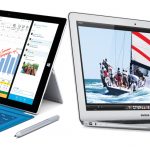
It is no secret Microsoft is marketing its new Surface Pro 3 Windows 8.1 hybrid as a direct rival to Apple's venerable MacBook Air ultrabook. As someone who owns the latter of the two I can see why. Both are premium devices that are similarly priced (Surface Pro 3 is more expensive, however, when purchased with Type Cover) and offered in near-identical configurations, power-wise, which yield comparable battery life (MacBook Air is better in this regard, even if only by mere hours). However, as I wrote in a past article, Surface Pro 3 offers extra features, like a touchscreen and tablet credentials, which can, arguably, make it more appealing.
As I said before, Microsoft's best chance of persuading MacBook Air users to switch to Surface Pro 3 is come upgrade time, as, right now at least, this upgrade, as appealing as it may be for those willing to dump OS X for Windows, is not worth the cost penalty. Microsoft appears to be aware of this, as it launched a new trade-in offer for MacBook Air owners. And, unexpectedly I might add, the Surface Pro 3 maker offers quite a bit in return.
Microsoft is cooler than Apple

Third in a series. In business perception is everything. Many companies succeed or fail not because their products are great but their brands are perceived to be that way. Apple is a remarkable perception manager. Consider iPhone 5s, which features and benefits fall far behind many competing devices. Rather than innovate, the fruit-logo launches an evocative marketing campaign -- "You're more powerful than you think" -- that makes the smartphone look better. Improved. The ads are compelling because they communicate: Your life will be better, you shall achieve your dreams, by buying iPhone 5s.
Meanwhile, competitors like Microsoft truly innovate and take the kind of risks that once defined Apple. Last year I asked: "Will 2013 be another year of Apple iteration masquerading as innovation?" Yes, and halfway into another year, little is changed. The answer is the same. Last month I explained "Why Apple no longer innovates". OS X Yosemite and iOS X 8 are prettier, but so what? Meanwhile, Windows 8/8.1 is a radical rethinking of the platform -- as is Surface, which delivers refreshing change to computing. What's that long-forgotten Yellow Pages tagline? Let your fingers do the walking. They do on Surface.
© 1998-2026 BetaNews, Inc. All Rights Reserved. Privacy Policy - Cookie Policy.