The fat lady sings for Microsoft, thanks to Google Apps


The office suite battle is really starting to heat up. Last week, Microsoft released Word, Excel and PowerPoint for the iPad, signaling a sea change in the company's focus. However, Google is still pushing forward with its attempt to sway users with its web apps. While both are good, no one can deny that Microsoft's offers more features.
With that said, more features does not always equate to better. In other words, if Google's offering meets a user's or business' needs, then it may be more cost effective. Quite frankly, too many features can be seen as noise when unused. One such company, the Glyndebourne opera house, switched from Microsoft to Google with great results.
Microsoft is back, baby! 5 things the company finally gets right

Microsoft is a lot like Lindsay Lohan or Britney Spears, and the tech news community has been acting like trashy paparazzi. You see, Lindsay and Britney were at one point the darlings of the entertainment business. They were well respected and people enjoyed following their rise to fame. However, once on top, those same people took joy at their self destruction.
Microsoft is the same; its Windows product was a huge reason why the personal computing explosion occurred. Without that operating system, the world would be a much different place -- likely for the worse. It too was celebrated, but once on top, many people bashed the company for its policies and business practices. Windows 8 was perhaps the apex though, with many news publications claiming that the operating system was a failure and that the company's best days were behind it. Well, I am here to say that Microsoft is finally doing some things right! Here are five things that prove it.
Adaptiva simplifies migration to SCCM 2012


If you use Microsoft System Center Configuration Manager (SCCM) you're probably aware that support for the 2007 version ends in July.
In response to this, systems management specialist Adaptiva is launching a Content Push Policy to its OneSite product, aimed at simplifying and cutting the costs of migration to SCCM 2012. It will also allow newcomers to SCCM to deploy the package more quickly.
Windows 8.1 Update -- Microsoft finally gets it right


In an effort to make its tiled OS more popular, Microsoft has been forced to make a series of compromises. People haven’t been rushing out to buy touch screen computers, and Windows tablets lag a long way behind Android and iOS devices, so with the Windows 8.1 Update Microsoft has made changes designed to appeal to keyboard and mouse users and further bridge the gap between the desktop and the Modern UI.
Sure, the result is a Frankenstein product, and the compromises made along the way are obvious and awkward, but you know what? Windows 8.1 with Update installed, is actually a damn fine OS. If this was the product that Microsoft had rolled out as a successor to Windows 7, I suspect it would have been a lot more popular and received a lot more praise.
Microsoft embraces Open Source with WinJS

When the story of open source is told, Microsoft is often portrayed as the evil, closed-source antagonist. While I like the open source model, I also understand Bill Gates' belief in paying for software. After all, there is nothing wrong with someone wanting to be financially compensated for their hard work. In other words, closed source ideology is not evil, just different.
While Microsoft's commitment to closed source ideology is not expected to change anytime soon, that doesn't mean the company can't stray a bit. Today, in a shocking and surprising move, the software-giant announces that it is releasing the WinJS source code as an open source project.
Microsoft changes its mind yet a-bloody-gain, shows off resurrected mini Start menu


Build 2014 has seen lots of revelations already -- a free version of Windows is on the cards, universal apps for different devices will make the lives of developers rather easier, and a raft of new Windows Phones are just around the corner -- but there is one that is particularly intriguing.
During the keynote speech today Microsoft also revealed something else. That it is changing its bloody mind yet again. The Start menu is going to make a return. Yep. The Start menu that was shunned is coming back.
Meet Windows Phone 8.1

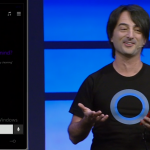
Today, at the Build conference in San Francisco, Microsoft takes the wraps off Windows Phone 8.1, the first major update for its smartphone operating system since late-October 2012. The much-awaited release should finally give the software giant's competitor a clear advantage in the race against main rivals Android and iOS, that dominate the smartphone market from afar.
Microsoft has thrown a lot of features at Windows Phone 8.1, some of which we had been expecting to arrive with Windows Phone 8. A lot is riding on this release, as the platform is at a critical stage now. Its market share fails to top 4 percent due to low consumer adoption, Microsoft is set to become the largest Windows Phone vendor, manufacturers have shown little interest in it as they focus their efforts on Android instead, and the competition is more fierce than ever. Windows Phone 8.1 is the release which sets the tone for the platform in 2014, and, naturally, our expectations are high.
Build 2014 kicks off today -- what are you expecting?


There are a couple of major events scheduled for today but, with apologies to Amazon, Microsoft is set to steal the limelight with the kickoff to its Build 2014 conference. The show, which takes place at the Moscone Center in San Francisco, will run through this Friday, and features a plethora of sessions geared towards developers.
But those sessions aren't what matter to the average user -- the big stories will come out on day one with the keynote that kicks off at 11:30 am EDT. There are a few things we expect and others that are are rumored, and some that can be left to pure speculation. Here is a brief look.
Internet Explorer leads the way in guarding against social engineering attacks

Deceiving the user into downloading and installing malicious software is one of the most common ways of attacking endpoint systems.
A good web browser can be an effective aid in blocking these social engineering attempts and the latest research from NSS Labs looks at the leading contenders plus three browsers from China to see how good they are at keeping you safe.
Bill Gates loves his new iPhone 5s, can now beat Bono at Candy Crush

Bill Gates just took a bite out of a forbidden fruit. Microsoft's founder has been seen using an iPhone 5s while departing for a philanthropic endeavour, despite his role at the software giant and having a no-Apple-device-allowed policy in his family.
Gates's kids were taken by surprise, after asking to use iPhones since 2007 and being told "No", but said they understand and support his choice as Apple's smartphone "is pretty cool". Gates' decision to buy an iPhone 5s, in white with, naturally, a (Product) Red case, was fueled by Bono's taunts, as U2's lead singer repeatedly teased Gates for not being able to beat him at Candy Crush.
Where are XP users moving to? Windows 7
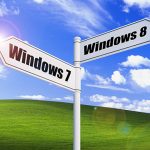
In a week Windows XP will reach its end of life. Microsoft has done its best to tell people they need to switch operating systems or face the consequences, but if the latest desktop OS share trend from NetMarketShare is anything to go by, Windows XP users really don’t seem too worried. In March, XP’s share dropped just 1.84 percent, from 29.53 percent to 27.69 percent. Hardly the signs of a mass exodus, although at least the share fell this month, unlike the previous two, when XP usage actually went up.
Microsoft has, naturally enough, pushed XP users towards upgrading to Windows 8.x, or "new Windows" as the tech giant likes to refer to it, but Windows 7, or "old Windows" proved yet again to be far the bigger draw.
5 features of Windows that need defenestrating -- including IE

Defenestrating? Pretentious? Moi?! How could you?!
Don't get me wrong, I love Windows. A fanboy I am not -- I'll quite happily pick holes in Microsoft's operating system -- but for the most part I do love it. While I have a great deal of time for Windows, it doesn’t mean there isn't room for improvement. By this I don’t mean that Microsoft needs to bring back the Start menu or start copying features from OS X or Linux, rather that it's time to have spring cleaning. In just over a week, Windows XP will be consigned to the OS graveyard, but what about Windows 8.1? The latest version of Windows doesn't need to be killed, but there are lots of features that need to be put out of their misery.
The most popular stories on BetaNews this past week March 23 -- 29

Microsoft has flirted with Apple's iPad on a couple of occasions this week. Early on in the week there was the case of a 12-year-old girl who wanted nothing more than an iPad Mini. Microsoft stepped in and managed to convince her that the Surface 2 was the way ahead. Way to spin! But this was not the big Microsoft-iPad news. In a move that many saw as almost sacrilegious -- but one that was welcomed by just about the same number -- Microsoft Office, finally, made its way onto iPad. This wasn't the only release from Microsoft this week -- the source code for early versions of MS-DOS and Word for Windows was made publicly available. Having faced criticism for the way it approached a recent investigation, Microsoft pledged that it would no longer read customer emails during the course of an investigation without getting law enforcement involved.
Windows XP may be in its death throes, but this isn't going to stop people from using it. To help keep these hardy fellows safe, Malwarebytes announced that it would keep its users protected for life. It's not just XP that Microsoft is lowering into the grave, Office 2003 also finds itself six feet under. As the door on XP closes, another one opens -- or closes, depending on how you look at it. The purchase of Nokia's Devices and Services division is due to close in April after initially facing some delays.
Microsoft promises not to read user emails again

After repeatedly bashing Google for going through its user's personal messages in the whole "Don't Get Scroogled by Gmail" campaign, Microsoft went one step beyond automatically scanning messages for keywords in order to serve up adverts, which Google does, and actually read a user’s private email, which Google doesn’t (as far as we know anyway).
Microsoft felt its actions were justified -- it was trying to prove a blogger had leaked pre-release Windows builds -- but users were rightly concerned that Microsoft had shown it was willing and able to read their personal emails should it choose to. The statement the company issued in light of the concern over its practices was hardly reassuring, and suggested Microsoft would do it again should the need arise. Today, Brad Smith, General Counsel & Executive Vice President, Legal & Corporate Affairs, Microsoft, has posted a follow up blog that essentially says Microsoft made a mistake and will be making changes to ensure reading customer emails in this way won't happen again.
Beware of third-party Google-branded Windows Phone apps

The official launch of major Google apps on Windows Phone would qualify as the biggest news of the week, next to the release of Office for iPads. Such an event seems highly unlikely, as the search giant is focusing its mobile development efforts on the more popular platforms, namely Android and iOS.
Imagine my surprise when, only moments earlier, in group chat my colleague Alan Buckingham mentions these five Google apps, that seem legit at first glance: Hangouts, Voice, Maps, Search and Google+. They are now available in the US Windows Phone Store. Did the search giant just have a change of heart? The answer appears to be negative, as, first-off, Google does not sell such apps for $1.99 a pop, it makes them available for free. But, what is so special about them anyway? It is not like these are the only third-party Google apps in Store.
© 1998-2026 BetaNews, Inc. All Rights Reserved. Privacy Policy - Cookie Policy.