Microsoft wants to buy your Windows XP computer for $100, but there is a catch


It used to be that people would upgrade their computers when they wanted to. However, there also used to be more compelling reasons to upgrade. Personal computers used to see huge hardware improvements every year -- faster processor, more RAM, etc. Consumers saw hard evidence of why an upgrade was necessary.
Nowadays however, computers have become "fast enough" -- they are lasting longer and longer. More importantly, people actually saw a benefit in upgrading to Windows 95, 98 and XP. Conversely, there haven't been huge selling points to upgrade to Windows 7 or 8.x for the average casual computer user. Microsoft is ending Windows XP support on April 8th, so it wants consumers to upgrade. In a potentially desperate move, the company announces that it will buy your old, dust-filled XP machine for $100 -- a crisp Benjamin.
Microsoft: Going through your 'private' emails is like searching 'ourselves'


Microsoft has admitted to going through one of its own users' personal emails (a blogger who has leaked pre-release Windows builds and, allegedly, intended to sell the software giant's IP) without asking for a court order, as this practice is covered by its permissive privacy policy.
To assuage concerns that it may, in the future, not go through its own users' emails without justification, Microsoft has issued a statement which details the steps the company will have to complete, and the obstacles it sets for itself, for such things to happen again. This reminds me of the for-the-sake-of-doing-it surveillance reform that US President Barack Obama unveiled to minimize the controversial NSA mass surveillance practices, that also has similar measures in place to prevent abuse. Neither promise is reassuring.
NSA lawyer says data collection occurred with tech firms' 'full knowledge and assistance'


The NSA story isn't new. Scratch that. It's not really a story; it's a saga. Just when it seems safe to feel that there can't possibly be any more revelations to knock us sideways... oops... there's another little surprise for you! Just a week ago, I argued that Google's encryption of Chinese web searches amounts to little more than a PR exercise, designed to try to get the disgruntled user back on its side. This is not something that is related to the NSA revelations. When we found out that the likes of Facebook, Microsoft, Google and Yahoo (to name but a few) had been handing data over to the US government, all of these companies were falling over themselves to appear to be doing everything they could legally do to let their customers know what had been happening with their data.
Of course, it's not just the UK that has this problem, although that’s certainly where the attention has been focused -- the UK had (or possibly has) its own Optic Nerve program which was used to spy on webcam chats. The story we have heard time and time again is that these companies did not know what was going on. That the government had been collecting data without their knowledge. There were concessions that in some cases, FISA requests had been received but there were limitations on what could be publically revealed. Each company tried to outdo the others by appearing to reveal as much data as it could as quickly as humanly possible.
Avast: Here is what might happen after Microsoft drops Windows XP support

You are likely well aware by now that, come April 8, Microsoft will officially drop support for its dated Windows XP. Considering that the operating system will celebrate its 13th birthday this year, the company's decision is hardly surprising. Users have had plenty of time to plan for this moment, and move to newer, better versions of Windows.
Yes, there are still many Windows XP users, as the operating system's market share tops nearly 30 percent, far more than the newer Windows 8.x branch, combined. As a result, the extent of the public support cutoff is huge, even effecting security companies which have declared their commitment to supporting Windows XP past its due date. In a blog post, Avast details potential issues users might encounter starting next month.
Microsoft Office 365 and Surface tablets to save Mecklenburg County millions of dollars

Choosing a large-scale software solution is a difficult thing. Obviously, in these tough economic times, cost savings are a huge deciding factor. However, saving money up front can lead to future headaches down the road. In other words, if the software causes the employees to be less productive, you may as well flush your cost savings down the toilet. Hell, it may cost you more in the long run.
Microsoft is a dependable name in software solutions, and Office is one of the most powerful software suites bar none. One county in the state of North Carolina has realized cost savings and increased productivity thanks to Office 365 and Surface tablets.
Malware in pirated software costs billions


Enterprises worldwide are expected to spend $500 billion in 2014 to deal with issues caused by malware in pirated software. Consumers are set to spend $25 billion and waste 1.2 billion hours on security threats and fixes.
These are among the conclusions of a study carried out by IDC and the National University of Singapore, released today by Microsoft’s Digital Crimes Unit as part of its annual Play It Safe campaign.
Microsoft announces economical Wireless Mobile Mouse 1850 for Windows and Mac

When it comes to computer mice, it is hard to make them one-size-fits-all. After all, people have different sized hands, different preferences and heck, let's not forget the whole lefty and righty situation. To muddy the waters even further, many people own two mice -- one for home and one for portability.
A mouse for home is easy; it can be any size as it does not need to be portable. Instead, the consumer can just focus on comfort and price. A portable mouse is more difficult. A consumer must focus on size and connectivity, often at the expense of comfort. Many portable mice are too small and can be a chore to use. Today, Microsoft aims to deliver an inexpensive portable mouse, which is comfortable for both right-handed and left-handed users alike.
Cloud storage price wars! First blood to Google!

And so it begins. The price war in the cloud. There are few tech companies that would not like you to store all of your files in the cloud, and there are several big names vying for attention. The obvious contenders for the crown are Microsoft with SkyDrive (sorry, OneDrive), Dropbox and Google Drive -- of course there are plenty of others, but these are the names that trip readily off the tongue. As computer users we have become increasingly comfortable with the idea of storing files online; in fact we almost demand it. If an app or service does not offer cloud storage, there are instant complaints about the lack of between device syncing.
But cloud storage does come at a cost. On the face of it, online storage is available free of charge. All of the big names -- and many of the smaller ones -- provide gigabytes, in varying quantities, of space gratis. But for cloud storage to be truly useful, everything needs to be stored there. The 5GB of free space from one provider is not to be sniffed at, but 5GB disappears very quickly. Opt to store all of your photos online, for instance, and the gigabytes will very quickly be eaten up.
OneNote for OS X is nice, but Evernote's better [Review]
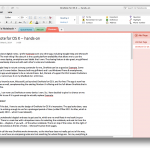
For jotting down digital notes, I prefer Evernote over any other app, including Google Keep and Microsoft OneNote. The main thing I like about it is the superb platform availability that allows me to use the service on every laptop, smartphone and tablet that I own. The sharing feature is also great; my girlfriend and I can seamlessly share and edit each other's notes and notebooks.
While Google Keep is not yet a strong contender for me, OneNote can be as good as Evernote. Some would argue it is even better. Because both my girlfriend and I use Windows Phone 8 smartphones, Microsoft's app would appear to be a natural choice. But, the lack of support for OS X means OneNote is a no-go, as I cannot use it on my MacBook Air. Until now.
Boot Camp supports only Windows 8.1 on Apple's new Mac Pro

Even though Windows 8.1 is not Microsoft's most-popular PC operating system at this point -- Windows 7 takes that title -- Apple has decided it should be the only choice users of the new Mac Pro can have in Boot Camp.
This may come as a surprise, considering Windows 8.1's low adoption among PC users, but the company's decision is to be expected. Boot Camp gradually drops support for older versions of Windows in newer Macs, as shown by the software's support page.
Microsoft confirms Surface 2 with AT&T LTE -- goes on sale tomorrow

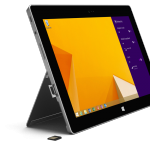
We knew it was coming, but today Microsoft confirms that it is introducing a 64GB mobile broadband-ready version of Surface 2, and you won’t have to wait very long to get your hands on it either, as it will be available from tomorrow, March 18.
"In launching this new version of Surface 2, we’re adding the power and reach of AT&T’s 4G LTE network to an already fantastic device", Panos Panay, Corporate Vice President, Microsoft Surface, states. The new slate will be available in the US at Microsoft retail stores, www.microsoftstore.com and at BestBuy.
The most popular stories on BetaNews this past week March 9 -- 15

This is the week that saw the web celebrating its 25th birthday and Tim Berners-Lee took the opportunity to call for a web bill of rights, which I argued is essential for the future of democracy.
Another week means a fresh batch of security concerns. In Europe, users were warned of the dangers of connecting to public wifi hotspots, while a new report found that cybercriminals are becoming increasingly sophisticated in their techniques. Ian was on hand with advice for anyone trying to tackle or avoid viruses.
Mozilla disses Microsoft -- cancels Modern UI version of Firefox for Windows 8.x

The hatred of Modern UI and its associated Start Screen is well documented. Many users dislike the full-screen Windows apps, stating they are less productive with them. There can be truth to that -- working with multiple open programs and apps simultaneously can be problematic. Not to mention, there are very few apps compared to legacy programs. Some users may feel that if they cannot go "all in" on Modern UI, they don't want to use it at all.
It is hard to blame developers for not embracing Modern UI -- Microsoft hasn't even done so with Office. One notable app that has been conspicuously absent, is Firefox. Mozilla developers have been working on it, but a final, stable version never came to fruition. Sadly, Mozilla announces that it is cancelling the project, dealing Microsoft's Windows 8.x a significant blow.
Concord Hospitality wisely chooses Chromeboxes instead of Microsoft Windows

Choosing the right computer for a task can be tricky. If you spend too little money, you may buy an under-powered machine with poor performance. Conversely, if you spend too much, you may end up with too much power, effectively wasting money. Finding the balance is key.
Chromebooks and Chromeboxes are all the rage lately -- they are great computers if they meet your needs. For many businesses, they would be a bad choice. You see, the firms may need Microsoft Office and other specialized software, which will not run on Google's Chrome OS. However, if your needs are browser-based, it is a great choice. One such company, Concord Hospitality, is utilizing Chromeboxes with great results.
Google's Chinese web encryption is nothing more than PR and posturing

We are spied upon. Someone, somewhere, knows what you have been doing online. It might be your snooping friend taking a look at your browsing history, or it might be that weird looking guy on the next table in the coffee shop watching your every click. It might be advertisers using cookies, or it could be your own government. This is now just about expected; it is part and parcel of using the internet. In some parts of the world, access to the internet is not only monitored, but also restricted and controlled. But it didn’t used to be like this, and it needn't stay like this.
In some regions the idea of mass spying is a relatively recent concept. The activities of the NSA, GCHQ and other government organizations are something only the most recent generation of internet users is "used" to -- for the rest us, it is at best an unpleasant sea change, and at worst just the tip of the iceberg. As it was revealed that governments were not only spying on citizens' online activities but also getting other companies involved by requiring them to hand over user data, big names such as Microsoft, Google, and Apple were falling over themselves to appear to be going out of their way to reveal everything they could about the demands made of them. It was the PR machine in action, trying to make the best of a very, very bad situation.
© 1998-2026 BetaNews, Inc. All Rights Reserved. Privacy Policy - Cookie Policy.