Sony shifts 5.3 million PS4s and takes number one spot

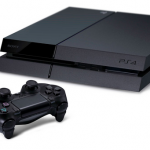
Ten days ago, the PlayStation 4 passed something of a landmark -- selling 5.3 million units. Figures also show that the PS4 was the top selling console in the US in January. Hitting the number one spot is based on data from NPD Group, while the overall sales numbers come from Sony's own record of sales in North America and Latin America, as well as in Europe and Asia.
Andrew House, President and Group CEO of Sony Computer Entertainment Inc said "I am thrilled that so many customers around the globe have continued to select PS4 as the best place to play throughout and beyond the holiday season. We are delighted that according to the NPD Group's latest data, PS4 was January's top-selling console in the United States. The PS4 system's momentum just keeps growing stronger".
Microsoft portrays Surface 2 buyers as idiots


In its new "honestly" commercial, Microsoft shows us a man who has just purchased a Surface 2. "This deal was way too good to believe", says the happy purchaser, with a bag tucked under his arm. "Instead of paying too much for an iPad, I got this Surface 2", he adds, before telling the camera it comes with Office (a Surface commercial that mentions that? Amazing!) and Outlook, free Skype calls to over 60 countries, and 200 GB of cloud storage ("others charge for that").
He’s clearly happy with his purchase, so I don’t want to burst his bubble, but I’m going to anyway.
Paper is passé -- DocuSign eSignature comes to Microsoft Office 365


The existence of a paperless office and the overall death of paper has been greatly exaggerated. Anyone who has been in an actual company office recently knows that paper is still haunting the corporate world. Sure, there is less of it being used, but even one sheet is too many.
What can be particularly annoying is signatures. Printing and signing something feels archaic. Hell, you might as well chisel your name into a cave wall. Today, however, Microsoft and DocuSign join forces to bring eSignature to Office 365. While the partnership won't single-handedly kill paper, it is a start.
The most popular stories on BetaNews this past week: February 9 -- February 15

It is usually Bill Gates who is heralded for his philanthropy, but according to the Chronicle of Philanthropy, it is Facebook's Mark Zuckerberg who is currently the most generous. In another change from the norm, malware threats to OS X, Linux and Android have increased, showing it is not just Windows that is prone to attack. As if to prove this, Mac malware has been discovered that has been designed to steal Bitcoins from victims. Factor in all of Apple's devices and the company managed to sell more units than Windows PCs are sold, although this revelation caused quite some debate.
Twitter found itself in the headlines after the James Dean estate tried to gain control of a fan's James Dean-related account. Twitter has already spoken out about the shackles binding companies from being open about government data requests -- companies are practically falling over themselves to add their names to the list -- and Dropbox is in agreement. The European Commission has expressed a desire to wrestle some control of the internet from US hands voicing fears that too much influence was being exerted,
Microsoft celebrates selling more than 200 million Windows 8 licenses
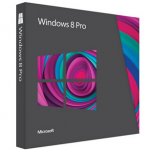
Very little has been said about sales figures for Windows 8 of late, but today Tami Reller, Microsoft's executive vice president of Marketing outed the most recent number of sales during a webcast. Reller revealed that 200 million Windows 8 licenses have now been sold. This is an impressive increase from the last sales figures of 100 million back in May 2013, but sales of the latest version of Microsoft's operating system remain slower than its predecessors.
The 200 million licenses do not include volume license sales, but the number does include sales to the public as well as those to OEMs. A doubling of sales in under a year is not to be sniffed at, but it will probably do little to calm the vocal groups keen to bash Windows 8's success. Ultimately the speed of sales is still a little slow. While more than 40 million licenses were sold in the month after Windows 8's release, this was not sustained.
Rise of the mobile -- Apple devices outsell Windows PCs

Apple overtakes Microsoft! That’s not a headline you'd expect to read, and when you look at sales of Macs versus Windows desktops, Macs and Windows laptops, or any combination of these, it is Windows devices that are always going to come out on top. But look at things from a different angle and it is a very different story. In Q4 2013, the number of Apple devices sold exceeded the number of Windows PCs sold around the world.
This is an interesting demonstration of the notion that mobile devices are very much on the increase. Compared to Windows PCs, Macs account for a very small percentage of computer sales, but once sales of iPads, iPods and iPhones are factored in, Apple overtakes PCs -- not by much, but it is still significant. It is also worth noting that while Windows Phone is widely derided for poor sales, once these smartphones are included, Windows devices return to the top of the charts -- but again, not by much.
1 billion smartphones ship in 2013, Android and iOS still dominate

According to figures released by International Data Corporation (IDC), 2013 was the year that smartphones really took off -- a staggering 1 billion units shipped. As has been the case for some time, it is Android and iOS that continue to dominate, with Google's mobile operating system claiming a 78.1 percent market share, and Apple's 17.6 percent. As has been the norm, Windows Phone found itself in third place, although it did manage to increase its market share to 3 percent.
The figures are based on shipments in the fourth quarter of 2013, and when compared to the same period in 2012, Android and Windows Phone both made gains while iOS lost some of its market share. Jumping from 70.3 percent of the market in 2012, Android's growth was impressive, while iOS dropped 3.3 percentage points from 20.9 percent. Looked at in terms of percentage points, Windows Phone's jump from 2.6 to 3.0 percent of the market, it still represents an improvement of more than 13 percent.
Google and VMware join forces to bring Windows apps to Chromebook via the cloud

Chromebooks may be increasing in popularity, particularly in business, but they still have a long way to go before they catch up with Windows-based laptops. One of the factors holding back Chromebook is, both obviously and ironically, Chrome OS. It is a perfectly capable operating system for anyone locked into the Google ecosystem, but it has one failing -- for many people, at least -- it will not run Windows applications. But all this is set to change thanks to a new venture between Google and VMware.
VWmare is a name long-associated with bringing one platform's apps to another using virtualization, and now it is pushing its DaaS platform (or VMware Horizon Desktop as a Service Platform for Service Providers to give it its full, unabridged title) as a way to bring Windows applications to Chromebook users. As this is something that will be available on a subscription basis, it is likely to appeal to businesses rather than individuals, but it does break down another obstacle for anyone with two minds about Chromebook.
Why Microsoft must allow legacy apps in Windows Store


The tangible value of any operating system, be it for mobile devices or traditional PCs, is given by the strength of its app ecosystem. Having many, great pieces of software available is hugely important, no matter the platform, as these are the things people are interested in and wish to use on a daily basis. When it comes to desktops and laptops, Windows is, and will continue to be for the foreseeable future, the undisputed king in that regard. But, with the introduction of Windows Store, one important question arises: When will Microsoft finally concede legacy apps also need centralized distribution?
Apple understands users do not wish to risk visiting the shady corners of the InterWebs when looking for the software they need or want, and so the company introduced the App Store in OS X 10.6.6 Snow Leopard. Admittedly, it is not as vast as it could be, but it is definitely miles better than having nothing at all. Even Microsoft has launched some of its popular apps there, so the software giant is clearly aware of the benefits of this distribution method on traditional PCs. Allowing users to install legacy apps from Store will also do wonders for the Windows user experience. Honestly, Microsoft would be foolish not to do it soon.
Windows 8.1 Update 1 lacks the one thing that could save the troubled OS -- a Start menu
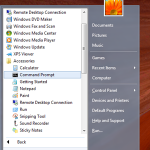
Yesterday I wrote about the forthcoming Windows 8.1 Update 1 and called it a "Frankenstein product stitched together with compromises". My view was based on my experiences with a leaked build of the OS. I didn’t realize, at the time of writing, that others were saying the same things, or that the update was being so roundly criticized online (I try to form my own opinions based on experience rather than get them second-hand).
Since then I’ve read numerous articles on the subject, and ploughed through hundreds of comments, and the general consensus of opinion is that Windows 8.1 Update 1 is, at best pointless, and at worst, a disaster. That seems a little unfair, seeing as the finished version isn’t even out yet, but that’s been the story of the tiled OS since the very beginning -- people haven’t been willing to give it a chance.
Microsoft soars through the sky -- FAA authorizes Surface 2 for pilot use

Traveling on an airplane used to be quite the archaic experience. Sure, soaring above the clouds is great, but for many, using electronic devices for things like Flappy Bird is much more exciting. Sadly, for many years, electronic devices were banned from certain phases of flight, such as take-off. Luckily, last year, the FAA allowed electronic devices during all phases.
While that was great for passengers, what about the pilots? Surely these air-based navigators want to take advantage of cutting-edge technology too. Well, today is their lucky day, as the FAA grants authorization to Microsoft's Surface 2.
Microsoft makes Windows 8 worse

On Sunday, Paul Thurrott asked (geez does this guy ever sleep) the question: "What the Heck is Happening to Windows?" The answer is hugely pertinent to the BetaNews reader community. Thurrott refers specially to Windows 8.1 development, and colleague Wayne Williams gives great overview of what to expect in Update 1, today.
The problem: What Windows is becoming, as Microsoft tries to satisfy its legacy customers while embracing future devices, particularly those using so-called NUIs, or new user interfaces, like touch and voice. Wayne smartly observes: "Maybe I’m just being overly negative here but with all the changes Microsoft has made along the way, Windows 8.x feels like it’s becoming a Frankenstein product stitched together with compromises".
Windows 8.1 Update 1 -- A Frankenstein product stitched together with compromises

Microsoft’s tiled operating system has always divided the Windows community. There are those who love or at least like it, and those who tolerate, or outright hate it. I tried really hard to like Windows 8, but never did. Windows 8.1 is much more usable for me, and I’m a fan of it now (even though I probably wouldn’t have switched in the first place if my job didn't require me to be running it). But let’s be honest here. "New Windows" was a massive gamble for Microsoft, and it’s one that simply hasn’t paid off.
The devices and services giant bet big on touch screen devices and Windows tablets flying off the shelves, and they haven’t. The PC market has imploded, users haven’t really taken to expensive touch enabled computers, and Windows tablets are nowhere near as popular as iPads or the numerous Android powered alternatives. Users are sticking firmly to older versions of Microsoft’s OS -- Windows 7 and even XP are showing more growth than Windows 8.x. With the forthcoming Windows 8.1 Update 1 Microsoft has rolled over and admitted defeat. Keyboard and mouse users are here to stay, and finally the tiled OS has something to offer them.
The most popular stories on BetaNews this past week: February 2 -- February 8

The biggest news of the week has to be the appointment of Satya Nadella as CEO at Microsoft, which brought to an end weeks of speculation and rumor. Bill Gates also stepped down as chairman. A leaked version of Windows 8.1 Update 1 appeared online giving us all a sneak peek of what we can expect to see in the upcoming release -- including context menus on the Start screen, a new enterprise mode in Internet Explorer, and different ways of working with modern apps. Ahead of this big release, it was Windows XP that was showing growth rather than Microsoft's latest operating system.
In other Microsoft news, Xbox One's first big update was revealed to be coming up on 11 February. Sony announced that it was selling its VAIO business to enable it to focus its attention on mobile devices. Business and individuals who rely on 37signals' products found that the company was not only changing its name, but also dropping all of its services apart from Basecamp. There was another blow for Bitcoin as the online currency was effectively banned in Russia.
Yahoo to Windows Phone users: No new Flickr app for you!

Having quality, official apps available, and frequently improving, for popular services is a key part in increasing Windows Phone's chances of breaking into market share double digits and, therefore, getting more developers to consider releasing their offerings in the Store.
While third-party alternatives have already proved to be viable options, it is clear by looking at the Store rankings that Windows Phone users have an undeniable craving for installing the real deal. Official apps lend more credence, after all, and are less likely to be removed without prior notice, unlike their unofficial counterparts. And this brings us to the Flickr app which Yahoo has officially admitted it no longer has any plans to update.
© 1998-2026 BetaNews, Inc. All Rights Reserved. Privacy Policy - Cookie Policy.