The Start menu -- cause or effect?

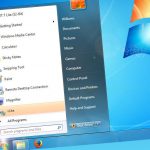
When Windows 95 was released there was a lot of fuss about the Start menu and debate about whether it would catch-on. It was a significant departure from icon shortcuts in program groups; or superficially at least. In reality, it was simply the program groups (folders) put in a hierarchical order and rather wisely, the option to place folders, icons and shortcuts on the desktop remained (to this day).
The Start menu developed; it grew out of the logic of the program shortcut and built upon that logic. It was not intended to abruptly impose a new paradigm but to slowly replace the shortcut as customers became comfortable with the concept. That journey never really ended, as the icon shortcut was not phased-out -- why would it be?
Windows 8.1 for work: 27 great new features aimed at the office

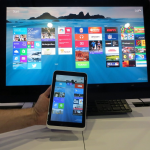
The countdown to Windows 8.1 is officially on. Whoever thinks that Windows 8.1 is squarely a consumer-centric release is heavily mistaken. After spending a month with Windows 8.1 Pro on my Thinkpad X230 Tablet, I can definitively say that Windows 8.1 is shaping up as a rock-solid option for the enterprise. I've previously written about why businesses should have been considering Windows 8 for their next upgrade cycles. With 8.1, Microsoft's latest OS is a service pack on more than a few steroids.
By any measure, I've been a vocal, bullish early adopter of Windows 8. My day to day consulting work for customers doesn't allow me to stay stuck on previous generations of Windows. Even if I did prefer Windows 7, my mixed client base is moving to 8 whether I like it or not. I need to be prepared for the questions and troubleshooting that ensues, which means I need to be their resident Windows 8 expert.
Microsoft-Nokia Deal: a tale of desperation


After Microsoft announced that it was acquiring substantially all of Nokia's devices & services business, the stock market painted a fairly accurate picture of what this deal means -- Nokia investors were relieved as the stock surged by nearly 35 percent, while Microsoft investors responded by driving the stock down by 5 percent. Based on my prior experience in technology M&A (Mergers and Acquisitions), I wanted to take a look at the motivations for the transaction and the viability of Microsoft's long-term consumer strategy.
Let's begin by taking a look at the deal terms. Microsoft will be paying Nokia €3.79 billion for its handset division (including 8,500 design patents) and another €1.65 billion in patent licensing. As a part of the deal, Microsoft will gain rights to the Lumia and Asha brands, but Nokia will retain the rights to the "Nokia" brand. However, Microsoft has licensed the "Nokia" brand, exclusively for use on low-end S30/40 feature phones.
Why Microsoft really bought Nokia


A good friend of mine called Microsoft buying Nokia "two stones clinging together trying to stay afloat". I wouldn’t go that far but I don’t think the prognosis is very good. On the other hand, I’m not sure it has to be good for Microsoft to achieve its goals for the merger. Huh?
This is why you come here, right, for my lateral thinking? I don’t think Nokia has to succeed in order for Microsoft to consider the acquisition a success.
Mark your calendar -- Xbox One arrives November 22

Summer is over, the nights are getting cooler and thoughts turn to... holiday shopping season, of course. 2013 promises to be a big one, with Windows 8.1 devices on the market and a new round of console wars ready to heat up consumers in overcrowded retail outlets around the globe.
Sony plans to launch its competitor, the PS4, on November 15, and today we learn that Microsoft will follow its rival into the market, albeit one week later, on November 22. Both consoles will be awaiting shoppers on Black Friday -- providing there is any stock left by that point.
Kickoff time -- Microsoft details NFL partnership

The long Labor Day weekend is now behind us and though it is sad to see summer go, every cloud has a silver lining, and for many of us that lining glows on Sunday afternoon from September to February. In May of this year Microsoft partnered up with the National Football League and today the company details a bit more of what has come from this marriage of technology and gridiron.
"Surface is landing on the NFL sidelines with select club personnel to support teams with player health initiatives. Surface will help keep important player medical information at the fingertips of team trainers and medical staff in the locker room and on the field. This includes the X2 concussion assessment app to quickly diagnose potential player concussions after a hard play. Surface tablets and the X2 app will be an additional tool to help medical staff and trainers to determine whether a player should return to the game", said Surface director James Bernstrom.
Steve Ballmer addresses Microsoft employees, following acquisition of Nokia's Devices & Services

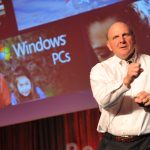
Earlier today, Microsoft announced that it is buying Nokia's Devices & Services business and licensing the rights to use the Finnish company's patents, in a deal which will cost the software giant a mere €5.44 billion in cash. Microsoft will pay €3.79 billion for the phone-making arm and another €1.65 billion to take advantage of the patents. Also included in the terms of the arrangement is a separate HERE license, which will give Microsoft the right to use Nokia's mapping services in its products.
Following the announcement, Microsoft CEO Steve Ballmer sent out an email to the software giant's employees, explaining what the purchase of Nokia's phone-making business entails for Microsoft's corporate structure as well as its future strategy. Ballmer previously revealed that he will retire within a year. Coupled with the latest news, this will undoubtedly further fuel the already heated debate, surrounding his successor.
Microsoft to buy Nokia's phone business for just €3.79B
That's not a bad deal -- far from it, in fact. Nokia is leading the pack on Windows Phone sales, has a broad patent portfolio and a former Microsoft executive -- Stephen Elop -- as CEO. The software giant is buying the Finnish company's Devices & Services business -- its phone arm -- and the right to use its patents for just €5.44 billion. Yes, that's right -- just €5.44 billion.
That is considerably less than what Microsoft paid for Skype -- $8.5 billion -- in 2010. Both deals involve trading cash, but whereas the latter has yet to bear fruit across all of Microsoft's services, the former is actually at the forefront of turning Windows Phone -- the software giant's smartphone operating system -- into a solid mobile proposition and competitor to Android and iOS. Not a bad deal.
Why I love Windows 8.1

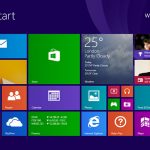
Eighth in a series. It feels weird admitting this. Akin to declaring a fondness for Piers Morgan, or dancing in public to One Direction, almost. But I like Windows 8.1. A lot.
I was never a fan of Windows 8. In fact I'd go so far as to say I detested the Modern UI which on my uber-fast desktop system simply got in the way when I was trying to work and slowed me down or tripped me up. Every time I wanted to do something simple like launch a program it insisted on throwing me out of the desktop and into a weird tiled nightmare I couldn't wait to wake up from.
Windows Phone is a 'real adversary' to Android and iOS

Or is it? It's not often that I see Windows Phone linked to being a "key player" on the smartphone market (quite the contrary, if some pundits are to be believed). But, according to a new report from Kantar Worldpanel Comtech, it appears that Microsoft's operating system has established itself as a "real adversary" to Android and iOS. That appears to be no small feat.
Between May and July 2013, Windows Phones accounted for 8.2 percent of all smartphone sales in five major European markets -- France, Germany, Italy, Spain and UK. Compared to the same time-frame from last year (when it had 4.9 percent market share), the OS grew by 3.3 percentage points, or 67.34 percent. That is a sizeable increase, however one that did not lead to Windows Phone's market share hitting double digits in a larger region (which, in my opinion, is a noteworthy steppingstone for any podium contender).
5 big myths surrounding computer security and HIPAA compliance

For those in the States, the mad dash to compliance is unquestionably on. After years of taking a "wait and see" approach to Health Insurance Portability and Accountability Act (HIPAA) regulations surrounding medical office technology, healthcare providers (and related covered entities) are scrambling to get their systems and procedures in order. Big Brother has officially set a September 23, 2013 deadline for most new rules that put into place heightened protocols for how patient information (PI) is shared as well as how notifications about breaches need to be handled, among other things.
Naturally, a lot of my consulting clients in the healthcare industry are reaching out for professional help on how to get their IT systems in line as these deadlines approach. One of the biggest facets of the new HIPAA laws, which affects companies like mine that provide hands-on IT consulting, is that for the first time ever we are being considered "covered entities" in the same boat as the healthcare outlets themselves.
The most popular stories on BetaNews this past week


Looking at the biggest stories on BetaNews from August, 25 - 31, 2013. For the second week running, Microsoft managed to steal many of the headlines. After going gold, RTM, or however Microsoft now wants to refer to it, Windows 8.1 was released to OEMs. Depsite reaching this important milestone, developers were… irked, shall we say, to learn that they will not be able to get their hands on the completed code until it is released in October. At least that would be the case had the bits not leaked online very quickly. It was a Chinese version that was made available for unofficial download first, but an English version wasn't far behind.
I have previously pondered the popularity (or otherwise) of the Surface Pro, and this week Derrick stood firmly behind Windows RT positing five reasons it is destined to succeed.
Microsoft and Google (don’t really) want to tell you more about government data requests

Sounds nice, doesn't it? Two big names have listened to the concerns of the people that matter -- their customers -- in the wake of the NSA debacle, and want to share more information with the public about precisely what information the government is asking them to hand over. If only it were that simple.
In a blog post on TechNet, Microsoft General Counsel Brad Smith reveals that both Microsoft and Google filed lawsuits back in June to try to force the government to permit them to publish details of data requested under Foreign Intelligence Surveillance Act (FISA) orders. Smith says they [the two companies] believe they have a "clear right under the US Constitution to share more information with the public".
Microsoft teams with Crackle to bring you exclusive movie

Crackle, the online streaming service from Sony, remains one of the competitors in today's growing and increasingly competitive market. Today the entertainment arm of Sony announced a new strategy. The company will partner with tech giant Microsoft for what both hope will be mutual benefit.
"Sony’s Crackle is the latest digital network to start producing its own original feature-length films, with next Thursday’s premiere of the martial arts flick Extraction. But antsy Windows Phone action junkies don’t have to wait: Crackle is giving us an exclusive early pass" reports Microsoft's Michael Stroh. Windows Phone customers are not the only one who will get this exclusive content -- Xbox Live and Windows 8 users will also benefit from the deal.
Halo: Spartan Assault gets free Operation Hydra expansion


Last month, Microsoft released Halo: Spartan Assault for Windows Phone 8 and Windows 8. I declared that the game was "the best smartphone game I have ever played" -- a statement I stand by today. However, Microsoft has chosen not to rest on its laurels. Today, the company announces an update to the popular game called Operation Hydra.
Microsoft says it is a "free game update with five new missions to battle through". The company further says that the update "also adds support for phones with 512MB RAM, making the game available to even more Windows Phone models".
© 1998-2026 BetaNews, Inc. All Rights Reserved. Privacy Policy - Cookie Policy.