So is Windows 8 Microsoft's ‘biggest failure ever’?

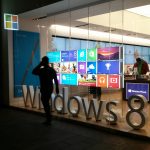
There are lots of questions concerning Windows 8 -- does Microsoft need to make changes to it? Is the OS responsible for the death of the PC? How many copies has it actually sold? And last Friday financial-services company The Motley Fool asked the question in my headline, which I know a lot of people have been pondering too -- is Windows 8 Microsoft's biggest failure ever?
Like all tech firms, the software giant has had its fair share of hits and misses. Microsoft isn’t the greatest risk taker out there, but it does make gambles occasionally that don’t pay off and it has experienced some major flops over the years. People talk about Vista, but there have been plenty of other past disasters, including Windows Me, Microsoft Bob, Zune, Kin… But is Windows 8 its worst catastrophe to date?
There are many reasons for the recent PC sales slump


Windows 8 is not the direct cause for poor PC sales, and to suggest this is simply sensationalism. True, the operating system received cool reception from some people, but most don't realize that Microsoft had little choice to do what it did. The company distributed the first Preview during the BUILD developer conference in autumn 2011, and I immediately recognized what was going on. Windows 8 is all about touch and mobile. Mobile touch devices are replacing computers among many consumers. Microsoft likely saw this and had to do something. That something is Windows 8. I discuss this consumerization of the PC market in my late-March BetaNews story.
What some people fail to appreciate is that a PC is more than a consumer device. Windows is more than a mobile operating system. It is very complex, designed for heavy-duty work. Microsoft had one of two choices: Create a totally new operating system for mobile and leave Windows as is; merge a mobile operating system into Windows so it is a hybrid. That the company chose the latter is ingenious, but risky. Likely we won't know until years from now whether or not Microsoft wisely, but it is a noble undertaking nonetheless.
Does Patch Tuesday make your Windows 7 computer endlessly reboot?


For the most part Microsoft's Windows updates, known as Patch Tuesday, aim to fix problems as opposed to causing them. That is not always the case, and the most recent update, which took place this week, is a shining example of what happens when good intentions go bad.
On April 9th Microsoft released two "critical" security updates and seven others rated as "important" for both Windows and Internet Explorer as part of its latest round of updates, collectively covering 14 issues. However one of those fixes, labeled KB2823324 and aimed at the Windows 7 file system kernel-mode driver, went badly for some customers. The result was reports of blue screens of death (BSOD) and also infinite reboots.
Accidental Empires, Part 20 -- Counter-Reformation (Chapter 14)


Twentieth in a series. "Market research firms tend to serve the same function for the PC industry that a lamppost does for a drunk", writes Robert X. Cringely in this installment of 1991 classic Accidental Empires. Context is universal forecast that OS/2 would overtake MS-DOS. Analysts were wrong then, much as they are today making predictions about smartphones, tablets and PCs. The insightful chapter also explains vaporware and product leak tactics IBM pioneered, Microsoft refined and Apple later adopted.
In Prudhoe Bay, in the oilfields of Alaska’s North Slope, the sun goes down sometime in late November and doesn’t appear again until January, and even then the days are so short that you can celebrate sunrise, high noon, and sunset all with the same cup of coffee. The whole day looks like that sliver of white at the base of your thumbnail.
Project GeoFlow gets public preview
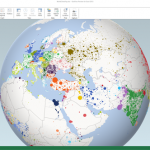
Microsoft announced GeoFlow at the SharePoint conference in November 2012 and today rolled out a public preview of the 3-D mashup that combines the Office spreadsheet app Excel with Bing maps to allow you to plot geographic and temporal data visually.
Microsoft Research claims that GeoFlow "enables information workers to discover and share new insights from data through rich, 3-D data on a globe and fluid, cinematic guided tours—virtual cinematography moving through data". The app evolved out of the WorldWide Telescope project. "We built a gigantic virtual telescope, but to do so, we had to build an engine that could visualize the universe. If we can visualize the universe, we can visualize almost anything else", Microsoft Research principal researcher Curtis Wong explains.
Is it time to trust Microsoft with your PC security?


Ever since viruses started to hit the headlines back in the 1980s, security for PCs has been big business. Products like Norton and McAfee have grown to household name status, and made their original developers very rich men on the back of it.
This is mainly because Windows wasn’t built with security in mind and was adopted in such huge numbers that it made a tempting target. Until recently that is. With Security Essentials built into Windows 8 and active by default, and available free for users of older systems, the boys at Redmond have suddenly started to take security seriously.
Set up two-factor authentication for your Google account on Windows Phone


Enabling two-factor authentication for a Google account is an effective security measure against unauthorized access. It adds an extra layer of protection by requiring users to enter an application-specific password or security code in order to gain access to various Google services. For this second part the company says users will need an Android, BlackBerry or iOS handset. But what about generating security codes on Windows Phone? Surely, there has to be a way.
And there is. Microsoft has released an app called Authenticator which allows Windows Phone users to generate security codes for two-factor authentication. And, because it "implements industry-standard security code generation", the app supports Microsoft as well as Google accounts. The only question is: How to set it up for the latter?
FU, Windows 8, PC shipment decline is worst EVER


In some alternate universe, Microsoft CEO Steve Ballmer slaps former Windows & Windows Live president Steven Sinofsky on the back for a job well done. The company's newest operating system is such a huge success that sagging PC shipments soared to record numbers. Our reality is something shockingly different. First-quarter declines are the worst since IDC started tabulating numbers in 1994 and surpass the worst estimates. You know things are really bad when even perennial gainer Apple sees a huge year-of-year fall off.
"At this point, unfortunately, it seems clear that the Windows 8 launch not only failed to provide a positive boost to the PC market, but appears to have slowed the market", Bob O'Donnell, IDC vice president, says. Holy Moley, Windows 8 slowed the market? You want to know why Ballmer booted Sinfosky out the door? O'Donnell offers chilling indictment.
Office 365 scores a big win with ABB

Microsoft has been racking up contracts between Office 365 and businesses and governments recently, including eight new ones just announced in March. Now the company may have made its biggest score yet, partnering with world-wide power and productivity company ABB.
According to Andy Tidd, chief information officer at ABB Group, "Office 365 and Yammer will enable us to transform communication and collaboration among our employees, surfacing the best and most innovative ideas across the organization".
Microsoft continues its childish attacks on Google

Microsoft’s Scroogled campaign, in which the technology giant attacks Google for various perceived transgressions, has now turned its sights to Android, or more specifically the Google Play store.
Past Scroogled "attacks" (aka petty whining) have taken Google to task for using a pay-to-rank practice in Google Shopping, and reading emails in Gmail. The newest complaint is that Google shares your personal info with app makers.
Accidental Empires, Part 19 -- Economics of Scale (Chapter 13)

Nineteenth in a series. "Computer companies don’t go public to raise money; they go public to make real the wealth of their founders", Robert X. Cringely explains in this chapter from 1991 tome Accidental Empires. Other organizations do IPOs to fund future investments, whereas many tech firms already sit on mountains of cash when going public.
We’re at the ballpark, now, and while you and I are taking a second bite from our chilidogs, this is what’s happening in the outfield, according to Rick Miller, a former Gold Glove center fielder for the Bosox and the Angels. When the pitcher’s winding up, and we figure the center fielder’s just stooped over out there, waiting for the photon torpedoes to load and thinking about T-bills or jock itch endorsements, he’s really watching the pitcher and getting ready to catch the ball that has yet to be thrown. Exceptional center fielders use three main factors in judging where the ball will land: what kind of pitch is thrown where in the hitter’s zone, the first six inches of the batter’s swing, and the sound of the ball coming off the bat.
Authenticator for Windows Phone hints two-factor verification will come to Microsoft accounts

Microsoft has released an app for Windows Phone called Authenticator, which is designed to generate security codes associated with two-factor authentication. Nothing special so far, other than Microsoft's name being associated with the app. What is noteworthy is that, according to the release notes, you can use Authenticator "to help keep your Microsoft account secure". Is Microsoft finally taking the user's security seriously?
At the time of writing this article two-factor authentication is not avilable for my Outlook.com account. But this suggests that, eventually, Microsoft will enable the extra security measure for its cloud services, presumably sometime soon and likely for Outlook.com first of all. Currently users have to rely on the complexity of their passwords in order to insure the safety of their Microsoft accounts, whereas Google users, for example, have had the option to use two-factor authentication for quite some time.
Nokia Lumia 920 is the most popular Windows Phone device
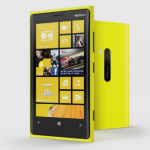
AdDuplex, which touts itself as the "largest cross-promotion network for Windows Phone and Windows 8 apps", released a new monthly report which shows the Nokia Lumia 920 as the most popular Windows Phone device currently available. The handset holds a 14 percent market share among devices running Microsoft's smartphone operating system.
According to the report, the Lumia 920 dethroned the Lumia 800, "by a very small margin", for the title of the most popular Windows Phone device. The 920 was released worldwide in November 2012. The latter made its way onto the market one year earlier and also holds approximately a 14 percent market share among Windows Phone handsets, albeit slightly lower when it comes down to actual numbers.
FairSearch files complaint against 'Google's anti-competitive' mobile strategy, in the EU

FairSearch, a coalition comprised of 17 global businesses including Expedia, Kayak, Microsoft, Oracle, Nokia and TripAdvisor, has announced that it has filed a complaint with the European Commission (EC) against Google, citing an "anti-competitive strategy" and consolidating "control over consumer Internet data for online advertising" in the mobile space.
FairSearch uses two reports from Strategy Analytics (SA) and eMarketer to base its claims. According to the coalition, Google exerts its dominance in the mobile operating system space with Android, which held a 68.4 percent market share in 2012 per SA, and in mobile search advertising, which eMarketer says Google dominates with a 96 percent market share.
Microsoft rolls out Office 2010 SP2 beta

By now a number of you have probably joined me in moving on to Office 2013, either the desktop version or the new Office 365 Home Premium subscription adaptation of the suite. However, there is nothing wrong with the previous Office 2010 release of the product, and many users and businesses are still running that software.
For those, there is some good news this morning -- Microsoft has released a beta version of Service Pack 2 for Office 2010. The SP2 beta also includes Sharepoint 2010 support as well. In addition, it has improved support for Internet Explorer 10 and Windows 8, updates for system reliability, program compatibility, security and more.
© 1998-2026 BetaNews, Inc. All Rights Reserved. Privacy Policy - Cookie Policy.