Microsoft announces Surface Pro availability while apologizing that you can't get it

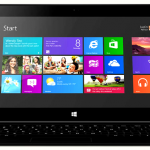
Last weekend was a big one for the sports world -- the Super Bowl is a day when even non-NFL fans suddenly watch football. This weekend turned out to be an exciting one for the tech world with Microsoft's launch of the Surface Pro tablet, which resulted in lines and a sellout.
In an ironic blog post yesterday Microsoft's Panos Panay, Surface chief, both announced the availability while simultaneously apologizing that customers could not actually buy one. A post titled "Surface Pro: Available Now" begins with "We’re working with our retail partners who are currently out of stock of the 128GB Surface Pro to replenish supplies as quickly as possible. Our priority is to ensure that every customer gets their new Surface Pro as soon as possible". If you are confused then apparently you are not the only one.
Surface sells out!


So much for the naysayers panning Microsoft's flagship tablet, or (wrongly) calling it woefully overpriced (but inferior) iPad. The first Surface Pro shipment sold out -- well, just about -- and only within a few hours, too. I called a half-dozen West Coast Microsoft Stores Saturday evening. None have either model. The online shop is sold out of the 128GB slate, but you can still get the 64 gigger. Stock checks at Best Buy and Staples also reveal sell-outs.
"They cleaned us out!" one California MS Store employee tells me Saturday night. Another says his shop stocked out in a couple of hours. No one would say how much inventory was available, but one person says, "Plenty!" Clearly not plenty enough. The question now: How long will those who want Surface Pro wait? One staffer says he expects more tablets Tuesday. No one else has timeframe.
Accidental Empires, Part 5 -- The Demi-God (Chapter 1b)


Fifth in a Series. Editor: Serialization continues of landmark 1991 book Accidental Empires, looking at younger Microsoft CEO Bill Gates and Microsoft Word 3.0 for Macintosh -- proverbial vaporware at the time.
Several hundred users of Apple Macintosh computers gathered one night in 1988 in an auditorium in Ann Arbor, Michigan, to watch a sneak preview demonstration of a new word processing application. This was consumerism in its most pure form: it drew potential buyers together to see a demonstration of a product they could all use but wouldn’t be allowed to buy. There were no boxes for sale in the back of the room, no "send no money, we’ll bill you later". This product flat wasn’t for sale and wouldn’t be for another five months.
Should you buy Microsoft Surface Pro?

Microsoft's flagship tablet running Window 8 Pro goes on sale in Canada and the United States on February 9. The device is the most-important released to date running the operating system, for what it seeks to accomplish and means for Microsoft. Critics call Windows RT a failure (I disagree). Distribution is the problem, if any, and that's easily remedied.
Still, RT badmouthing puts Pro perceptions in a bad spot. Microsoft's public relations team responded by getting devices out to reviewers and setting an embargo of 9 pm EST February 5. So four days before launch, a bunch of reviews exploded across the InterWebs around the same time. Younger reviewers from trendier tech tabloids tend to talk up Surface Pro while older fogies and those from more consumer pubs are more hesitant. I'm among the few old farts who get Surface and what Microsoft strives to achieve here. Then, again, I've covered the company for a long time.
Microsoft cancels Surface Pro launch

I should say the big launch event planned for New York City. Can you say bad weather? In October Hurricane Sandy sandbagged (absolutely no pun intended) Google's Nexus device unveiling, also in the Big Apple. The search giant announced products anyway. Likewise, Surface Pro sales will go on, in stores around Canada and the United States and online.
"Surface Pro launch activities in NYC have been cancelled due to weather; our best wishes for everyone impacted by the blizzard," a Microsoft spokesperson tells BetaNews. Surely there's a metaphor here somewhere. What Microsoft's top brass must want -- desperately hope for on knees with hands clasped high -- is a blizzard of Surface Pro sales. A storm of people rushing into stores or pounding keys online to buy one of the two models, 64GB ($899) and 128GB ($999). If we were all characters in a novel, the blizzard would foreshadow future events -- or so Microsofties can only hope.
Microsoft touts SkyDrive numbers, announces new features

Microsoft announced the new Office 2013 / Office 365 release on January 29th and the new suite, no matter which version of it you choose, comes with tight integration with the company's cloud storage service, SkyDrive. You do not have to use it -- you can still store your files locally, but it makes for easier work when a document can easily be accessed from everywhere and shared with co-workers.
However, apparently a lot of people are taking advantage of the feature, because today Microsoft's Sarah Filman, lead program manager for SkyDrive, announces that the service now stores a lot of files -- "Recently we reached a big milestone; our customers are now storing over a billion Office documents on SkyDrive".
Get Aero back in Windows 8

Windows 8 fans didn't take Microsoft's decision to dump the familiar Aero Glass interface lightly. Even though the software corporation has very good reasons for doing so, there are users who are willing to put up with the apparent disadvantages and want to bring the transparency back.
Microsoft is known for its stance on the matter and it is unlikely that the software giant will be persuaded to bring Aero Glass back in Windows 8 and, therefore, eat its own words about the advantages of the new interface. For this reason, and likely others as well, a developer decided to take matters into his own hands and release a hack that brings back Aero Glass into the Windows 8 Desktop Window Manager.
Microsoft’s attacks on Google are sad and embarrassing


After I left school I went into sales. And one of the first things I was taught was this: never disparage the competition. Never say bad things about them -- even if what you’re saying is true, or you believe it to be at least -- because it makes the firm you’re representing seem petty and small.
Clearly this is a lesson Microsoft needs to learn. The firm’s marketing department, in particular whoever came up with the Scroogled campaign, is doing its best to turn the Redmond, Wash.-based technology giant into a petty, whining child, complaining about a rival rather than championing its own products. Instead of shouting triumphantly, "Use Outlook.com because it’s great and has all these benefits", Microsoft is reduced to grumbling, "Don’t use Gmail because it reads your emails". It’s not an aggressive information campaign as some people have described it. It’s a sad and frankly pathetic strategy.
Microsoft sends Live Mesh execution-date reminders

Perhaps it is just me, but Microsoft's decision to take Live Mesh off of life-support has hit especially hard. We knew this was coming of course, but still, I like having my files synced between multiple computers and, while I love SkyDrive, I do not need the cloud as an intermediary within my own home -- that is ridiculous overkill and would cost me money as well.
Today the company dispatched email reminders that began "Dear Mesh customer, Recently we released the latest version of SkyDrive, which you can use to..." Yes, thanks a lot. I know what I can use it for, but syncing between computers in my home is not something I should be compelled to use it for.
Microsoft launches 'Don’t Get Scroogled by Gmail' campaign to stop Google 'going through personal emails'

Microsoft's efforts to downplay Google's Gmail over its own Outlook.com service are well known amongst the tech crowd. In late-November the Redmond, Wash.-based corporation claimed that a third of new Outlook.com signups were people switching from Google's email service, and after the web giant dropped support for EAS, Microsoft quickly advised Gmail users to make the same switch. Now Microsoft is at it again, launching a new crusade titled "Don't Get Scroogled by Gmail".
The purpose of the campaign, according to the software firm, is to "educate consumers that Google goes through their personal emails to sell ads". Don't Get Scroogled by Gmail is aimed at American Gmail users and is supported by a GfK Roper study commissioned by Microsoft that found "70 percent of consumers don’t know that major email providers routinely engage in the practice of reading through their personal email to sell ads", with a vast majority of people, 88 percent, disapproving of this practise once the information was brought to their attention.
Microsoft shouldn't block Xbox 720 from playing used games

Earlier today a story popped up on the popular gaming website Edge Magazine that cites "sources with first-hand experience of Microsoft’s next generation console". That, of course, immediately raises red flags, but it has not stopped many news sites and blogs from running with the information contained in the "leak". There is a lot of information in the post, but one particular piece caught big attention and is viral.
That is a claim that "Microsoft’s next console will require an Internet connection in order to function, ruling out a second-hand game market for the platform". If true, that would be a disaster for customers and cause the company a public relations nightmare on a massive scale.
Four things that Microsoft needs to fix in Windows Phone 8

Coming from Android or iOS, Windows Phone 8 is an eye-opening smartphone operating system. It sets the bar pretty high when it comes to looks and performance -- the design is simply beautiful and refreshing, and the software responsive and fluid -- but it never really manages to outshine its main rivals. After living with the HTC Windows Phone 8X for a while, I can't help but notice glaring oversights in an otherwise solid proposition. The package is not complete.
You see, being pretty and going fast does not cut it among the fierce world of Android and iOS. Microsoft needs to take a good look around and take charge by solving the shortcomings of Windows Phone 8. Fact is, it's easy to pick faults with the immature app selection, like many journalists do, but that's more of a chicken and egg problem. What the software giant has to do is build on the current platform by offering better basic functionality, functionality that's necessary for a greater user experience.
Microsoft announces five new retail locations

The family grows quickly. Microsoft has been beefing up its retail offerings for the past year, trying to get into as many markets as possible in an effort to sell products and compete with the retail juggernaut that is Apple. In fact, the company chose to keep nearly all its popup stores opened from the past holiday season. Now the company has announced five new brick and mortar locations.
Taking into account those popup stores, the company currently operates about 65 retail outlets, but the number is about to expand with today's announcement. New stores will be coming soon to the following list of locations.
Surface Pro first-impressions review

Surface Pro is magnificent. A classic. It's the Windows experience you longed for but were denied. The tablet is a reference design for what -- and what not -- Microsoft OEM partners should achieve. The device is the past and future, pure personal computer and post-PC. Simply put: Surface Pro is jack of all trades, both master of many, and (gulp) none. Capabilities astound, yet quirks abound. But even they are endearing, giving Windows 8 Pro personality and dimension.
For the past five days, I've had the privilege of using Surface Pro, which goes on sale February 9, as my primary PC. That's not enough time to fairly evaluate the tablet, which is why I write a first-impressions review. I'll add much more as my month with the device progresses. For now, I will share my early reactions, while offering context about Microsoft's objectives for the product and how well it achieves them. Unquestionably, Surface Pro isn't for everyone. But it could be for you.
Windows Azure now features VM Depot integration

Microsoft Open Technologies unveiled the VM Depot public preview early last month, and the software giant has just announced that its community-driven open-source virtual machine image catalog is now integrated into the company's cloud platform, Windows Azure.
The new feature is available through the Windows Azure management portal and is designed to ease the handling of virtual machine images from VM Depot. The cloud platform's users can take advantage of open-source stacks, "based on supported Linux distributions, made available by members of the community and directly provision the files as personal images straight from the Windows Azure portal".
© 1998-2026 BetaNews, Inc. All Rights Reserved. Privacy Policy - Cookie Policy.