Microsoft joins the party, warns users against Java


Oracle has had no shortage of headaches recently, thanks to Java. The exploits have been running wild lately, making attempts to fix the problems resemble a game of whack-a-mole. In fact, the troubles even resulted in the United States Department of Homeland Security being forced to post a warning against using the platform.
In a post to the government website, the DHS warned that "by convincing a user to load a malicious Java applet or Java Network Launching Protocol (JNLP) file, an attacker could execute arbitrary code on a vulnerable system with the privileges of the Java plug-in process".
Outlook.com users can finally receive Mega confirmation emails


Right after Kim Dotcom launched Mega on January 19 I succumbed to temptation and registered for a new account. My initial foray was, however, short lived as no confirmation email arrived in my Outlook.com inbox. Clearly, Microsoft's service and Mega did not play well together.
Dotcom shed some light on the matter when he posted the following on Twitter: "Don't use Hotmail to register on Mega. They have mysteriously black holed emails from our domain. Gmail works fine", He shortly followed this up with: "We are working on the 'confirmation email' issue. Some mail services react allergic to an unknown domain sending millions of confirmations". Intrigued by the issue I asked Microsoft for a statement concerning the confirmation email issue with Outlook.com accounts.
Microsoft Office 2013 now available to consumers

After teasers and tweets, it's really no secret that today is the big day when Microsoft launches Office 2013. The suite has already been available for TechNet users since mid-November, but in typical Microsoft fashion the consumers are the last to get their hands on the goodies.
Office 2013 Home and Student, Home and Business, and Professional, as well as Office 365, are currently available for purchase in different markets, including United States, United Kingdom, Germany and Australia, with pricing adjusted depending on the region.
Office 2013 launches January 29 in NYC

Microsoft is announcing something Office-related tomorrow, January 29th. That much is clear given all of the evidence that popped up over the weekend and has continued to mount today. Still, the company likes to hold some secrets and stating something emphatically would be inappropriate reporting on my part. However, trying to connect the dots is a fun exercise that we certainly can do.
First, over the weekend a new website from Microsoft appeared with a teaser message -- "Coming January 29th. More time to do the things you want. #timeto365".
Why are Windows 8 sales so good when PC shipments are so bad?

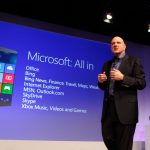
All signs pointed to another disappointing quarter for Microsoft's Windows division. But, instead, with fiscal second-quarter results announced today, revenue rose 24 percent year over year. Meanwhile, PC shipments are down 6.4 percent during same time period, according to IDC, which doesn't seemingly reconcile with Windows OEM revenue rising 17 percent. What's up with that?
There is sense behind the numbers, which forebode potential trouble ahead the next couple quarters, unless PC shipments pick up or Microsoft hits a big home run with Surface Pro, which goes on sale February 9. Simply stated: The company got big lift by selling cheap Windows Pro upgrades, something that ends January 31. OEM increase is byproduct of PC makers stocking the shelves with new models. Neither is sustainable, raising question: Will Windows 8 be a one-hit wonder? Meaning: One quarter of sales greatness?
Microsoft Q2 2013 by the numbers: $21.5B, 76 cents EPS

Late this afternoon, Microsoft answered a question oft-asked by investors this month: What's up with Windows 8? The new operating system, which launched October 26, was supposed to lift sagging PC sales and demonstrate the capability to successfully compete with so-called post-PC platforms like Android and iOS. Now we know more. Windows & Windows Live revenue passed Business, making the OS division most-valuable again.
For fiscal second quarter, ended December 31, Microsoft revenue was $21.46 billion, up 3 percent year over year. Operating income: $7.77 billion, a 3 percent decrease. Net income was $6.38 billion, or 76 cents a share.
Microsoft plays the nostalgia card to tempt past users back to Internet Explorer

I remember clearly where I was the day Internet Explorer launched. It was 16 August 1995 and I was sitting in a room full of tech writers watching Bill Gates show off Microsoft’s new browser. And I recall thinking, "why would anyone want to use anything other than Netscape Navigator?"
I remember clearly, some years later, wondering why anyone would want to use a browser that wasn’t Internet Explorer when I first heard about Firebird (which later became Firefox), and then wondering a few years after that why anyone would want to use a browser that wasn’t Firefox when Chrome launched. Times, loyalties and browsers all change, and Microsoft is hoping to use nostalgia to persuade people who "grew up" with IE to give the browser another chance.
Like Zune, Microsoft can't get Surface right
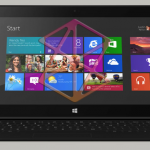
When Microsoft launched its portable music player Zune in 2006 few thought it would be a serious contender to Apple’s iPod. The fact that it was a US-only release spoke volumes. It was a product the firm simply didn’t have enough confidence in for a global launch.
And now we’re faced with a similar launch strategy for Microsoft Surface Windows 8 Pro. Yesterday the Redmond, Wash.-based corporation announced the delayed slate will be "available for purchase on Feb. 9, 2013, in the United States and Canada at all Microsoft retail stores, microsoftstore.com, Staples and Best Buy in the US, as well as from a number of locations in Canada". And the rest of the world? There’s no word.
Microsoft takes the wraps off Windows Azure Media Services
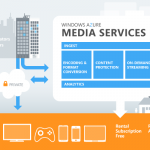
Microsoft's efforts to improve the company's cloud platform, Windows Azure, most definitely do not fly under the radar. Over the past few months the software giant brought Windows Azure Services to Windows Server 2012, introduced a plethora of new features for its cloud platform, updated the Windows Azure SDK for .NET and, on Tuesday, announced the general availability of Windows Azure Media Services.
Windows Azure Media Services is basically a Media Platform as a Service or PaaS, as Microsoft likes to call it, that allows users to implement video streaming, using various formats, to Android, HTML5, iPad, iPhone, Xbox, Windows 8 or Windows Phone, among other supported clients. Developers can control Windows Azure Media Services through REST APIs or Java SDK and .NET SDK in order to build an automated media workflow which can upload, encode and stream video.
What you need to know about Microsoft's 'New Office'

Even though Microsoft's lips have been sealed shut on the topic, launch of Office 2013 (and the new Office 365) is imminent. Speculation is fueled by the Office 2013 available on its Home Use Program (HUP) website, something which has customarily preceded most prior Office launches. If the show is about to begin, then all of these preparatory charades are quite the indicator.
Martin Brinkman provided a wonderful in-depth preview on Office 2013 this past summer, and the great majority of what he covered is still valid in the final bits. I've personally been using a MSDN copy of Office 2013 Pro Plus since about late October and am quite pleased with the product. Ever since Microsoft dabbled with x64 capability in Office 2010, in-house developers increased memory and security aspects that 64-bit provides and the result is a smoother, safer Office experience. Microsoft posted a long Technet article on the benefits of x64 Office 2013 this last summer.
Surface Pro goes on sale February 9th
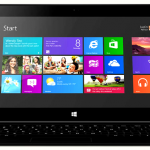
Nearly three months ago, Microsoft debuted the Surface RT tablet alongside its brand new operating system, Windows 8. Things have not been all-rosy since that fateful day in late October, and rumors of both failure and success run rampant. But all the while the company kept what is, perhaps, its trump card in hand -- the Surface Pro.
This is the tablet that Microsoft expects to be the big player, the one that will win over business users. Now we finally have some details about what to expect.
My 5 really big, unbelievable tech predictions for 2013

Most analysts, journalists and pundits use the new year to rattle off lists of what might be. Well, my inside sources were on vacation over the holidays and then at the Consumer Electronics Show. This week I finally hooked up with them and can finally make some safe bets on what's ahead. The delay gives me one-month edge on everyone else -- 11 to be right.
You will be shocked by this 2013 will-be list. BetaNews uses nothing but the finest sources, culled through constant pestering, home phone calls and secret online and parking garage meetings. With that, I present the Big 5.
HTC Windows Phone 8X -- positive first impressions
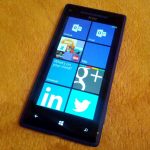
Before anyone labels me as an Android fanboy, let me tell you this -- I like Windows Phone 8, I like it a lot. Even though my smartphone of choice is the Google Galaxy Nexus running either of the two Jelly Bean iterations, Microsoft's mobile operating system has always appealed to me, especially the latest iteration which is by far the best of the bunch. I’ve always wanted to review Windows Phone 8, but there was one big problem -- I couldn't get a review unit for an in-depth look at it. So I did what PR folks were not expecting -- I bought an HTC Windows Phone 8X.
So why the Windows Phone 8X? There are not many devices running the new OS at the moment, but in my part of the world the selection is even more limited -- HTC is the only manufacturer that currently sells a Windows Phone 8 smartphone. The price is also very attractive at EUR479 which is marginally less than what the Samsung Galaxy S III goes for, for instance. By contrast the Nokia Lumia 920, which is not yet available locally through official channels, costs more than EUR700 at major retailers, a price difference that I cannot justify at all. So, as you can imagine, the Windows Phone 8X is my one and only choice.
A third of all users have added a Start button and menu to Windows 8 (maybe)
Windows 8 users fall into two simple categories. There are those that miss the old way of working and don’t really care too much about the tiled Start screen, and those users who have embraced Microsoft’s new operating system and don’t understand why people are still wittering on about the Start button and menu.
The truth, however, is a large proportion of users do want the Start button and menu back, initially at least, and thanks to third party software they can fulfill that desire fairly easily. There’s no shortage of freeware solutions, ranging from my personal favorite hack, Ex7ForW8, to ViStart 8.0, and we’re now beginning to get an idea of just how popular they are.
Security Essentials fails 'AV-Test Certified' stamp of approval and Microsoft says it does not matter

Three days ago, the AV-TEST Institute published its latest results for consumer security product testing, which was conducted on Windows 7 during a two month period, through November and December 2012. From the 25 security solutions analyzed in the roundup, only three products failed to receive the recognized AV-TEST certificate, one of which was Microsoft's own Security Essentials.
The software giant was prompt to respond to the latest test results, by emphasizing that "a rigorous review" is conducted in-house "whenever test results warrant it". Obviously, Microsoft does not shoot itself in the foot, as you may assume, and provides a number of internal test results in order to reassure users that Security Essentials is not as bad as the AV-TEST Institute may suggest. Question is: Why put itself on the spot in the first place?
© 1998-2026 BetaNews, Inc. All Rights Reserved. Privacy Policy - Cookie Policy.