Microsoft makes Windows Azure even better


On Friday, Microsoft unveiled a host of new features for the company's cloud platform, Windows Azure. The latest update beefs up the software corporation's offering by expanding the availability of Windows Azure Store into more regions as well as adding support for Mobile Services in Northern Europe.
Microsoft states that the company also plans to extend support for Mobile Services to "all Windows Azure regions world-wide", but did not provide any specific details as to when that will happen. The Redmond, Wash.-based corporation touts a number of other changes in the last Windows Azure update to Mobile Services, Web Sites, Media Services, SQL databases, Virtual Network improvements as well as Subscription Filtering support.
An iPad lover’s review of Microsoft Surface -- you know what’s coming, right?

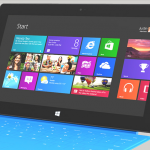
Arriving far too late to influence any gift buying for Christmas, here’s my review of Surface with Windows RT. The tardiness of the review isn’t really my fault. Microsoft only put its device in proper shops in the UK last Friday, and I wanted to include the shopping experience as part of the article (even though I didn’t actually spend my own money -- a friend purchased the tablet I’m reviewing).
Before we get into the review, I need to preface it by saying the following: I love Apple’s iPad. I bought an iPad 2 as soon as it was released and replaced it with the new 4th gen model a month or so ago. And even though I use Windows 8 daily, I really don’t like the new OS all that much. So, inevitably, I’m going to hate Surface, right? Absolutely loath it. Well, that’s what I thought. But surprisingly I like it. I like it a lot.
Microsoft finally understands how much we love irony


It took an ancient, nearly obliterated society and a looming apocolypse, but perhaps Microsoft is finally starting to get it. The company, once the dominant force in the web browser market after wiping out Netscape, is starting to get its act back together. Between ancient forces and challenges from Firefox and Chrome, the company has started to understand human nature. We may not believe the world will end tomorrow and we may not believe Internet Explorer 10 is actually good, but we can all agree that we love irony.
To that end, the Redmond, Wash,-based company has been on a roll of sorts recently. It launched a website with the ironic name "browser you loved to hate" and even launched a video depicting an IE-hater in action. Now the new kinder, gentler Microsoft meets tomorrow's impending doom with a bit more humor.
Microsoft 'surprised' after Google dropped Exchange ActiveSync support

Almost a week ago, part of Google's "Winter cleaning" involved dropping support for Microsoft Exchange ActiveSync on January 30, 2013. It appears Microsoft is far from happy with the controversial decision, and the company promptly retaliated by advising Gmail users to switch to Outlook for "the best email experience" across all devices.
As was the case with removing the free version of Google Apps for Business, Google's recent move is subject to criticism. But why does it matter? Google dropped the ball in Microsoft's court, as the latter uses EAS in a number of software products including Windows Phone and Windows 8/RT. The protocol allows syncing of calendars and contacts and uses push email functionality. "Killing" it leaves Microsoft customers without those features when accessing Google services.
Microsoft claims success for 'Meet your Match' Windows Phone challenge

Nearly a month ago, I told you about Microsoft's latest Windows Phone challenge -- titled "Meet your Match". Today the company released some numbers from its latest campaign. Although much of this is speculative, at least it almost certainly went better than the recent spectacular #DroidRage failure.
Windows Phone evangelist Ben Rudolph, who launched the successful "Smoked by Windows Phone" during Consumer Electronics Show 2012, began "Meet your Match" to coincide with the release of Windows Phone 8. This time around, instead of a simple speed test, Microsoft challenged customers to see which device better fit their needs -- Windows Phone 8 or the device they currently use.
Microsoft muscles further into your living room with new Xbox apps

It's no secret that Microsoft sees its Xbox platform as much more than just a gaming console. It wants the device to act as the digital hub of our living rooms, and today the company took another step in that direction, announcing more than 40 new entertainment apps.
Xbox Live's Larry Hryb, AKA Major Nelson, posted the news this morning that "more than 40 new global entertainment partners [are] coming to Xbox LIVE, including new apps launching this week."
SkyDrive comes to Xbox 360
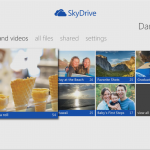
Microsoft has announced the availability of a SkyDrive app for Xbox 360 consoles, giving users the ability to display content stored in the cloud service on any connected TV or monitor.
The Xbox 360 is designed as a content consuming device, and the SkyDrive experience on the console reflects this. According to the software giant, the app focuses on photo and video sharing, as well as playing slide shows, with no mention of productivity. It's fair to assume that Microsoft plans to keep the content editing features for newer devices running Windows Phone or Windows 8/RT.
Vimeo and Insider now available for Windows Phone 8
While many of you wring your hands over the whole iPhone versus Android thing, Microsoft is quietly building a mobile platform that has also caused some hand-wringing -- late release, no upgrade path for previous users... not a great start. There has been a lot written about Windows Phone 8 since it was released. With some people saying it's good and others that it's a failure. The truth is, in my opinion, it's just really too early to tell. However, one thing is certain, the Windows Phone Store is growing quickly, with new apps being added all the time.
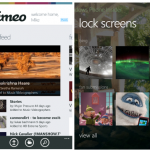
Today, two prominent new apps appeared in the Store that many of you may want to add to your new handset -- Vimeo and Insider.
Microsoft's Android bashing campaign goes down in flames as #WindowsRage trends

What was Microsoft thinking? The software giant initiated a campaign on Twitter, dubbed #DroidRage, inviting Android users to share their "malware horror stories", only to have it backfire spectacularly shortly afterwards. A huge number of anti-Microsoft posts with the #WindowsRage hashtag appeared on Twitter and Google+, almost immediately.
The problem with the campaign, apart from the less-than-brilliant concept, is the timing. Criticism of Microsoft’s more recent products, such as Windows 8, Surface and Windows Phone 8, should have caused the company to lay low for a while. Instead, the firm unwittingly gave frustrated users of its new products a unified hashtag to rally behind.
Surface RT sales are probably quite good, you just don't know it


The "Microsoft tablet is a failure meme" was old from the start. Every day there's some new blog based on rumor or innuendo assuring everyone who pays attention that Surface is doomed and sales are this side of worse than terrible. There is so much nonsense punditry, I don't know where to start. DigiTimes has unnamed channel sources saying Microsoft cut orders for the tablet by half. The report got widespread attention, despite the publication's record for getting this kind of story wrong. Along come the analysts. DFG slashed shipment estimates to between 500,000 and 600,000 from between 1 million to 2 million. Number was way too high to start. Now Tim Worstall, a Fellow at Adam Smith Institute, whines that Surface RT is way overpriced. It's not.
If Microsoft's tablet has a sales problem -- and let's strut that I-F again -- distribution is the reason. The product isn't overpriced or flawed. Microsoft only sells Surface through the company store; that's online and (by my count) 66 retail shops. Sixty stores are in the continental United States, five in Canada and another in Puerto Rico. There are only a limited number of places anyone can buy the tablet, which limits how many the company can sell. What matters more is how many Microsoft sells per store. Pundits crying "fail" are nincompoops of the nth degree. If any of them bothered to look at Apple Store, they would understand.
Nokia Lumia 920T brings Windows Phone 8 to the largest market in the world, China Mobile

Wednesday, Finnish smartphone maker Nokia introduced the Lumia 920T, the first TD-SCDMA variant of the Lumia 920 that will be available later this year on the world's largest carrier, China Mobile. Off-contract, the Windows Phone 8 handset runs for roughly $720 and ships in the typical black, red, yellow or white trim.
Nokia has given little away regarding the device's hardware specifications. That is likely due to the fact that the two Lumia 920 device types share most of the same underpinnings, except support for the TD-SCDMA wireless standard used in China. As a result, buyers can expect a 4.5-inch PureMotion HD+ display with a resolution of 1280 by 768, a 1.5GHz dual-core Snapdragon S4 processor, 32GB of internal storage, an 8.7 MP rear-facing camera with LED flash, 1080p video recording and PureView technology, and a 1.3 MP chat camera.
Microsoft feels the heat from Android, launches #droidrage campaign

Surely Microsoft is not overcome by joy after IDC placed Windows Phone as the third largest player in the 2016 smartphone market, lingering behind the biggest competitor -- Android. Taking vengeance upon the green droid, the Redmond, Wash.-based software corporation initiated the #DroidRage campaign on Twitter, inviting users to share their Android "malware horror story".
As an Android user myself, I can't help but feel overly amused by Microsoft's idea. The #DroidRage campaign exudes desperation, considering Windows Phone's lowly popularity and embodies anything but a professional attitude, which is expected from one of the largest software companies in the business. Furthermore, Twitter users responding to the save-the-world-from-Android-malware campaign are not necessarily on Microsoft's side.
Nokia announces the Lumia 620, a wallet-friendly Windows Phone 8 smartphone
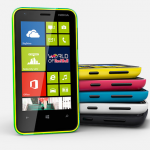
Nokia's Windows Phone 8 line-up currently targets the high-end and mid-range smartphone market with the Lumia 920 and Lumia 820, respectively. However, starting from Q1 2013 the Finnish manufacturer will also offer a more affordable device powered by Microsoft's latest mobile operating system.
The Lumia 620 will come with a modest $249 price-tag, without operator subsidies or local taxes, and feature a 3.8-inch ClearBlack LCD display with a resolution of 800 x 480. Power comes from a 1.0GHz dual-core Qualcomm Snapdragon S4 processor aided by just 512MB of RAM. On the back there is a 5.0MP camera capable of 720p recording at 30FPS and an LED flash to brighten up indoor shots. On the front the Lumia 620 sports a 0.3MP camera capable of shooting pictures and videos at 640 x 480.
Microsoft opens the door to its Socl network
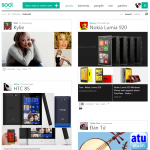
I know what you’re thinking. There just aren’t enough social networks. Sure, there’s Facebook, Twitter, Google+, Pinterest, Instagram, LinkedIn and MySpace, but what the world really needs is one that bills itself as an experiment in social search, right? Fortunately Microsoft’s Fuse Labs has been working on such a project, and has finally opened its endeavour to the world.
Socl (pronounced "social") was launched quietly back in May, as an invite-only offering for students. It was described then as an "experiment in learning" (which is hardly the sexiest of taglines) but from today the site is open to all, and if you’re the sort of person who appreciates seeing slightly raunchy animated GIFs of Katy Perry, or still enjoys all things Gangnam Style, you’re going to love it.
3 big reasons to oppose any UN attempt to rewrite rules of the Net


The Pope may be making news headlines in the tech world by opening his own Twitter account, but there's a much more worrying headline that is keeping its nose under the covers this week. The Internet as we know it could be in trouble if representatives from free-speech oppressors such as China and Russia have their way at a UN telecom regulations conference starting this week in Dubai.
The 11-day conference is billed as a gathering of the world's top nations to discuss ways to update rules last touched in 1988 on oversight related to telephone networks, satellite networks, and the Internet at large. Proponents of the conference say that the Internet has changed so radically since the 1980s that it is now time for others to have greater say in how it's regulated and controlled.
© 1998-2026 BetaNews, Inc. All Rights Reserved. Privacy Policy - Cookie Policy.