Intel Clover Trail to make mid-range Windows 8 Pro tablets attractive

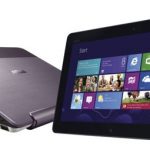
In the consumer market, Intel is best known for making chips that go into PCs of various design, and with the newly announced Intel Atom Z2760 processor, codenamed Clover Trail, the Santa Clara, California-based corporation is looking to make a dent in the mobile tablet market as well, where its presence can be considered abysmal at best.
The new Intel processor is designed to fill the gap between Windows RT-based tablets running on ARM chips and full Windows 8 Pro-based tablets on Intel Core i processors. Intel looks to be planting its Clover Trail flag in the middle ground, offering compatibility with desktop applications and improved mobility through good battery life and a compact package.
When will multi-platform users escape digital content hell?


I'm not locked in to any one company's ecosystem right now. I have a Windows 7 Ultrabook, a desktop I built myself running Mint Linux, an iPad, and my trusty Galaxy Nexus. Each appliance serves the purpose I purchased it for very well, and I feel no need to switch away from any of them for the moment. When I perform basic daily tasks, things run smoothly. I use Dropbox and Google Drive for sharing much of my content back and forth, and it's a great experience.
When it comes to purchasing digital content like music, movies, or books, it feels like I am punished for not being locked in to any one content system.
Google gets a break in the US, a warning in Europe


Trustbusters and other regulators still have their eyes on Google, which in response has maintained high lobbying presence in Washington. Is that effort paying off?
This week is surprisingly chock full of happenings -- good or bad, you be the judge -- for Google in the areas of lobbying and antitrust. Governments changed their positions on antitrust, rivals combined efforts and Google shifted strategy. All-in-all, it must be busy at the Washington, DC offices.
Windows 8 tablets are the right post-PC response

Microsoft is taking a considerable risk with the Windows 8 ecosystem and major push into the post-PC era. There is no room for error and to get it right all the parts must work in perfect harmony. Windows 8 faces stiff competition and must dismount all preconceptions it's a weak tablet operating system.
Microsoft enters the market fully prepared to take its opponents head-on. Instead of copying adversaries, the company takes the more mature approach of offering a different user experience. Every competitor should fear Windows 8 tablets, and I've got five reasons why.
HTC's new Windows Phone 8 smartphones mimic Microsoft's tile interface

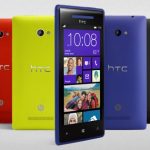
Wednesday, longtime Windows smartphone maker HTC debuted two new flagship Windows Phone devices which were designed to showcase Microsoft's latest mobile OS Windows Phone 8. The new smartphones, called the Windows Phone 8X and 8S, carry the same bright external colors of Nokia's Lumia series Windows Phones, but use HTC's technology and design prowess to make the devices stand out on their own.
Similar to the HTC One X in the speed and power department (dual-core 1.5GHz processor, 1 GB RAM, 8 megapixel camera), the Windows Phone 8X has a 4.3-inch Super LCD 2 display with Corning's Gorilla Glass 2, 16 GB of internal storage, and an improved 2.1 megapixel forward-facing camera with 1080p video capture and an 88 degree wide-angle lens.
SkyDrive files get redundant protection from your stupid self

Microsoft on Tuesday announced it has added recycle bin functionality to its SkyDrive cloud storage and collaboration suite, adding yet another layer of redundancy to the service to make sure the unthinkable doesn't happen and you actually delete a document.
I've "accidentally installed" plenty of things that have made me want to punch my own teeth out, and plenty of my work files have become corrupted, or have crashed before I could save changes…but I can say with some degree of confidence that I've never accidentally deleted a file. Maybe I'm some kind of keystroke wizard or something, because Microsoft likes to make extra sure people don't mistakenly delete something they need.
Has Microsoft lost the tablet war before it begins?


Asus' Windows 8 tablet roadmap leaked a few days ago, revealing the company's intention to launch three tablets powered by Microsoft's soon to be released Windows 8 operating system. Bloggers and journalists have used the roadmap to argue that the pricing is too high to compete effectively against Apple iPads and Android tablets. Taken aside that the pricing may not be final, it seems like they are right, if you only compare price and nothing else.
Asus' entry model, the Vivo Tab RT, for instance, lists with a starting price of $599. That's $100 more than Apple's cheapest new iPad model, and $300 more than Google's Nexus 7 tablet. But can you really make that comparison?
What Office 2013 pricing means to you


Simply stated: Microsoft wants to end any pretense you own the software, while curbing software piracy in the process. Oh yeah, expect to pay more for Office than you do today. For many households or small businesses, that's lots more, particularly if they buy into the Office 365 subscription paradigm.
Office 2013 is all about subscription pricing, something Microsoft has attempted several times over the years in pilot form but never really brought to the mass market -- certainly not broadly. The company will continue selling boxed software but the big push is about subscriptions. Hell, I had to dig deep to find retail pricing. Today's pricing announcement pushed Office 365 versions instead. Right, the new subscription bundles.
Steve Ballmer hints at Microsoft Surface costing $300-$800
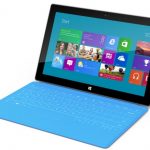
Rumors of a $199 Microsoft Surface RT tablet popped up on the Web a month ago, feeding the idea of a cheap and even subsidized Microsoft tablet that would take the pricing war to any device from the Google Nexus 7 to Apple's new iPad. In an interview for The Seattle Times, Microsoft CEO Steve Ballmer mentioned a new price range for the the company's Windows 8 device, putting the previous rumors of a $199 Microsoft tablet to rest.
Even though Microsoft did not announce the pricing, when asked about Surface, Steve Ballmer said that it would go for "probably $300 to about $700 or $800," giving a rough estimate of what potential buyers should expect to pay for the much discussed tablet. The previous rumors might be dust in the wind after the latest "estimate," but at the same time it calls for speculation justified by the $500 difference which isn't unsubstantial to say the least.
Apple is the new leader in technical stagnation


The golden years of Apple's outright dominance in technical innovation is fading, and quickly at that. The iPhone 5 just launched with a deservedly ho-hum and lackluster reception, with many people asking the obvious question: that's it? For a company riding the high waves of Wall Street for more than a few years now, with earnings going through the roof quarter upon quarter, is this the best that a larger-than-life tech giant can bring us?
Maybe the naysayers are right in that Apple is the leftover shell of a monolith once passed (post-Jobs.) Perhaps that internal drive to bring out the best in technology they release is starting to fizzle. I'd go as far as to argue that Apple never really has been as continually innovative as many people may believe. While Apple does have an easy ability in commanding the lead for sectors it enters, this doesn't necessarily mean the company if filled with technical Einsteins as so many supporters clamor to believe.
Windows 8 won’t save ailing companies from disaster


We all know that Microsoft is taking a hell of a gamble with its new operating system. If Windows 8 fails, as many are suggesting it will, that would be a major blow to the Redmond, Wash.-based company. Microsoft is staking pretty much everything on Windows 8 and trusting that ubiquity -- placing the OS on desktop systems, tablets, and mobile phones -- will be enough to persuade people to give it a chance.
The problem: Microsoft isn't just risking its own business. With the traditional PC market stagnating, faltering companies like Dell and HP (which both reported large drops in revenue recently -- HP’s losses being the worst in its 73-year history) need a way of boosting their dwindling PC sales. In previous years, the arrival of a new operating system would have done exactly that. When Windows 7 launched, for example, sales of new computers jumped 40 percent in the first week alone. While PC sales will undoubtedly still increase following Windows 8’s launch, it’s unlikely we’ll see such a big jump as last time around. Partly because many of those relatively recent upgraders will be happy to stick with what they’ve got, and partly because Windows 8 runs better on lower-specced systems than its predecessor does anyway. For those reasons alone it’s unlikely that this version of Windows will drive hardware sales in the same way that previous ones did.
ViStart 8 gives back what Microsoft took from Windows

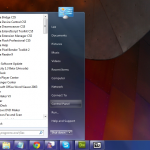
If you have tried out any of the preview releases of Windows 8, you may well have joined the thousands of users who are mourning the loss of the Start menu. Microsoft’s decision to drop this staple element of Windows has caused frustration, confusion and disbelief in equal measure, but with the help of ViStart 8, you can bring back an old favorite to Windows 8, but there’s also a lot to look forward to if you have an older version of Windows.
One of ViStart 8 key selling points -- although the app is actually free -- is that it supports skins. These provide you with a quick and easy way to completely transform the look of the Start menu. You may think that the program has done very little when you first install and run it in Windows XP, Vista or 7, but as you explore the range of skins that are available, you’ll discover that there are varying layouts to choose from.
Kindle Fire HD burns Microsoft more than Apple

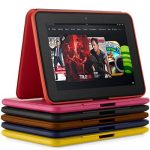
Following Amazon's Kindle Fire HD announcement, a reader reminded me of a prediction I made at the start of the year: "If Apple gives up its position of industry leadership in 2012 the only company capable of assuming that role is Amazon.com". I stand by those words -- Amazon is really bringing the fight to Apple -- but the most important part is "if Apple gives up its position", which it clearly hasn’t, at least not yet. The real loser here, in fact, is not Apple but Microsoft.
I could be wrong about this but I don’t recall any pundits (me included) predicting that Amazon would introduce a larger format tablet, yet that’s exactly what they did. The larger Kindle Fire HD with its built-in content and app ecosystem (and that killer 4G data package!) is a viable iPad competitor at a terrific price and puts real pressure on the Cupertino, Calif.-based company. Will Apple match the price? I don’t think so. That’s not the game they want to play. But the game is on, nevertheless, and users can only benefit from competition.
Android and iOS shut out Windows Phone, BlackBerry
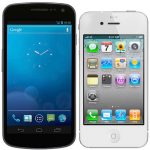
For the three months ending in July, Android and iOS combined US smartphone subscriber share reached 85.6 percent, according to comScore. That's 3.4 percentage points higher than April. Meanwhile, Research in Motion and Microsoft mobile platforms receded to 9.5 percent and 3.6 percent share from 11.6 percent and 4 percent, respectively. While comScore combines defunct Windows Mobile and Windows Phone, we henceforth refer to both using the latter name.
The smartphone market clearly consolidates around Android and iOS, leaving even less share for Windows Phone or BlackBerry. Android and iOS will soon face the new batch of Windows Phone 8 handsets, including the Nokia Lumia 920 announced today. However, as it stands now, Microsoft's mobile operating system has plenty of ground to cover to even count as a worthy adversary to the two major platforms.
Windows Phone 8 is the best idea Microsoft has had in phone tech
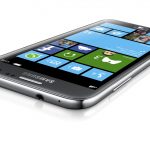
Samsung's recently-announced Windows Phone 8 smartphone, the ATIV is oozing with power and modernity, and that is what the Windows Phone software needs to finally become a dominant platform.
A platform needs flagship devices --smartphones and tablets-- to showcase what it can do in front of (possibly) billions of people, and hardware-wise it doesn't get any better than Android and iOS devices displaying their inner strength, their performance. Android takes first place and iOS second in the smartphone charts, and they have halo devices to represent them. Windows Phone, meanwhile, has been a mere shadow behind the two flexing their muscles. The Samsung Galaxy S III best represents Android as much as the iPhone 4S best represents iOS, but what does Windows Phone 7.5 have to show? A single-core CPU with 512MB of RAM and a GPU that was news a few years ago? That doesn't cut it...
© 1998-2026 BetaNews, Inc. All Rights Reserved. Privacy Policy - Cookie Policy.