PCs need model years, just like cars


Windows PC makers will start unveiling their first 2013 models from today. They are all desktops built around the maiden Ivy Bridge processors out of the chute, which Intel announced late this morning. Ivy Bridge is the working name for Intel’s 2013 models.
Intel decision-makers chafe whenever I refer to their processor generations as model years. In fact, executives throughout the PC ecosystem universally hate the term. They’d better all start embracing it, though. Because they’ll need to adopt a model-year mentality if they want to ensure continuing growth.
Windows Phone will gain serious market share this year

Let me repeat that a little more verbosely. Watch for Windows Phone to grab a serious hunk of market share at the end of 2012. No doubt about it. "Huh?" you ask. Believe it.
The Feibus-is-crazy club most assuredly is enjoying a surge in membership right about now. And why not? There is certainly plenty of evidence to suggest that Windows Phone thus far has underwhelmed.
Microsoft Q3 2012 by the numbers: $17B revenue, 60 cents EPS

Late this afternoon, after the closing bell, Microsoft revealed results for one of its most uncertain quarters in years. That's because Gartner and IDC report tepid PC shipments and Microsoft prepares to launch a horde of new products later this year, including new versions of Office, Windows and Windows Server, among others. Sometimes sales sag in the quarter or two before new product releases -- and for 2012 there are many core ones coming.
"With the upcoming release of new Windows 8 PCs and tablets, the next version of Office, and a wide array of products and services for the enterprise and consumers, we will be delivering exceptional value to all our customers in the year ahead", Microsoft CEO Steve Ballmer says.
Nokia's short-term pain is the result of long-term problems

Point. It's always fun to point the blame at someone, and everyone loves to blame CEO Stephen Elop for Nokia's woes. As the Finnish phone manufacturer began to burn, Elop came aboard and made a deal with his former employer, Microsoft, to adopt the Windows Phone platform. Pundits thought he was insane, and have criticized him repeatedly for the move.
These criticisms grow louder as Nokia reports a $1.3 billion euro ($1.76 billion) loss in the first quarter of 2012. According to the financial statements, the company burned through 700 million euros in cash during the same quarter, and has a little under five billion euros in cash left. The company may face bankruptcy in two years.
Nokia does the Windows Phone death dance

Few high-tech companies have imploded like Nokia and at the strangest time. Typically, dominant companies get killed during transitions from where they rule to where they don't. Nokia is oddest exception, imploding during a major computing era shift that favors its core competency. Transition from the PC to the mobile device eras is underway -- to a market where Nokia was, until recently, share leader by huge margins. How low the mighty has fallen, and former Microsoft division president turned Nokia CEO Stephen Elop wields the missile codes that launched self-inflicted nuclear strikes.
Today's Nokia earnings report is a disaster. It's radioactive fallout from Elop's decision to turn over the Finnish company's crown jewels to Microsoft. Elop sold Nokia's soul to his former masters, which I described at the time as a "silent takeover" of the company. Nokia needed new leadership, not new technology -- Elop's fundamental platform and cloud services switch -- to combat escalating Android and iOS competition. Before his tenure, Nokia did the right things, just in the wrong ways. Since taking the chief executive's seat in Autumn 2010, Elop has done the wrong things in all the right ways to destroy a once proud mobile device innovator.
Microsoft refreshes Windows Intune, debuts cross-platform mobile device management

Tuesday at the Microsoft Management Summit in Las Vegas the topic was the private cloud and the public availability of System Center 2012. Microsoft switched gears on Wednesday and revealed details on the next version of Windows Intune, its public cloud offering.
Wednesday's Intune release is a beta version limited to 10 PCs. It will support all versions of Windows after XP Service Pack 3, but is currently incompatible with Windows 8, and "will not support Windows 8 until after it is generally available" according to the company.
Microsoft, Nokia, don't cheat Lumia owners of Windows Phone 8
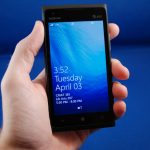
Children often suffer when parents make bad decisions. For the marriage of Microsoft and Nokia, there is trouble looming for the kids -- that's you, buyers of Lumia smartphones. The next version of Windows Phone codename Apollo may not be supported. That's the rumor shooting across the web today. Here's one bit of gossip every current Windows Phone owner should hope is wrong.
I've got no inside intelligence here, hearing nothing either way about Lumia upgrades. But I can see scenarios where Apollo might be a problem, particularly for older CPUs or GPUs. For example, all current Windows Phones are single-core. Surely double-core handsets are coming, but will the software support single-core CPUs? It's the first question to ask, with rumors a flying and Microsoft not denying.
Microsoft releases System Center 2012 to manage private clouds

Microsoft is pushing the cloud heavily at this years Microsoft Management Summit in Las Vegas, and its private cloud offerings are taking center stage. The company announced the general availability of System Center 2012, its private cloud management platform.
Private cloud deployments are exactly what the name entails -- for consumption internally -- and can be hosted either internally or by a third-party provider. System Center's public cloud equivalent is Windows Intune, which launched last March.
As Metro debate smolders, will it burst into flames and consume Windows 8?

On Friday, colleague Ed Oswald opined "Metro apps on Windows 7 is a bad, bad idea". I agree. Ed responded to Adrian Kingsley-Hughes' ridiculous commentary: "Bring Metro apps to Windows 7 to encourage developer growth". He usually writes good stuff, but this one is a stinker. Metro doesn't belong on Microsoft's current OS, and BetaNews commenters raise legitimate questions about how much it belongs on Windows 8.
Metro is a hotly-debated topic here, and on other sites where Windows enthusiasts gather. There's general consensus that Metro works for touch, albeit with too much scrolling to the left once there are many apps, but controversy about its functionality with mouse and keyboard and position as primary user interface is fierce. Some readers here also question whether or not touch should be the future Microsoft bets on. Windows 8's success depends on Metro -- businesses, consumers and developers embracing it. If they don't, the OS could be the biggest flop since Windows ME or Vista. Take your pick which!
Metro apps on Windows 7 is a bad, bad idea
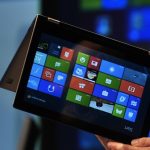
As we move closer to the launch of Windows 8 -- and the sea change that the Metro user interface brings to the platform -- there's an ever increasing drumbeat of both skepticism, concern, and apprehension depending on who you talk to.
End users are skeptical of Metro because they do not see its value. The interface completely changes how we interact with Windows, and in some cases will confuse us. I point you to this video of tech pundit Chris Pirillo's father attempting to use Windows 8 for the first time without instruction as an example. Microsoft may have unintentionally added an extra layer of complexity in an effort to simplify the OS.
Nokia could teach Apple a thing or two about customer service


It’s the biggest product launch of the year so far for Windows Phone and Nokia. The Lumia 900 went on sale April 8th and early reports suggest that sales are better than expected. They're nothing stellar but nevertheless some good news for a platform struggling to gain market share.
Earlier this week, I convinced my mother to purchase her first Windows Phone, the Cyan Lumia 900. Later that afternoon, I learned of a serious software bug causing devices to literally lose their data connections --an essential feature for any smartphone. So admittedly, I was pretty concerned. It turns out, I didn’t need to be.
Microsoft all but buys Netscape with AOL patent acqusition

It's truly the final curtain call for Netscape. A portion the company's technologies are part of a massive $1 billion patent sale between AOL and Microsoft, announced Monday morning. Microsoft was the top bidder in an auction to sell off non-essential technologies that include about 800 patents.
Microsoft is also acquiring a subsidiary of AOL. While AOL did not specify the subsidiary by name, sources tell All Things Digital that it is Netscape. AOL still retains the right to the brand and related businesses, but all the technologies behind it are now owned by the Redmond, Wash. company.
Don't cry for me, Steve Ballmer

But I'll shed a tear for you and remember the good times we had together.
That's because IDC asserts, despite exciting Windows 8's coming launch, that the PC era will be over by 2016. Gartner uses a different metric to arrive at 2014. But whatever the measure, the Windows era is over, too, as (gulp) Android becomes the most widely shipped operating system on the planet. I guess you were right to obsess about Google after all. Cripes! As long ago as 2003, wasn't it? Who could have imagined that it would really come to this? You weren't being paranoid at all.
Nokia and Microsoft save face by investing 18 million Euros in Finnish apps dev project

Nokia has shown a score of developers the door since announcing its Windows Phone distribution deal in February 2011. Surely you remember the 2,300 Symbian developers off-loaded to Accenture? Is it cheaper to invest in new ones than keep the old? I ask because of today's Microsoft-Nokia announcement: Each will invest up to 9 million to fund AppCampus at Aalto University, in Finland.
The program is designed to help generate applications for Windows Phone and, get this, Symbian! Someone slap me aside the head and explain why Nokia doesn't just capitalize on the experience of existing Symbian developers. Easy answer: Both platforms need more third-party apps, and Nokia CEO Stephen Elop must make a desperate show of face, given his brutal axing of employees and ripping the Finnish heart out of Nokia's management culture.
Microsoft Dynamics looks to the cloud

Today, Redmond, Wash.-based Microsoft reaffirmed its commitment to bring business process software to Azure. Kirill Tatarinov, president of the company's Business Solutions group, promises that Dynamics NAV 2013 and Dynamics GP 2013, which are separately set to be available in calendar fourth quarter, "will run on Windows Azure in an elastic Microsoft cloud". Dynamics AX 2012 R2 is on track for similar release.
Dynamics NAV and GP are designed for small-to-midsize organizations. SMBs looking for an early taste of NAV 2013 will get their chance when a beta becomes available in May, says Tatarinov, during Microsoft Convergence 2012. The next AX version, which looks to be v2014, will evolve into an enterprise cloud service.
© 1998-2026 BetaNews, Inc. All Rights Reserved. Privacy Policy - Cookie Policy.