Windows 7 OEM price even cheaper if you get Vista Upgrade first

Microsoft: SMB 2.0 hole does affect Vista, not Windows 7


A security advisory issued by Microsoft late yesterday takes to task a security consultant for a British ISP who apparently, and possibly even accidentally, discovered a way that the Server Message Block 2.0 driver can trigger an instant Windows crash. Rather than report the incident directly to Microsoft, Laurent Gaffié went public with his findings first, in such a way that appears to have triggered the enthusiasm of the black-hat side of the security community.
"Microsoft is concerned that this new report of a vulnerability was not responsibly disclosed, potentially putting computer users at risk," reads yesterday's Security Advisory 975497. "We continue to encourage responsible disclosure of vulnerabilities. We believe the commonly accepted practice of reporting vulnerabilities directly to a vendor serves everyone's best interests."
Vista SMB 2.0 exploitable hole points to need for new filters

Nearly two years ago, I proclaimed Microsoft's adoption of Server Message Block version 2 the #6 of ten best new features of Windows Server 2008. Essentially, it provides a way for servers utilizing the Common Internet File System to utilize modern filing tools such as symbolic links and transaction batches, to expedite the process of sending large files over the Internet.
It has taken this long for anyone to find what was described earlier today as a glaring hole in Windows SMB 2.0 security, but it's an embarrassing little hole nonetheless: A security researcher discovered that if you get the order of the words in the SMB 2.0 message headers wrong, in such a way that you end up sending an ampersand (&), where a zero should be in the high word of the Process ID field, then you can end up sending a message block that could literally crash the remote recipient. Conceivably, an exploit could be crafted that could remotely crash a Vista-based client.
Not just Vista: The operating system is dying, too

Okay, so I raised a bit of a stink with last Friday's Wide Angle Zoom. So to make sure my position on Vista, operating systems, Microsoft and the future of the technological world under President Barack Obama's leadership are completely understood, I wanted to address some of the more...ah, pointed perspectives from the Comments section. I've paraphrased the wordings to protect the innocent. Here goes:
Vista is a great operating system. There's nothing wrong with it.
Vista's dead: Microsoft kills an OS and no one cares
For anyone still burning a torch for Windows Vista, its time is rapidly approaching. Buy now or forever hold your peace.
I can't say I'm surprised at how any of this has turned out. After all, Vista's launch was, to be charitable, rocky. When it first arrived just before Christmas 2006, it was late, bloated and, for some, expensive. It may have looked pretty on the outside, but critics quickly pounced on it for driver incompatibility, sluggish performance on mainstream -- and sometimes even high-end -- hardware and enough bugs to fill a family-sized tent on a weekend camping expedition. Microsoft didn't help matters with its ill-fated "Vista Capable" designation -- a public relations debacle that convinced buyers who were too lazy to read the fine print that Vista would run just as well on hardware barely suited for XP.
Microsoft: Europe customers must wait to upgrade Vista to Windows 7
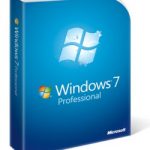
Microsoft spokespersons have confirmed to Betanews, contrary to press reports earlier today, that at some point it does plan to provide European customers with a Windows 7E upgrade package -- a way to upgrade Vista installations to Windows 7, while enabling customers to leave out Internet Explorer 8. In all cases, that means uninstalling IE from Vista, which current builds of the Win7 upgrade are not capable of doing.
"As part of Microsoft's decision to offer Windows 7 without a browser in the [European Economic Area], we also had another hard decision to make: Offer both Full and Upgrade retail packaged product and delay the entry of Windows 7 into market, or not offer the Upgrade packaged product at launch," the spokesperson told Betanews. "At this time, we will not offer an Upgrade packaged product in Europe, but in a way that does not penalize our customers."
New Vista buyers can expect to pay more for Windows 7
After considerable confusion over whether Microsoft will offer free upgrades to Windows 7 for new PC buyers who find Windows Vista pre-installed, in an announcement this morning that required clarification, some confirmations, and a bit of editing, the company stated that it is leaving it up to PC manufacturers to determine how customers will get Windows 7 upgrades, and how much they'll cost.
Customers who already have Windows Vista on their PCs, Microsoft confirmed to Betanews this morning, can order upgrades to Windows 7 through Microsoft, but will pay full price to do so. Upgrading to Win7 Home Premium will cost about $10 less than upgrading to Vista Home Premium, however -- a difference between $129.95 for Vista and $119.99 for Win7. Upgrades to the Professional and Ultimate SKUs of Win7 will cost 4¢ more than did the corresponding upgrades to the Business and Ultimate SKUs of Vista -- $199.99 and $219.99, respectively. And the full retail prices for Windows 7 Home Premium, Professional, and Ultimate will be in alignment with the existing prices for Vista Home Basic (not Premium), Business, and Ultimate SKUs, except their MSRPs will now end in ".99" rather than ".95."
Tracking Vista's elusive 'Black Screen of Death'

What we've been calling a "perception problem" with Windows Vista -- the notion that users may tend to think it's less secure or reliable than it has proven to be on a large scale -- isn't just about perception for users faced with severe unreliability issues. As a Windows user for over two decades, I have been to the far depths of unreliability, and have lived to tell the tale. Probing the problems with Windows is actually part of my job, and one reason I actually am a Windows user -- unlike the rest of the world.
Yesterday, a problem that's far beyond perception afflicted a 64-bit Vista SP2-based Betanews production system for the fourth time in a year, this time with the remedy being so far out and unusual that everyday users could not possibly have discovered it by normal means. As we've found out, it's a problem that has affected a small number of Vista users since the system's debut three years ago, though that number appears to be growing steadily just as Vista is preparing to vacate the spotlight for Windows 7.
Chrome, Firefox, IE8 accelerate 12% or more in Windows 7 over Vista

If you've been testing the final Windows 7 Release Candidate on your own physical platforms, and you wonder what's giving you that feeling that it's just a bit peppier, a tad zippier, it's not an illusion. Betanews tests all this week, concluding today, comparing all the major stable release and development Windows-based Web browsers, running on exactly the same physical computer with fresh Windows Vista SP2 and Windows 7 RC partitions, confirmed what our eyes and gut feelings were telling us: On average, most browsers ran 11.9% faster in Windows 7 than on the same machine running Vista SP2, with most speed gains falling right around that mark.
Internet Explorer 8, for example, runs 15% faster in Windows 7 than in Vista SP2, in multiple tests whose results were within one another by a hundredth of a point. Using our performance index as a guide, if you consider the relatively slow Internet Explorer 7 in Vista SP2 as a 1.00, then in a fresh test of IE8 on the same platform, the newer browser in Vista SP2 scored a 2.03 -- performing generally better than double its predecessor. But in Windows 7, the score for IE8 rises to a 2.27.
Five Vista perception problems Windows 7 must overcome
Poor Windows 7. Months before its official launch, it's already fighting to live down the reputation of its older siblings. It's bad enough it has to fight perceptions of insecurity (I'm looking at you, XP) and bloated incompatibility (Vista, anyone?). But like the poor kid entering a high school after his older brothers have spent years being serially suspended for misbehaviour and general hooliganism, Windows 7 has an uphill battle ahead of it. Whether the perceptions are earned or not is irrelevant. Undoing them is a monumental process either way, and it all rests on the shoulders of a kid whose only mistake seems to lie in carrying the family name.
But undo these perceptions it must. Windows 7 promises to be Microsoft's most crucial launch ever because the company's very future has never been in as much question as it is now. Its two cash cow franchises, Windows and Office, are mooing a little less deeply these days thanks to a seismic shift away from the traditional PC model. While Vista's problems are more perception than anything else, there's no escaping the cruel reality that the age of Windows-everywhere-by-default is over. As conventional desktop and laptop PCs give way to all sorts of new form factors running all sorts of new operating systems and connecting to the outside world in all sorts of unconventional ways, Microsoft can't afford another lukewarm Windows launch.
Eager Fans Await Halo 3 Release

[portfolio_slideshow id=28223]
Halo 3, undoubtedly the most anticipated title for the Xbox 360 -- and perhaps of all time -- will be finally available tonight. More than 10,000 stores will be opening their doors at midnight to sell the game, which is expected to break all sales records and become the biggest interactive entertainment launch in history.
Microsoft Not Discussing Windows 7, Office 14

Now that Vista and Office 2007 are officially out the door, Windows enthusiasts have been busy scrounging up what they can about the next versions of both products. Not much has turned up besides code-names and potential features, but a number of blog posts prompted Microsoft to say publicly that it's not saying anything.
The commotion largely began at the RSA Security conference last week, where Windows Core Operating System Division Corporate Vice President Ben Fathi told an audience that the next major release of Windows is about two to two-and-a-half years out, indicating a 2009 timeframe.
© 1998-2026 BetaNews, Inc. All Rights Reserved. Privacy Policy - Cookie Policy.