Companies miss basic precautions that could prevent data breaches

Public awareness of data security issues has never been higher. Not only have data breaches made the news but the FBI's battle with Apple has put encryption in the headlines too.
Yet despite the high profile of threats a new survey of IT security professionals from secure browser company Authentic8 shows that businesses aren't taking basic steps to protect themselves.
HP announces printer security services


HP has redesigned the way it protects printers, setting a new industry standard, the company announced in a press release this week.
Its new Secure Managed Print Services (MPS) offer "advanced" security professional services and solutions, as well as expanded core delivery capabilities, which now include a new remote fleet security management service. The company also says it will be pre-configuring its print devices for security.
Automated phishing boosts profits for hackers
Phishing has proved to be one of the most profitable techniques for hackers. A new report from cyber security company Imperva reveals that the availability of turnkey services is making it even more effective.
Imperva researchers explored the darknet marketplace to estimate the cost of phishing campaigns and to get a clear picture of the hackers' business model. They discovered phishing-as-a-service (PhaaS) campaigns were easy to buy and low cost.
The big security problems in 2017

If there’s one thing you can say with certainty about cyber-security in 2017, it’s that many companies are going to fail because they are simply not doing the right thing. Fundamental flaws still exist.
Until the technical people lift their heads up and see that security and business are different sides of the same coin, we will inevitably see more damaging attacks. When security people learn to speak in the language of business they will begin to understand just where in the organization they need to apply their expertise.
100 percent of holiday retailers vulnerable to cyber security issues

With more of us than ever doing our shopping online over the holiday period we want to feel that we can do so safely.
But a new report from security ratings company SecurityScorecard exposes cyber security vulnerabilities across 48 of the biggest US retailers.
The key cyber threats to businesses in 2017

The past year has been a pretty eventful one for many reasons, not least in the area of cyber security which has seen attacks gaining in sophistication and persistence.
If you were expecting 2017 to be an improvement you may be in for a disappointment according to the Information Security Forum (ISF) which is today publishing its outlook for the threats businesses will face in the next year.
Google, Facebook, Microsoft, and Twitter join forces to fight terrorism


Terrorism is a daily threat to our freedoms. It is unfortunate, as we used to be able to go throughout our days without the thought of violence. Now, it dominates the news. Heck, when I am in Penn Station in NYC, I see soldiers with machine guns. Sigh.
Unfortunately, terrorists thrive on the internet too. Using social media and video platforms like YouTube, these evil-doers look to recruit new members while sharing propaganda. Today, Google announces that it is partnering with some major players -- Facebook, Microsoft, and Twitter -- to fight online terrorism with a special database. The partners will look to protect user privacy in the process.
Amazon launches DDoS protection service AWS Shield

Following the massive attack that took down the servers of the DNS service provider Dyn and a number of high profile websites including Netflix, Twitter, Spotify and Reddit last month, Amazon Web Services (AWS) has announced a new technology to protect sites against distributed denial of service (DDoS) attacks.
The new tool, which is called AWS Shield, was announced at the company's re:Invent developer event in Las Vegas. Amazon's own site was affected by the attack on Dyn and the company has now decided to launch its own DDoS protection service to ensure that its site and those that use AWS are able to withstand future attacks.
Social engineering attacks are a real threat to most organizations

Social engineering, as a method of cyber-security attacks, is very popular and quite widespread, according to a new report by cybersecurity firm Agari. It had polled 200 professionals from healthcare, government, financial services and education sectors.
Six in ten (60 percent) of security leaders say their organization either was, or "may have been" a victim of at least one targeted social engineering attack, on the last year alone. Two thirds of those attacks (65 percent) led to employees’ credentials getting compromised.
Mirai malware spreads to routers in new countries
According to security firm Flashpoint, the latest strain of the Mirai malware responsible for infecting Deutsche Telekom routers has spread to devices in at least 10 countries other than Germany.
The firm has discovered that the new strain of Mirai has infected routers in places like the UK, Brazil, Iran and Thailand. It is still unknown how many devices have been infected in total, but Flashpoint estimates that five million devices could be vulnerable to the malware.
Ransomware attacks to decrease in 2017
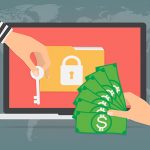
Ransomware is expected to deflate a bit next year, but hackers won’t be resting on their laurels, that’s for sure. Instead, they might just move to dronejacking, for a "variety of criminal or hacktivist purposes".
This is according to McAfee Labs, whose new report, the McAfee Labs 2017 Threats Predictions Report, identifies 14 cyber-security trends to watch in 2017.
Half of IT professionals more concerned about internal threats than external ones
Hackers and cyber criminals are often seen as the biggest threat to company IT systems, but a report from behavioral firewall company Preempt shows that insiders, including careless or naive employees, are now viewed as an equally important problem.
The survey carried out for Preempt by Dimensional Research finds that 49 percent of IT security professionals surveyed are more concerned about internal threats than external threats.
Most enterprise attempts at email authentication fail
A new study shows that 75 percent of large businesses attempting implementation of the DMARC email authentication standard are not presently capable of using it to block unauthorized email.
This means that enterprises are putting their own security, compliance, and brand protection at risk. Automated mail authentication specialist ValiMail looked at email authentication policies for more than a million business domain names, including those of Fortune 1000, NASDAQ 100, and FTSE 100 businesses.
The 'age of automation' can benefit the security landscape

Artificial intelligence (AI), machine learning and automation are technology trends dominating discussions in many different industries at the moment and cyber security is no exception.
As cyber criminals become more advanced and the threat landscape continues to develop, businesses are looking to new technologies that can help secure their organization in a more proactive way.
Symbol-to-accept strengthens multi-factor authentication
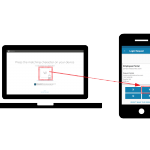
One of the more popular ways of securing logins in recent times has been the use of push-to-accept technology, sending a verification message to a user's mobile device.
However, this runs the risk of users inadvertently approving login requests that they didn't initiate. Adaptive access company SecureAuth is launching its new Symbol-to-accept technology to boost security without sacrificing convenience.
© 1998-2026 BetaNews, Inc. All Rights Reserved. Privacy Policy - Cookie Policy.