Cost of a cyber-attack will soon reach $1 million for large businesses


We are coming closer to the point where a cyber-attack will cost every large business more than $1 million. According to a new Kaspersky Lab report, a single cyber-security incident now costs a large business, on average, $861,000.
Small and medium-sized enterprises (SME) pay ten times less, on average -- $86,500. The new report also stresses, once again, how costs go up the longer the threat remains unseen. For an SME, it will have to pay 44 percent more to recover from a week-old attack, compared to the one spotted on the first day. Among large companies, the percentage sits at 27.
Students need better data security education


As students head back to university, a survey by Intel Security reveals that, in the UK at least, half of them are failing to protect their phones, tablets and laptops from online threats.
The survey of more than 1,000 UK-based students carried out in conjunction with The National Student finds that despite a quarter of teenagers reporting that they are 'almost constantly' online, only 50 percent of students ensure they have the necessary security software installed to keep their devices and data safe.
Security, disaster recovery are top IT priorities for UK businesses

UK businesses’ number one technology priority is security, according to a new survey by EACS. The IT solutions and managed services provider polled CIOs, IT directors and IT managers, and released the results in a whitepaper entitled Business & Technology Priorities 2016 survey.
Among the top priorities for them are better efficiency, operating results, increased productivity and cutting costs. The study also found one interesting thing -- all IT decision makers agree that no company can be 100 percent safe. That is why disaster recovery is in second place on the list of tech priorities.
How cyber security professionals see insider threats

Whilst the popular view of hackers tends to be of outsiders, there's been increasing emphasis in recent years on the threat to enterprise data posed by those inside the organization.
Behavior analytics company RedOwl carried out a survey at last month's Black Hat conference, asking almost 300 security professionals for their views on insider threats, and the results are released today.
Ping Identity partners with Microsoft to deliver secure application access
Many large enterprises use Azure Active Directory (Azure AD) as their identity platform for managing users and providing secure access to thousands of cloud SaaS and on-premises applications.
Secure access company Ping Identity is announcing a collaboration with Microsoft to deliver integrations that will expand secure remote access and single sign-on (SSO) from any device to more on-premises web applications for Microsoft Azure AD customers.
GCHQ plans Great British Firewall to protect web users

The UK's cyber intelligence agency GCHQ is planning what has been labelled a 'Great British Firewall' to protect individuals and companies against cyber attacks.
The idea emerged in a speech delivered by the head of GCHQ's national cybersecurity centre, Ciaran Martin, at the Billington Cyber Security Summit in Washington DC.
American Express customers phished using phishing prevention scam

In a rather ironic twist on traditional phishing attacks, customers of American Express are being targeted by a campaign promising them an identity theft and phishing prevention tool.
The phishing emails offer SafeKey use as bait. This is a legitimate program that Amex offers its customers as an additional layer of security to guard against ID theft and phishing.
One in five companies fail to test for security vulnerabilities

Many businesses don't carry out frequent security testing despite believing that it's critically important to securing their systems and data, according to a new survey.
The study from managed security services company Trustwave and Osterman Research finds that one in five businesses surveyed don't do any security testing, despite the fact that 95 percent of respondents reported encountering common security issues associated with security vulnerabilities.
New partnership aims to improve threat detection

The problem with many security solutions is that the number of alerts they generate leads to a good deal of time in investigations, some of which will turn out to be false positives.
Real-time analytics company Corvil is partnering with endpoint security specialist Carbon Black to offer customers unified cyber threat detection, analysis, and response.
Employees sue Seagate over HR department's private data leak
After falling victim to a phishing scam in March, Seagate is now being sued by its own employees whose sensitive data was exposed in the leak.
The company's HR department was tricked into providing the operators of the phishing scheme with the personally identifiable information (PII) of 10,000 past and current employees and W-2 forms that include their Social Security numbers along with their wage, salary and tax information.
Dispelling 5 common myths about desktop printers in the office

They may seem like technology from the days of old, but make no mistake -- desktop printers still can hold an important place in British businesses today. Not only do they help create efficient and flexible printing management, but they also can help keep British office workers at their most productive, rendering them potentially one of the most important products for IT managers in 2016.
The value of desktop printers is often overlooked due to advancements of new printer technology services, including an array of enterprise-orientated features, however, the traditional role of the printer mustn’t be forgotten. Desktop printers intertwined within a multi-device print and document management strategy, whilst also combining bigger multi-function devices with smaller devices, should arguably become commonplace for all managers responsible for their company’s printing activities.
The growing security risks in enterprise Windows environments [Q&A]

ManageEngine recently announced the results of its global Active Directory and Windows Server Security -- Trends and Practices Survey for 2016, which found that 70 percent of IT administrators across the globe agree that their Windows environments are not immune to malicious attacks.
To delve a bit deeper, we spoke to Derek Melber, a technical evangelist for ManageEngine.
Fifteen years after 9-11, threats have evolved too


Fifteen years after 9-11 it’s interesting to reflect on how much our lives have -- and haven’t -- changed as a result of that attack. One very obvious change for all of us since 9-11 is how much more connected we are to the world and to each other than we were back then. Politico has a great post quoting many of the people flying on Air Force One that day with President George W. Bush as his administration reacted to the unfolding events. Reading the story one thing that struck me was the lack of immediate information about the attacks available to the airborne White House. They had televisions with rabbit ear antennas and rarely more than a few minutes of TV coverage to watch at a time as they blasted around the midwest at mach 0.94.
Even Mary Alyce and I, sitting on our Wine Country hillside, were watching satellite TV that day. Today, of course, we all have news and social media coming-in through a wide variety of channels and nothing is very private for long.
New version of RAA ransomware only goes after business users

A new version of the RAA ransomware was found recently by security researchers at Kaspersky Lab. This one, written completely in Jscript, seems to be targeting business users exclusively, the researchers claim.
It comes as they all do: through an email with the malicious attachment. This one, however, comes in a password-protected zip file. This method does two things:
Intel Security will revert to the McAfee name
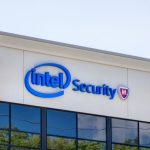
Intel has made the decision to sell off a majority stake in its security software arm, which was previously known as McAfee, to the private equity firm TPG.
In 2010, the chip maker acquired the security software company for $7.6 billion and then four years later it decided to do away with the McAfee name entirely in favor of Intel Security. TPG, which will own 51 percent of the company after the sale, will be reverting the company name back to McAfee, likely due to the security software being a household name and having a large user base.
© 1998-2026 BetaNews, Inc. All Rights Reserved. Privacy Policy - Cookie Policy.