Hackers play the fame game to boost business


Hacking by its very nature tends to be an activity that takes place in the shadows. However, analysts at security awareness specialist Digital Shadows have identified a growing trend of some hackers actively seeking the limelight to promote their businesses.
Just as in the legitimate commercial world, reputation is important and players without one are less likely to be trusted. In order to boost their profiles therefore some cyber criminals have been using publicity to add to their credibility.
Restore access to your PC with Trend Micro Ransomware Screen Unlocker


With so much attention focused on the file encrypting-type ransomware it's easy to forget the simpler variety, which pops up when your PC boots and won’t allow access to your system until you pay up.
Even these basic infections can sometimes be tricky to remove, but Trend Micro offers a couple of tools which may be able to help.
Businesses struggle to prevent data breaches

Data breaches are everywhere, and companies feel they’re not doing a good job at preventing them. They are, however, taking steps to try and counter the trend. This is according to a new report by business documents management organization M-Files Corporation and the Association for Information and Image Management (AIIM).
According to the report, more than a third (38 percent) of organizations have suffered at least one data breach in the past 12 months. Almost a third (31 percent) feel their company isn’t doing all it can to protect sensitive information, and 36 percent say their company doesn’t have a "formally documented policy" regarding data storage, management and sharing.
Smart plugs have major security issues

Plugging things into a smart electrical plug might not be the wisest of choices at the moment, because they could easily be hacked, putting both your physical and digital life at risk.
This is according to a new report by Bitdefender, which says that smart electrical plugs could be hacked, and the attacker could not only gain access to your personal data, but also reprogram the plug.
Twitch is exposing your activity by default -- here's how to fix the privacy issue


As someone that grew up playing video games in the 1980s, I am rather intrigued by the current trend in watching other people play. It is not so different from when I was a kid actually -- upwards of ten children from the neighborhood would all gather around one NES waiting for their turn to play. If you think about it, we probably spent more time watching others playing than doing so ourselves.
One of the most popular video game streaming platforms is Twitch. There are countless folks broadcasting themselves playing games, and even more spectating. The service has introduced a new feature that some folks might not like. By default, it will expose your activity on friend lists. Don't like that? Luckily, there is a fix.
Traditional malware falls as mobile malware rises in July

The number of active malware families attacking businesses fell by five percent in July, but mobile malware now accounts for nine percent of the total -- up 50 percent from June.
These figures come from threat prevention company Check Point based on intelligence drawn from its ThreatCloud World Cyber Threat Map.
Eddie Bauer point of sale systems hit by malware, customers notified


If you aren't thinking twice every time you swipe your card at a retail location, be it a store or restaurant, then you haven't been paying attention lately. It should give you reason for pause, but sadly you still have to do it. Just cross your fingers on the other hand.
Previous examples have included Target and Home Depot to name just two. The latest is retailer Eddie Bauer. The company is warning customers it’s point of sale system was hit by malware.
New spear-phishing attacks seek out industrial and engineering targets

Researchers at Kaspersky Lab have uncovered a new wave of targeted attacks against the industrial and engineering sectors in 30 countries around the world.
Named 'Operation Ghoul' by Kaspersky's researchers, the attacks use spear-phishing emails and malware based on a commercial spyware kit to seek out valuable business-related data stored in their victims' networks.
Users know the risks, but connect to Wi-Fi hotspots anyway

People are risking a lot when they connect to a free Wi-Fi, which is particularly important knowing how many people use mobile devices for work. According to a new report by NordVPN, a company selling VPN services, Wi-Fi networks can be hacked easily and attackers could steal valuable data, including corporate information, credit card information or identities.
"Hackers often position themselves as Wi-Fi hotspots and easily steal personal information of each individual that logs in", says NordVPN. "In addition, identity thieves have lately been using wireless sniffers, a software designed to intercept and decode data when it is transmitted over a network".
Failing to attract security experts may prove costly for businesses

A new report from Kaspersky Lab has found that large businesses that struggle to attract sufficiently skilled security experts end up paying up to three times more to recover from a cyber security incident.
The much talked-about skills gap in the security industry continues to cause problems for businesses, as increasing wages, a general shortage of expert availability and the need for more specialists are all prevalent.
The trouble with open source research on the web

Every open source research project -- no matter how simple or complex -- starts with browsing the internet. But researchers should know that their identity can be obtained through a number of basic techniques, which could have consequences ranging from modified data to directed cyber attacks or worse.
Even the simplest of website visits will expose significant details about your location and your device, and pretty much any site you visit will drop code on your computer to track what you’re doing as you traverse the internet. Most of the time, this exchange is benign, but there can be times when content will be modified or attacks launched based on the identity of the user.
HMA! aims to bring VPN to the masses
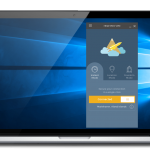
Virtual private networks (VPNs) are an effective way of masking your internet activity when using public networks.
However, they've always seemed a bit geeky, which puts many everyday internet users off using them. VPN specialist Hide My Ass! (HMA!) is aiming to change that with a new version of its product aimed at people who haven't previously used a VPN.
UAC vulnerability in Windows 7 and Windows 10 allows for traceless code execution


Windows' User Account Control (UAC) feature was designed to help keep computers safe from malicious software installations, but there are already at least a couple of ways to bypass it. A new technique for circumventing UAC not only makes it possible to execute commands on a computer, but to do so without leaving a single trace.
Security researchers Matt Nelson and Matt Graeber discovered the vulnerability and developed a proof-of-concept exploit. The pair tested the exploit on Windows 7 and Windows 10, but say that the technique can be used to bypass security on any version of Windows that uses UAC.
Hacker group Shadow Brokers auctions off NSA malware

The NSA has (or had...) a collection of malware in its cyber arsenal. It has been stolen by hackers. It is now available to buy.
A group of hackers going by the name of Shadow Brokers claims to have stolen a range of hacking and malware tools from Equation Group's servers -- Equation Group is itself closely linked with the NSA. The group is offering the tools for auction and will sell them to the highest bidder. If bidding reaches one million Bitcoins, however, the group says it will make the tools publicly available to all.
Ransomware-as-a-service tool generates $195,000 profit in July

There are a number of high profile ransomware programs doing the rounds at the moment and we know that it can generate lucrative returns for the people behind it.
But just as in the legitimate commercial world, the as-a-service model is starting to gain traction with attackers. Security vendor Check Point is releasing details of Cerber, which it believes is the world's biggest ransomware-as-a-service scheme.
© 1998-2026 BetaNews, Inc. All Rights Reserved. Privacy Policy - Cookie Policy.