Cloud security concerns rise as investment grows


Industry predictions suggest that the world cloud market will exceed $250 billion by 2020, but a new report shows that as cloud investment grows so do security concerns.
Crowd Research Partners has released the results of its 2016 Cloud Security Spotlight Report, created in conjunction with leading cloud security vendors Alien Vault, Bitglass, Cato Networks, CloudPassage, Dell Software, Dome9 Security, IMMUNIO, (ISC)2 and Randtronics.
Microsoft expands Windows Defender Advanced Threat Protection Preview to more enterprise users


Security is one of the features of Windows 10 that Microsoft has been particularly eager to highlight. It's something that's important to everyone, but especially enterprise customers. Earlier in the year the company launched a preview of Windows Defender Advanced Threat Protection, and now this is being made available to a wider audience.
The program is still in the testing phase at the moment, but Microsoft is looking for feedback from IT professionals and enterprise customers. Although this is described as a public preview, would-be participants are required to register their interest and their applications are subject to approval.
The Intercept cracks open the Snowden archive including internal NSA newsletters
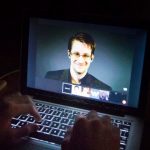
There can be few people who have had such an impact on people's perception of the government as Edward Snowden. Having exposed the convert spying activities of the NSA, he opened up a worldwide debate about privacy and surveillance that is still going on today. His revelations have shaped public opinion and changed the course of history.
Just as the likes of the Guardian have already helped to educate the world about what the NSA has been doing, so The Intercept is releasing a huge cache of internal NSA documents that give an intriguing insight into the agency's operations. The documents shed light on the NSA's work relating to terrorism, Iraq, and general surveillance.
The UK's year in business continuity disasters

All businesses should worry about how they'll keep going in the event of a disaster. But those disasters aren't always internal, they can be due to outside forces and can be hard to predict.
As part of this week's Business Continuity Awareness Week 2016 organized by the Business Continuity Institute, managed services company IT Specialists (ITS) has produced a list of the top 10 UK business continuity disasters of the last year.
Security Analytics: What it is and what it is not


There’s a misconception in the cyber security industry that many IT, security executives and vendors subscribe to. They equate security analytics to SIEM and user and entity behavior analytics (UEBA). They use the three terms interchangeably as if they are all one of the same and solve the same problems. As a result, companies waste time, leave gaps in their visibility, ability to execute and ultimately fail to minimize their cyber risk.
In a report released this month, analyst firm Forrester states, "Security analytics has garnered a lot of attention during the past few years. However, marketing hype and misunderstandings regarding security analytics have confused the market, making it difficult for security and risk leaders to make information decisions". This statement couldn’t be truer. UEBA and SIEM tools are supporting components of security analytics, but are not equivalent.
Google to block Flash in Chrome and default to HTML5 except for these ten white-listed sites

By the end of 2016, Google aims to switch Chrome users away from Flash in favor of HTML5. The writing has been on the wall for Flash for some time now, with a seemingly endless torrent of security issues pushing increasing numbers of people toward HTML5.
Google says that by Q4 2016, it wants to make HTML5 the primary user experience. Flash support will still be built into the browser, but it will be disabled by default. Ten sites, however, will be given a year's reprieve.
7-Zip gets an update to fix major security vulnerabilities

Security researchers from Talos have written a bunch of fancy words on their blog here, which basically say 7-Zip has a couple of serious security flaws.
Everyone’s up in arms about it, too.
Microsoft implements a blanket ban on computer support ads on Bing

Microsoft is following in Google's footsteps and cleaning up the ads that can be displayed on its network. After Google announced that AdWords could no longer be used to push payday loans, Microsoft has decided to ban ads for computer support services from Bing.
What's interesting here is that Microsoft has taken an incredibly hard line and issued a complete blanket ban on all technical support ads -- no exceptions. The aim is to weed out fake support ads and scams, but it will also impact on legitimate services.
Belgian police warn that Facebook Reactions pose a serious privacy risk

Police in Belgium are warning people not to use Facebook Reactions because of the risk they pose to privacy. Introduced recently to supplement the iconic Like option, Reactions give Facebook users the chance to respond to content with Love, Haha, Wow, Sad, and Angry emoji.
But Belgian police have issued a 'Safe Browsing' warning advising that Facebook is using Reactions to gather information about social network users. Specifically, the police warn that in using Reactions to express emotions, users are giving Facebook the opportunity to build up a more detailed personal profile about them and use that information to deliver closely targeted advertising.
Windows 10 Mobile will get native fingerprint reader support


Fingerprint sensors are all the rage these days on premium smartphones. You will not find a new high-end device launching without one. Even mid-rangers and low-end handsets are starting to offer this feature. That is, as long as they are not running Windows.
Fingerprint sensors are found on Android handsets and iPhones, but not on Windows Phone or Windows 10 Mobile devices. That is, in part, because Microsoft has not implemented support for this feature in its operating system. However, that is soon about to change.
IT pros too confident about detecting ongoing cyber-attacks

Endpoint detection and response company Tripwire and Dimensional Research conducted a research, and asked 763 IT professionals from various industries about their security practices, and if they felt confident they could detect an ongoing cyber-attack.
The two companies announced that the majority of IT experts felt overconfident in their abilities to detect an ongoing threat and remove an unauthorized device from their network.
Popular business apps come with major security risks

The security firm Wandera SmartWire Labs has released a new report detailing how many popular business apps used by large enterprises leak data and present a multitude of security risks.
The company assessed the threats that exist on popular business apps and how they could be potentially damaging to large companies in Europe, the US and Asia. Wandera’s report was able to shed light on 10 apps, widely used by enterprise employees, that failed to employ secure data storage and protect information that could personally identify users.
Mozilla asks the FBI for details of Tor vulnerability that could also affect Firefox

Mozilla is fighting to force the FBI to disclose details of a vulnerability in the Tor web browser. The company fears that the same vulnerability could affect Firefox, and wants to have a chance to patch it before details are made public.
The vulnerability was exploited by FBI agents to home in on a teacher who was accessing child pornography. Using a "network investigative technique", the FBI was able to identify the man from Vancouver, but Mozilla is concerned that it could also be used by bad actors.
New solution targets threats to containerized apps

Running applications in containers is increasingly popular, but whilst it offers benefits in terms of the flexibility to run apps anywhere, it raises fresh challenges for keeping them secure.
A new set of automated capabilities that defend against active threats targeting container environments is being launched by security solutions company Twistlock. Twistlock Runtime is fully automated and designed to detect and stop sophisticated runtime attacks -- including APTs and zero-day exploits.
Why changing your password is never enough

It’s become more common than not in recent years to experience a security breach -- whether it’s your company records or your personal social media accounts, data on the web today is not as safe as it once was.
Often, people think that because their personal information is protected with a strong password, it’s enough to ward off hackers and cybercriminals. This, however, couldn’t be further from the truth. Let’s learn why.
© 1998-2026 BetaNews, Inc. All Rights Reserved. Privacy Policy - Cookie Policy.