Companies invest more in DDoS protection


Pretty much every company out there has been, or will be a target of a DDoS attack. A new report by real-time information services provider Neustar, entitled The Threatscape Widens: DDoS Aggression and the Evolution of IoT Risks, released this month, says it’s no longer the question of "if" or "when" a company will be DDoSed -- it’s how often and how long will it last.
According to the report, 73 percent of companies were attacked in 2015, with 82 percent of those attacked suffering multiple attacks. Out of that number, 45 percent said they were attacked six times, or more. In EMEA, 47 percent of companies were attacked at least five times.
Remove CryptXXX ransomware with Kaspersky's free decryption tool

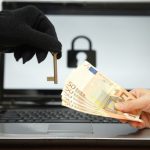
Security firm Kaspersky has released a tool that can be used to decrypt files on computers hit by the CryptXXX ransomware. Rather than paying the ransom demanded to regain access to files, victims are now able to turn to the free RannohDecryptor utility.
CryptXXX had been identified by ProofPoint earlier in the month and described as being closely linked to the Reveton ransomware operation and Angler/Bedep. The ransom of $500 is considered to be quite high, but Kaspersky's free decryption tool means that files can be retrieved without having to part with a cent.
Free online service helps uncover malicious domains


Phishing sites that use domain names similar to a legitimate company’s, along with cybersquatting are a major problem. Open DNS recently claimed that cyber squatters have become more active during the US election campaign.
Web security solutions company High-Tech Bridge is launching a new, free, online service that will allow anyone to instantly detect typosquatted, cybersquatted or phishing domains targeting their domain or brand name.
Why ATMs are easy to hack

Security researchers claim ATM machines are usually not that difficult for hackers to penetrate. Once they’re inside, they can steal money, or banking details from unsuspecting victims.
Now, researchers from Kaspersky Lab have investigated what makes ATMs such an easy target for hackers, and came to two conclusions: both software and hardware are easy to access and temper with.
Twitter makes it easier to report abusive tweets en masse

There has been a lot of interest in online abuse in recent months, and social networks are taking steps to weed out the trolls and abusers. Twitter has already introduced a number of measures to help tackle trolls, and today announces the availability of a new reporting tool for users.
Now rather than having to report a number of abusive tweets individually, it is possible to report up to five tweets simultaneously. As well as reducing the workload for someone who feels the need to report content, the new tool also makes things easier for Twitter as it allows for additional information to be gathered.
A regsvr32 hack is all it takes to bypass Windows' AppLocker security

A security researcher has discovered a way to get around Windows' AppLocker security system. Casey Smith found that it was possible to use Regsvr32 to call up a remotely hosted file that could be used to run any application -- malicious or otherwise -- of your choice.
This is something that will be a concern to companies, many of whom rely on AppLocker as it restricts what users are able to run on their computers. What is particularly concerning is the fact that the exploit does not require administrator privileges, and doesn't make any changes to the registry which makes it difficult to detect.
Hacker finds Facebook backdoor leaking usernames and passwords

The use of bounty programs to track down security vulnerabilities in websites and software is increasingly common these days, and it's a tactic employed by Facebook. One bounty hunter -- or penetration tester -- hacked his (or her… they are anonymous) way into the social network and made the shocking discovery that someone had already installed a backdoor.
Orange Tsai managed to compromise a Linux-based staff server and found there was already a piece of malware in place syphoning off usernames and passwords. These account details were being transmitted to a remote computer, and after revealing this to Facebook, Tsia pocketed $10,000 as a reward.
US Justice Department accesses another iPhone without Apple’s help

When it came to the San Bernardino iPhone, Apple was ready to dig in its heels and refuse to help the FBI to gain access to the encrypted contents. As it turns out, the company needn’t have bothered shouting as a third party helped instead. Now the same thing has happened with another iPhone.
This time around, the Justice Department had been looking for help accessing an iPhone at the center of a drugs case in New York. But now federal prosecutors have said they no longer need Apple’s help as they have managed to get by the lockscreen.
Nearly half of EU businesses don't know where their data's located

According to a survey by the cloud hosting firm UKFast, nearly half of businesses are clueless as to where their data is located.
To come to its findings, the company surveyed over 300 IT decision makers in EU businesses, with 47 percent of them unaware of where their personal and company data was hosted.
More apps and websites leak credit card data on enterprise handsets

In its latest quarterly Mobile Data Report, Wandera has revealed a significant rise in apps leaking credit card data on enterprise mobile devices.
The company, which specializes in mobile data security and management, compiled the report by analyzing the data usage trends and traffic patterns across its global network of enterprise mobile devices. Between Q4 2015 and Q1 2016, there has been a 17 percent increase in apps and mobile websites leaking credit card data.
It cost HOW MUCH to crack the San Bernardino iPhone?!

There are a lot of questions still to be answered about the San Bernardino iPhone that saw the FBI and Apple go head to head. After something of a battle, the FBI found someone to crack the iPhone. But who exactly did it? How did they do it? Will Apple be told how to do it in private? But one question that has also been lurking in the background is just how much it cost to hack into a single iPhone.
Now we know the answer. Not precisely, but we have a pretty good idea. Perhaps unsurprisingly, cracking the iPhone at the center of one of the most interesting technology cases in recent history, was not cheap. In a somewhat roundabout way, FBI Director James Comey revealed that the cost was more than $1.34 million.
Merchants are not security savvy

More than a third (38.5 percent) of merchants don’t even know what type of risks new technologies such as mCommerce bring. They most likely wouldn’t recognize a fraud threat even if they were right in the middle of it.
Those are the conclusions written in the new 2016 Mobile Payments & Fraud Survey, released by Kount. The figures are quite a surprise, knowing that mobile fraud increased by 81 percent between 2011 and 2015.
Google no longer lists its own site as 'partially dangerous'

According to Google’s online transparency report, Google.com had been considered a "partially dangerous" website.
In the report under the Safe Browsing section, the company listed its own website as one that could be dangerous to its visitors followed by a list of site safety details along with testing details.
New technique allows Trojans to remain in memory to evade detection

Remote access Trojans (RATs) have been used for many years to allow attackers to gain access to and take control of user’s systems.
Usually RATs are delivered when a user opens an email attachment or downloads a file from a website or peer-to-peer network. This involves direct delivery of the payload which makes detection easier.
Taking the pulse of cyber security in healthcare

Large hospitals often have thousands of workstations used by multiple employees to access confidential patient data, so securing them can be a major challenge.
Endpoint security specialist Duo Security has compared its customers in healthcare with those in other industries to determine how the sector differs in its security requirements.
© 1998-2026 BetaNews, Inc. All Rights Reserved. Privacy Policy - Cookie Policy.