90 percent of US federal agencies are vulnerable to data threats

According to new research 90 percent of IT security leaders in US federal agencies say they feel vulnerable to data threats.
In addition 61 percent have experienced a past data breach, with nearly one in five indicating a breach in the last year. This is among the findings of the US Federal Government Edition of the 2016 Vormetric Data Threat Report from enterprise data protection company Vormetric and 451 Research.
IT pros: Security budgets are not growing fast enough


As an answer to the ever increasing threats of cyber-attacks, the security budgets across various industries are growing, a new survey by The Institute of Information Security Professionals (IISP) suggests.
However, the rise in budgets is not enough to tackle the problem.
FBI can crack iPhone security and is classifying the method to prevent Apple fighting back


The FBI attempts to force Apple to unlock the San Bernardino shooter's iPhone have been in the headlines for a while now, stirring up debate about which side of the argument is in the right. Apple has refused point blank to help, but a recent twist saw the FBI changing its mind by saying it doesn't need Apple's help after all.
An outside party -- believed, but not known, to be Israeli security firm Cellebrite -- contacted the FBI to help access Syed Farook's iPhone. The Justice Department said it is "cautiously optimistic" that the proposed method, which is currently being tested, will be successful, but some reports suggest that it has already been used to break into some iPhones. Apple will obviously want to take steps to secure other devices if the hack is effective, but it has been classified to keep it secret.
Keyless entry makes car theft easy

Thieves can probably steal a bunch of cars with ease, if they are equipped with keyless entry. Those are the results of a new study done by a group of German car security researchers, looking into just how secure the technology is.
According to a news report by Wired, keyless entry for cars is not secure at all. As a matter of fact, out of 24 different cars, from 19 different manufacturers, all have been easily hacked through a method of amplifying the signal from the key fob in the house.
Can malware detect that it's running in your sandbox?

If you think an application is suspicious, then you might run it in a sandbox, a virtual machine, maybe use a debugger, and watch what it does. And if nothing happens then that means it’s safe. Right?
Well, maybe not. Malware will often try to detect this kind of trickery, and if it thinks it’s being watched, won’t do anything to raise an alarm.
Demand for IT security pros is rising in UK

The tech talent shortage the UK is faced with nowadays is no small problem, as the demand for IT security experts reaches new heights.
According to a new research by recruitment finance provider Sonovate, IT security professionals are currently the most wanted workers in the UK’s growing jobs market.
Thycotic plans $100 million security software giveaway

Privileged accounts exist in all areas of business IT and if compromised they can provide an external attacker or dishonest insider access to sensitive data.
Account management company Thycotic wants to help businesses protect themselves and so is giving away a no-cost version of its Secret Server package to guard against attacks that target privileged accounts.
How manufacturers can improve the security of Internet of Things devices
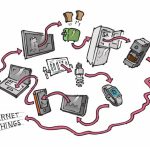
The security of the Internet of Things is fundamentally broken. Developers and manufacturers understandably are eager to get their new hi-tech products to market and unfortunately often overlook security, instead operating under the misapprehension that security-by-obscurity in their proprietary systems will do. The problem is that security researchers, and those with more malicious intent, can almost always extract binary code from the device memory via JTAG or similar in-circuit debugging facilities, or find it online in the form of updates, and reverse engineer via one of the many tools readily available.
Furthermore, a lack of security subject matter expertise among hardware-oriented engineers creates major vulnerabilities, compounded by the fact that firmware can too easily be modified; and a lack of logical separation between critical and non-critical components within the device opens up further avenues for attackers.
20 percent of employees would sell their passwords

According to new research from identity management company SailPoint one in five employees would be willing to sell their work passwords to another organization, up from one in seven last year.
Of those who would sell their passwords, 44 percent would do it for less than $1,000, and some for less than $100. This is made worse by the fact that 65 percent admit to using a single password among applications and 32 percent share passwords with their co-workers.
Security is a major concern for Internet of Things users

A survey by mobile and Internet security firm BullGuard of over 6,000 UK residents has illustrated just how widespread the Internet of Things (IoT) has already become, while also highlighting serious security concerns among consumers.
IoT is growing and will become more pervasive in the near future as consumers, whether knowingly or not connect more smart devices to the internet. Many consumer household items are now smart or internet enabled by default. Additionally over a quarter of consumers in the survey are planning to buy IoT devices in the next 12 months alone.
Snowden: I couldn’t trust Microsoft so I used free software like Tor, Tails and Debian

At the Free Software Foundation's LibrePlanet 2016 conference, Edward Snowden credited free software with enabling him to blow the whistle about government surveillance. Speaking via video link from Russia, the former NSA contractor said that "what happened in 2013 couldn't have happened without free software".
But as well as indicating his preference for free, open source software, Snowden revealed that he refused to use Microsoft software because he "couldn't be sure" that there weren't backdoors built in.
TeslaCrypt 4 ransomware now features unbreakable encryption and is even more dangerous for victims

Apple might be currently talking about its unbreakable encryption and how it's a good thing for privacy, but the FBI ruing it. The privacy arguement certainly stannds up to scrutiny, but strong encryption can also be used as a weapon, as demonstrated by countless examples of ransomware. There are numerous breeds of ransomware out there, but one of the most prolific is TeslaCrypt.
It's just a year since the first version of TeslaCrypt appeared on the scene, and it's gone through various updates and iterations over the ensuing months. Now it's hit version 4 and as well as continuing to threaten victims with sharing their files online, it also boasts what is being referred to as 'unbreakable encryption'.
Apple's fight with the FBI is about LGBTQ issues as well as privacy

As the battle between the FBI and Apple rumbles on, the debate about encryption has intensified, bringing with it renewed discussion about privacy. There are few people who would want to give up their right to privacy and allow unrestricted access to their personal communication, but there are some for whom privacy is even more important.
Tim Cook is just one of the voices shouting that a backdoor for the government would be a backdoor for anyone. Most people and companies have sided with Apple saying that rather than backdoor access, what's needed is stronger encryption, greater security, even more robust privacy. It's something that has the support of people from all walks of life, but it's an issue that's very close to the hearts of the LGBTQ community.
More than a third of UK universities are under attack every hour

VMware today announced research revealing that over a third (36 percent) of UK universities are under attack by a cyber attack, on not just on a daily basis, but each hour. Furthermore, the attacks are so frequent and widespread that 83 percent of universities believe that cyber attacks are increasing in frequency and sophistication.
VMware’s research shows that a high percentage of University campuses are being singled out and attacked due to their open architecture.
Off-the-shelf BYOD systems bring privacy and security risks

When companies allow staff to use their own systems to access corporate data, the devices used can often be outside of IT department control.
But how much of a security and privacy hazard is presented by a new off-the-shelf laptop? Security company Duo Labs set out to discover the risks by buying a number of OEM Windows 10 machines in the US, Canada and the UK and testing them for vulnerabilities.
© 1998-2026 BetaNews, Inc. All Rights Reserved. Privacy Policy - Cookie Policy.