Did Amazon have a security breach? Probably not


We've grown accustomed to security breaches, from Target to Home Depot and pretty much everywhere in between. It seems like daily news lately, but sometimes it seems companies are so hush-mouth that we just don't know. It's obviously in their best interest to not let word get out – bad for business, and all.
Today a story surfaced about Amazon sending some customers emails requesting that they reset their passwords. The message itself is a bit cryptic, so it's hard to say what really happened. There is also the (slim) possibility it was a scam. We say slim because there are no links to click on, the message seems legit and a carbon copy of one sent by the company before.
Encrypt all the things! Facebook, Google and WhatsApp to increase privacy and encryption


Privacy and security has always been a hot topic, but never more so than in recent months. The Apple/FBI case has really brought things to a head, enlivening the debate between privacy and security advocates, and those who side with the government. As Apple fights to prevent the FBI from accessing the San Bernardino shooter's iPhone, Facebook, Google and others are looking to increase encryption and lockdown user data even further.
The Guardian has learned that a number of Silicon Valley companies are working on ultra-secure encrypted messaging systems. With President Obama having made a sideways reference to supporting the inclusion of backdoors for government, Facebook is planning to not only bring encryption to Whatsapp's voice messages, but also to bolster the security of Facebook Messenger.
80 percent of internet users believe privacy is a fundamental right


People care more about their privacy than ever before according to the latest Consumer Openness Index by open source messaging and office productivity company OpenXchange, with 80 percent believing they have a right to privacy.
The survey of 3,000 Internet users in the US, UK and Germany shows that over the past year, public opinions about data privacy have hardened. The internet-aware public in all regions surveyed are more likely to say they would stop using websites and services if news of a privacy scandal broke.
Only collaboration will solve the encryption dilemma


"They who can give up essential liberty to obtain a little temporary safety deserve neither liberty nor safety". So goes the quote from Benjamin Franklin, one of the Founding Fathers of the United States, in 1755. Little did he know that over 250 years later, his words would be frequently cited in one of the most complex debates of modern times.
In a world where data is collected, shared and sold as the norm, the liberty vs. security question has never been so relevant. The topic has been brought into the public eye by the UK Home Secretary’s draft Investigatory Powers Bill -- or Snoopers’ Charter -- and honed-in on the issue of encryption. More specifically, whether government agencies should be given the power to access encrypted, private communications, by forcing service providers to hand them over.
Privacy and security killer: Obama supports backdoors to bypass encryption

The on-going battle between Apple and the FBI has brought encryption and security to the fore once again. After remaining silent on the subject for some time, President Obama -- speaking at SXSW -- said that he was opposed the idea of encryption mechanism that are so strong it prevents governmental access.
"If technologically it is possible to make an impenetrable device or system where the encryption is so strong that there is no key, there's no door at all, then how do we apprehend the child pornographer, how do we solve or disrupt a terrorist plot?" he wondered aloud, his almost rhetorical question playing neatly on two of America's biggest fears. He suggested that security keys should be made available to third parties, saying "you cannot take an absolutist view" when it comes to balancing security and privacy. But Obama has a solution: backdoors.
Why cloud security should be a part of software development

The slogan "there is no cloud, it’s just someone else’s computer", accompanied by an image of a worried looking cloud, has been doing the rounds for some time now. It’s overly simplistic but it neatly sums up the mistrust that some computer users have about cloud technology.
The inference being that people who trust the cloud and believe the hype are in some way naïve. The extension of which is that, if you’re giving your data to someone else, how can you be sure it’s safe? This is why cloud security needs to be part of the software development lifecycle.
UK government launches a fast online identity verification service
A new service has launched in the UK, which will allow the country’s citizens to easily verify their identity online. Called CitizenSafe, it is the brainchild of global specialists in identity data intelligence, GBG.
CitizenSafe was created after a survey had shown that people expect to access government services easily and securely online, and that online identity verification was a key step. It will be integrated within the UK government's gov.uk Verify service, and GBG says it will cut the time needed to verify an identity to mere minutes.
Justice Department accuses Apple of false rhetoric, pooh-poohs privacy concerns

Ahead of the hearing due to be held on 22 March, the Justice Department has lashed out at Apple in its latest response to the company's refusal to unlock the San Bernardino iPhone. Playing an emotional game, the DoJ says "Apple deliberately raised technological barriers that now stand between a lawful warrant and an iPhone containing evidence related to the terrorist mass murder of 14 Americans."
It says that only Apple is able to remove the barriers that are currently in the way, "and it can do so without undue burden". Apple has already made it abundantly clear that it will not help the FBI in creating what it describes as a backdoor into the iPhone at the center of the case.
FCC's Tom Wheeler wants to protect internet users' privacy by limiting ISPs' personal data usage
The chairman of the Federal Communication Commission has put forward a set of proposals to protect internet user's privacy. Tom Wheeler wants to place limits on how ISPs are able to use customer data in much the same way that phone companies are regulated.
The amount of unencrypted data ISPs have access to which can be used for advertising and marketing worries Wheeler. The FCC already governs how phone companies can use and resell customer data, and he believes the same rules should be applied to ISPs. More than this, he wants to empower customers so they can choose precisely how their data is used.
Apple says FBI case is the start of a slippery slope to mass surveillance via iPhone
The battle between the FBI and Apple over access to the San Bernardino shooter's iPhone is turning into little more than a battle of wills. Both sides are using the case to make a point; Apple posits that unlocking the phone would set a dangerous precedent, the FBI says not unlocking the phone amounts to aiding terrorists.
There have been heavy words thrown from both sides, and the latest round of blows sees Apple claiming that the FBI could follow up its phone unlocking demand with a demand to switch on iPhone cameras and microphone for the purposes of spying on users. "Where will this stop?" asks Eddy Cue. "Some day, someone will be able to turn on a phone's microphone. That should not happen in this country".
The majority of CCTV cameras can be easily hacked
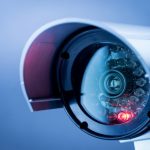
Your CCTV camera might make you feel physically safer, but after reading this article, it will sure make you feel virtually vulnerable. New research from cloud-based video surveillance company Cloudview suggests that the majority of CCTV systems can be hacked, providing an open door to cyber attackers.
The report, entitled Is your CCTV system secure from cyber attack?, says there are "major vulnerabilities" in both traditional DVR-based CCTV systems, as well as cloud-based video systems. Hackers can "easily" hijack connections to the device’s IP address, putting a lot of people, their properties and data at risk.
Majority of enterprises suffer from security blind spots

A majority of Global 2000 companies have areas within their networks that are not properly analyzed according to a new report.
The survey from network security company ForeScout Technologies, conducted by research firm Frost & Sullivan, says these 'blind spots' can lead to costly breaches due to unknown applications, traffic, devices and users operating insecurely on a corporate network.
Erin Andrews gets $55 million for peephole video that will never go away
What happens in Vegas may stay in Vegas, but what happens online is yours forever. Things posted don't simply go away -- a problem many of today's youth will face in the future. However, it's also a problem people have to come to terms with right now, even when it's not online intentionally.
That's the case with sportscaster Erin Andrews, who was videotaped naked in her hotel room through the peephole of the room's door. Yes, it made for huge views and sensational news, but it also damaged a human being.
A printed fingerprint can fool your expensive smartphone
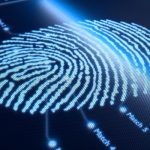
You could, quite easily, pull off a McGyver on a Samsung Galaxy S6 or a Huawei Honor 7 phone. Security researchers have discovered a way to trick these two phones and unlock them through the fingerprint scanner, using an inkjet printer, a few drops of conductive ink and special paper usually used for printing electronic circuits.
Here’s what they did: they took scans of a couple of fingers, and just printed them, in two dimensions, on paper using conducive ink, which conducts a charge. They printed it on special paper used for printing electronic circuits and other charge-carrying systems. Pressing the prints against the fingerprint scanner managed to unlock the two phones.
The FBI wants you to think Apple is a terrorist sympathizer
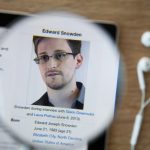
Speaking at the Common Cause Blueprint for a Great Democracy conference in Moscow via video link, Edward Snowden gave tech writers around the world an excuse to swear in headlines. Dismissing the FBI's claims as 'bullshit', the former NSA contractor says that Apple's involvement is not needed for the law enforcement agency to unlock the San Bernardino shooter's iPhone.
Snowden is not alone in decrying the demands being made by the FBI that Apple should create custom firmware to allow it to bypass the lock screen of the iPhone at the center of the terrorism case. He's one of a growing band of people convinced that the FBI is using the San Bernardino as a PR exercise. Apple has been criticized for being unhelpful, but more than this, the FBI is painting a picture that shows Apple as a terrorist sympathizer.
© 1998-2026 BetaNews, Inc. All Rights Reserved. Privacy Policy - Cookie Policy.