Android banking and payment apps at risk from Acecard Trojan


A new Android banking Trojan is now bypassing Google Play security measures -- the Acecard Trojan is capable of attacking users of nearly 50 different online financial applications and services.
During the last quarter of 2015 researchers at Kaspersky Lab detected an unusual increase in the number of mobile banking attacks in Australia. The suspicious activity was discovered to be the result of a single banking Trojan called Acecard.
Huawei and Nexusguard partner to offer DDoS protection

DDoS attacks are one of the most worrying threats that enterprises face. Chinese hardware company Huawei and security specialist Nexusguard are launching a new joint solution that offers enterprises and internet service providers state-of-the-art DDoS protection using software-defined networking (SDN).
The companies will combine Nexusguard's cloud-enabled Origin Protection and Huawei's DDoS Protection System Appliances, giving customers low latency and multi-layered protection that can accurately and quickly defend their systems with hybrid implementations.
Warning! Linux Mint hacked -- operating system compromised


Linux Mint is one of the best distos around, but if you’ve installed it recently you might have done so using a compromised ISO image.
The Linux Mint team today reveals that hackers made a modified Linux Mint ISO with a backdoor in it, and managed to hack the Mint website so it pointed to this bad version.
Smile! Your DVR may email your picture to China


You may look at the DVR as that box that records your TV shows and perhaps even allows you to skip the commercials. But there is more to it than just that. Users can also record video from their home surveillance cameras and replay the clips if something happens. A lot of that data is stored in the cloud -- with some systems it is completely yours with a hardware DVR needed.
In use as a home recording device the DVR is also known as CCTV, closed-circuit television. There are quite a number of them in use all over the world, many in homes and some in businesses. It seems like a good idea for security, but things aren't always what they seem.
Warning: Comodo Antivirus included insecure remote tech support tool


A researcher from Google Project Zero discovered a serious security issue with the technical support tools supplied with Comodo software products. Tavis Ormandy found that Comodo Antivirus, Comodo Firewall, and Comodo Internet Security all included a bundled VNC server with either no password protection, or a very weak password.
GeekBuddy is a remote desktop tool used by support staff to troubleshoot customer problems, but it also serves as a backdoor that allows for near-unrestricted access to users' computers. The tool installs with full admin rights, meaning that an attacker could very easily gain complete control of a remote computer.
Syed Farook's iCloud password was changed by officials; Trump proposes Apple boycott

Apple is standing fast on its decision not to help -- publicly, at least -- the FBI to gain access to the iPhone owned by Syed Farook, one of the San Bernardino terrorists. In the latest twist in the saga, Apple has revealed that the password for the Apple ID associated with the phone was changed whilst Farook was in custody.
Apple says that this closes off another route to accessing the data the FBI seeks. Had the password not been changed, the company says, it may have been possible to retrieve backup data without the need to create a backdoor into the suspect's phone. Meanwhile, wading in to the Apple/FBI debate with all of the elegance of an epileptic elephant, serial buffoon Donald Trump has called for a boycott of Apple products -- despite tweeting from an iPhone himself.
Five not so obvious things you can expect at MWC 2016


At Mobile World Congress (MWC) tides will start to turn. There won’t be an overnight revolution powered by shiny new gadgets, but technologies we’ve seen evolving over recent years will start to demonstrate their real potential.
We expect to see five major technology themes come to the fore in Barcelona this year:
Apple is using a straw man argument to fight the FBI

Listen to Tim Cook and you’d be forgiven for thinking that Apple was standing up for the little guy, sticking up for the likes of you and I in fighting the FBI. The FBI, Apple would have you believe, wants Apple to break encryption, thereby weakening security for everyone. But that's not really the case at all.
The FBI has not asked for encryption to be broken; it wants access to data on the San Bernardino shooter's iPhone, and it wants to do so by using the (as yet unknown) PIN that has been used to lock it. Get it wrong too many times and the device is wiped. The FBI wants custom firmware to be made available that would allow it to brute force the PIN. It's nothing to do with cracking encryption, but that's not what Apple wants you to believe. It's an exercise in misdirection and a classic straw man argument. The problem is, if the straw man goes up in flames, will Apple too?
Poll: Should Apple help the FBI unlock the San Bernardino iPhone?

The US courts say Apple should help the FBI access the contents of an iPhone belonging to one of the San Bernardino shooters, but Apple is refusing, on the grounds that it doesn’t want to erode the security of Apple customers.
I’m personally on Apple’s side, as is my colleague Joe Wilcox, but Donald Trump wants Apple to use "common sense" and open its phone up, while John McAfee is claiming he can help the FBI unlock Apple’s device within "three weeks", primarily through the use of social engineering. The FBI for its part says it doesn’t want Apple to create a backdoor in all iPhones, just unlock the one belonging to the killer.
Streamlining home network security [Q&A]
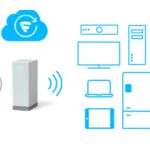
Whilst businesses can call on expert resources to secure their systems, for many home users protecting a home network and the devices attached to it can be something of a dark art.
Finnish security company F-Secure is aiming to make securing systems simple even for the non-technical with its forthcoming SENSE product. We spoke to Mika Majapuro, F-Secure's director of product management, to find about more.
Gozi Banking Trojan is now fully compatible with the Edge browser in Windows 10

Banking trojans, like ransomware, have become big business today. And the people behind all of these malicious products are always moving forward, innovating with the times in an effort to keep up with technology and victims.
There is a virtual smorgasbord of malware out there just looking for ripe pickings. One is the Gozi Banking Trojan, which injects its code into the operating system via the browser. With Windows 10 being offered (pushed) for free, malware makers are scrambling to cover the adoption rate by updating their products.
The majority of IT pros view email as a major security threat

Sixty-five percent of IT professionals don’t feel equipped to defend against email-based cyber attacks, according to the findings of a report carried out by email security and archiving company Mimecast.
The global study of 600 IT security professionals -- Mimecast Business Email Threat Report 2016, Email Security Uncovered -- also found that 64 percent of respondents regard email as a major security threat and one third believe email is more vulnerable today than it was five years ago.
95 percent of US consumers share their passwords
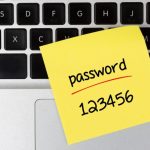
It seems that convenience trumps security when it comes to passwords. Although 73 percent of US consumers believe sharing login details is risky, 95 percent do share between one and six of their passwords with other people.
A new survey by LastPass also reveals that only 19 percent of respondents say they don't share passwords that would jeopardize their identity or financial information, leaving a scary 81 percent of people who would share them.
New research suggests alarm system SimpliSafe simply isn't safe

If you watch TV at all, at least in the US, you've likely seen the ads for the latest technologies being pushed to market. While many folks like to be early adopters, there's something to be said for ignoring that pie-in-the-sky pitch and waiting until something has had time on the market and been thoroughly tested.
We recently saw this with the Ring doorbell, a product that continues to run endless TV commercials, perhaps just banking on appealing to the average person who doesn't look into things too carefully. Another one taking up your screen time these days is a new alarm system calling itself SimpliSafe. The problem is, research indicates it may not be living up to its impressive moniker.
IT professionals' bad security habits exposed

Many IT personnel don't follow the same security protocols they’re expected to enforce according to the results of a new survey of over 500 professionals working in IT security roles.
The study by Absolute Software Corporation shows that 45 percent of IT professionals admitted to knowingly circumventing their own organization's security policies. In addition 33 percent of respondents admitted to successfully hacking their own or another organization.
© 1998-2026 BetaNews, Inc. All Rights Reserved. Privacy Policy - Cookie Policy.