IT security experts are confident they can spot a data breach

A new study by security firm Tripwire says IT security experts are very confident they can detect a breach, and that they can detect it quite fast. For automated tools, they do not share the same levels of confidence.
The survey questioned 763 IT professionals in various verticals, including retail, energy, financial services and public sector organizations in the US, about the seven key security controls that need to be in place in order to quickly spot an ongoing hack attack.
'The room had started to smell. Really quite bad': Stephen Fry exits Twitter once again


For a man so readily associated with words -- and certainly for a wordsmith so enamored with technology -- Twitter seems like something of a natural home for Stephen Fry. Over the years he has amassed hundreds of thousands of followers, but last night he closed his account. Fry's latest exit from Twitter (there have been several over the last few years for numerous reasons) came about because of the backlash he received for making a joke at an award ceremony.
Hosting the BAFTAs (British Academy of Film and Television Arts) on Sunday, he referred to costume designer and award winner (and, indeed, friend) Jenny Beavan as being "dressed as a bag lady". 'Offended' Twitter users attacked Fry in their droves, and he fought a valiant battle, before eventually giving up and terminating his account. It comes just days after Twitter set up a new Trust & Safety Council.
Mazar Bot malware can root and wipe Android smartphones

Security experts are warning about a new malware attack that targets Android users. Mazar Bot is delivered via SMS, is able to gain root access to devices, installs software including Tor, and can even go as far as completely wiping a victim's phone.
Mazar Bot was discovered by Heimdal Security whose researchers analyzed a text message that had been found sent to random numbers. The message purports to provide a link to an MMS, but in fact tricks recipients to install the malicious mms.apk -- Mazar Android BOT in disguise.
Everything you need to know about SIM swap scams
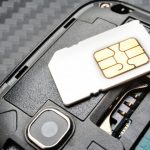
In today’s mobile-centric world, using mobile phones for Internet banking is standard practice for most people, but do customers know they could be at risk of a new type of scam?
SIM swap fraud, where scammers cancel and re-activate new SIM cards to hack into bank accounts, is reportedly on the rise.
It's too easy to breach a bank

I arrived onsite to suite 102 -- the bank’s corporate headquarters -- around 9:40 am. I was impersonating a local utility worker -- with all the garments like a hardhat, clipboard, obnoxious yellow vest, and some old Timberland work boots. I played the part well.
When I approached the suite I saw a giant glass entrance into the main office of the bank with a secretary minding the entrance and questioning visitors. I also noticed employees were entering and exiting an unmarked door at the end of the hallway -- no cameras to be seen. I proceeded slowly past the main entrance and then ran to catch the secured door as it was closing behind an unsuspecting employee. I was in!
Pedophiles are reportedly using Facebook to share images of children

An investigation by the BBC has found that secret groups on Facebook are being used by pedophiles to share images -- and Facebook doesn't seem to be doing much to control such activity.
The BBC reportedly unearthed numerous private groups which were both run by and for men with a sexual interest in children. One group was found to have a convicted pedophile as its administrator. Despite many of the groups and images being reported to Facebook, not all of them were removed, raising the question as to whether Facebook is doing enough to combat pedophilia.
Electronic toys maker wants to blame parents for data breaches

Electronic toys maker VTech has recently been a victim of a cyber-attack, which has seen the data of more than 6.3 million children exposed. The hackers got access to chat logs and photos.
Following the breach, VTech has updated its End User License Agreement, saying the company can’t provide a 100 percent guarantee that it won’t be hacked. It also shifts the responsibility back to the parents:
Adblock Plus wants to know why you're blocking ads (!)

Adblock Plus has been in the headlines quite a lot recently. Adblocking is certainly popular, but the company needs to strike a balance between keeping users happy, and maintaining a good relationship with advertisers. The Acceptable Ads program is part of this, but at its second #CampDavid session there have been some further ideas about the future of adblocking.
There was talk about what should be viewed as an 'acceptable ad', and an Acceptable Ads Committee will oversee this. But the discussion between Adblock Plus and advertisers brought up an important question: just why do people install adblockers?
Social engineering tops the hacking pops


Hackers are constantly seeking new ways to attack systems and gain insider access to data. A new survey from IT security company Balabit reveals the 10 most popular hacking methods to help companies understand how to protect themselves.
The survey of almost 500 IT security practitioners reveals that social engineering is the most popular means of attack. Hackers aim to get a 'low level' insider user account by means of phishing and escalate its privileges.
ISP filters could be harming UK users’ love lives

Content filters are supposed to protect you from bad stuff, but they can have unexpected side effects and block things you want to access.
As we approach Valentine's Day a new survey by UK broadband comparison site Broadband Genie has discovered that filters may be preventing Brits from finding love by blocking online dating sites.
What makes Cryptowall 3.0 the most successful ransomware?

Cryptowall 3.0 is the most successful ransomware of all time, a new report by security firm Imperva says. Ransomware is a type of malware which, once active on a device, encrypts all the data and demands payment from the victim, typically through Bitcoin.
In its report on the dangers of ransomware, and the impotent attitude of the FBI, which usually advises victims to pay the ransom, Imperva says Cryptowall 3.0 has caused $325 million (£225.7m) in damages so far.
Gmail now warns you if your emails are not TLS encrypted

To celebrate Safer Internet Day the other day, Google gave away an extra 2GB of cloud storage to anyone who completed a simple security audit of their account. At the same time the company also introduced a couple of important security enhancements to Gmail.
The first change sees the appearance of a simple indicator that makes it clear when an email is received through, or is about to be sent through, a service that doesn’t support TLS encryption. A broken padlock icon indicates that TLS encryption is not available, serving as a warning that there is the potential for the email in question to be dangerous or for the message to be intercepted.
Mac tool vulnerability exposes lots of apps to man-in-the-middle attacks

A security specialist has discovered a flaw in Sparkle, a third-party framework that Mac apps use to receive updates, which makes a man in the middle attack possible when unencrypted HTTP connections are used.
If the attacker has the ability to intercept the unencrypted data stream for example on a public Wi-Fi hotspot they could possibly inject malicious code.
The top threats to watch for in 2016
Messaging and infrastructure security specialist Cloudmark has released its Annual Global Threat Report for 2015 which reveals the biggest current threats based on its crowd sourced security platform, which analyses user behavior from more than a billion subscribers.
Top of the list is the Swizzor malware which delivers unsolicited ads, modifying browser settings without user permission. This silent threat delivers booby-trapped emails to unsuspecting users with varying subject lines. Each email contains a zip file carrying the malware payload, this uses a simple domain generation algorithm for command and control synchronization to create a large number of domains that then clash with legitimate websites and make it difficult for them to be taken down.
More consumers now care about how businesses handle their data

Nearly three million Brits have decided to leave a service provider that got hacked, a new research by security firm Privitar reveals. The report shows that 23 per cent of Brits have been affected by a security breach at some point, and 24 per cent of these reacted by switching providers.
The company says consumers now pay attention to how well a company handles data, when making choices. Even though data handling has become one of the key selling points for many companies, 52 per cent of consumers say it’s difficult to find any information on how companies store and use their personal information.
© 1998-2026 BetaNews, Inc. All Rights Reserved. Privacy Policy - Cookie Policy.