The bible is dangerous for you and your phone


For the religiously-inclined the appeal of installing an electronic bible on a phone is (somewhat) understandable. But as well as providing a biblical fix when out and about, apps of a religious bent could also harbor a worrying payload.
The Threat Insight team from Proofpoint looked at thousands of iOS and Android apps, and found that a disturbing percentage of seemingly innocent apps pose a threat to users. Apps were found to include secret tracking components, as well as data-stealing elements and the ability to make unauthorized calls. The figures make for frightening reading.
13 million MacKeeper accounts leak online


The anti-virus software for Apple’s OS X, MacKeeper, kept the user data of more than 13 million of its customers online without much protection, and someone eventually stumbled upon it.
Yes, stumbled is the perfect word in this instance, as the data was accessed through an IP address, no username or password required.
Hillstone adds extra security layer for AWS customers


When moving applications to the cloud it's easy to fall into the trap of believing that security can safely be left to the provider.
For Amazon Web Services customers there's now an extra layer of security on offer from Hillstone Networks. Hillstone CloudEdge is deployed as an Amazon Virtual Private Cloud (Amazon VPC) gateway to provide an additional layer of security protection.
New breach detection solution alerts enterprises to insider threats

For enterprises and government departments the biggest threats can often come from within the organization rather than outside it.
Detecting these insider threats can be difficult which is why security company Eastwind Breach Detection is launching a new platform that uses rich data, behavioral analytics, and threat intelligence to pinpoint anomalous behaviors even before they're classified as breaches.
BUFFERZONE launches advanced threat protection for Windows 10

Employee use of email and web browsers is still one of the most common ways that businesses suffer from cyber attacks, which underlines the need for effective protection.
Endpoint security specialist BUFFERZONE is announcing its product's support for Windows 10 to protect organizations upgrading to the latest OS from advanced threats, zero-day attacks, drive-by downloads and phishing scams.
No, the UK government doesn't have Twitter accounts supporting ISIS

ISIS has been in the news for some time now, and events like the recent terror attacks in Paris keep pushing the group into the public consciousness. Governments may be waging war on ISIS on the ground, but on the web it is the likes of Anonymous and vigilante hackers who have taken it upon themselves to curtail terrorist propaganda.
In the latest twist in the tail, hacker group VandaSec traced the IP addresses relating to some ISIS Twitter accounts to the UK government -- the Department of Work and Pensions specifically. Given that the accounts have been used not only to spread ISIS propaganda, but also to recruit members, does the UK government have a dirty little secret? As you might expect, it's not quite that simple.
The biggest data breaches of 2015
10Fold recently evaluated the seven largest breaches this year and found that hackers had absconded with more than 193.4 million personal records. To get to this figure, the agency reviewed 720 data breaches that occurred throughout the year. To narrow the list to a more manageable size, the team made five million the barrier to entry.
10Fold selected these data breaches based on independent research and review of third-party resources such as ID Theft Resource Center and Information is Beautiful.
New endpoint protection offers government users security for the public cloud

Use of the public cloud is on the increase but in some sectors such as government agencies is being held back by security concerns.
Data protection specialist Druva is announcing that it's launching a new endpoint solution that is Federal Information Processing Standards (FIPS) compliant.
Anonymous hacks the European Space Agency

The European Space Agency (ESA) has been hacked by Anonymous, and the names and login credentials of some of its employees have been posted online, the media reported on Monday.
The data released into the wild includes full names, email contact details, clear text passwords, office addresses, phone and fax contact details of those registered on the ESA database. The information contains 52 names, email addresses and passwords of 52 internal ESA users.
The traditional password won't exist in 10 years

Security professionals are increasingly moving beyond passwords towards alternative authentication methods according to a new survey.
The study by Wakefield Research for two-factor authentication specialist SecureAuth reveals that businesses across the US are increasing their security budgets and that 91 percent of cyber security professionals agree that the traditional password won't exist in ten years.
The top cyber-security trends of 2015

As 2015 draws to an end, we can look back on a year that has seen cyber security rapidly ascend the corporate, journalist and consumer agendas.
The cost of the average corporate data breach continued to rise, and with hacks on firms such as Car Phone Warehouse, Talk Talk, Ashley Madison and even the Internal Revenue Services in the USA, the last twelve months have seen a marked escalation in Black Hat activity.
Addressing new challenges in enterprise mobile management [Q&A]

Although many enterprises are keen to deploy mobile apps for their workforce and to support BYOD and extended working, they've often been held back by traditional app distribution options. Historically this has required IT organizations to bring devices under management -- for corporate owner, corporate liable, and BYOD devices -- which can put a brake on enterprise mobile app deployments.
To find out how new approaches can allow data to be secured at the app level, we spoke to Mark Lorion, Chief Product and Marketing Officer at mobile app management and security company, Apperian.
2016 set to be the year of malware targeting Macs and iOS

Security has long been an issue for Windows users. The sheer number of devices running Microsoft's operating system makes it a prime target for malware and virus attacks. More recently, Apple's computers have increased in popularity and security firm FireEye says that the company will find itself in the crosshairs in 2016.
It's not just Macs and MacBooks that are predicted to become more frequent targets, iOS is also expected to come under attack. FireEye warns that weaknesses have been found in Apple's walled garden, and this could spell danger for users. Symantec is issuing similar warnings, citing Apple's ever-growing user base as the reason.
Data security is key for customer retention
Nearly two-thirds (64 percent) of consumers worldwide say they are unlikely to shop or do business again with a company that had experienced a breach where financial information was stolen, and almost half (49 percent) had the same opinion when it came to data breaches where personal information was stolen.
This is according to a recent global survey by Gemalto, titled Broken Trust: 'Tis the Season to Be Wary, which surveyed 5,750 consumers in Australia, Brazil, France, Germany, Japan, United Kingdom and United States.
Crystal Security is a compact cloud-based malware detector
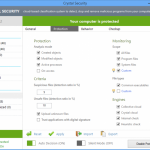
Install any anti-malware with real-time protection and you’re generally weighing down your system with services, drivers, DLLs, background processes and more.
Crystal Security does things differently, its tiny download unpacking to a single 830KB executable which runs happily on Windows XP and later.
© 1998-2026 BetaNews, Inc. All Rights Reserved. Privacy Policy - Cookie Policy.