How your social media habits could be putting your security at risk


The biggest risk to your data or that of your company could stem from the way you use social media. Despite headline-hitting hacking attacks social media remains a favorite tool of cyber criminals.
Data protection specialist Digital Guardian has produced an infographic warning of the risks of over sharing on social media.
Europe wants to protect 'human rights defender' Edward Snowden from the US

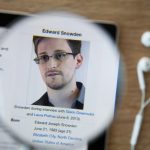
Edward Snowden could have a new friend, and place of exile, in Europe. Currently in Russia, Snowden today found himself the subject of an EU vote seeking to drop any criminal charges against the former NSA contractor.
The vote passed 285 to 281 and is likely to upset the US. This is because member states are also looking to extend protection to Snowden and prevent extradition by third parties, calling him an "international human rights defender".
000WebHost gets hacked, exposes 13 million emails and passwords


The high profile company attacks keep coming these days with Target, Home Depot and, most recently, TalkTalk. Now word comes out that a major web hosting service has also fallen victim, spewing a generous amount of information to anyone interested.
000WebHost is working to resolve the problems, which led to 13 million emails and passwords being made public, but in the meantime it is trying to take precautions to protect users, though it seems a bit late for that.
Major utilities leaving website vulnerabilities un-patched

Hard on the heels of last week's TalkTalk breach, another British utility company, British Gas, has contacted over 2,000 customers to warn them that their email addresses and passwords have been posted online.
Yet according to information security company High-Tech Bridge many large companies could be leaving customer data at risk via their websites.
Cloud-based app security – the consumer view
More than half of consumers don't believe that cloud-based apps and services are keeping their data secure, according to a new survey.
Cloud security specialist Radware has released the results of a study of over 2,000 people which reveals that consumer perceptions and expectations are dramatically shifting with frequently reported hacks, which will have a major impact on how businesses secure their services, communicate with consumers and go to market.
Google demands Symantec grovel over security certificate fiasco or risk the consequences

Google has fired warning shots at Symantec, threatening that Chrome would start to flag the company's security certificates as unsafe. The threat comes in a blog post penned by Google software engineer Ryan Sleevi who is still seething after Symantec employees issued a number of unauthorized security certificates.
Some of the certificates were owned by Google -- including Google.com -- and a Symantec-led audit suggested that the problem affected just 23 test certificates. But further probes revealed that there were in fact more than 2,500 certificates involved. Google is understandably fuming and is now holding Symantec to ransom.
The secret life of lost smartphones

Have you ever lost a mobile phone and wondered where it went? Security company Avast had the same thought and deliberately 'lost' 20 phones to find out what happened to them.
Avast installed three security apps on all the phones, the free Avast Anti-Theft app, Lookout Mobile Security, and Clean Master. It then randomly placed 10 phones in San Francisco and 10 in New York. Each phone was marked with contact information on where to return the device if found.
UK government says app developers won’t be forced to implement backdoors

The UK government is sending mixed messages about how it views privacy and security. Fears have been mounting since Prime Minister David Cameron wondered aloud "in our country, do we want to allow a means of communication between people which we cannot read?" -- his view obviously being that, no, we don’t want to allow such a thing.
Following the revelations about the spying activities of the NSA and GCHQ, public attention has been focused more than ever on privacy and encryption, Cameron having also suggested a desire to ban encryption. Today, some fears were allayed when it was announced that the government was not seeking to require software developers to build backdoors into their products. That said, the government said that companies should be able to decrypt 'targeted' data when required, and provide access to it.
Millennials don't want a job in cyber-security


Those 800,000 IT experts Europe will be missing by 2020 won’t be that easy to find, as the new study suggests that Millennials are not really crazy about a career in cyber-security.
These are the results of the annual study of millennials entitled Securing Our Future: Closing The Cyber Talent Gap. According to the study, young adults are not really interested in cybersecurity, but what’s even worse -- the number of young women in the US interested in a cyber-career is five times smaller.
77 percent of Brits think the internet is getting more dangerous

It may not be entirely surprising in the wake of recent high-profile attacks like that on TalkTalk, but a new survey of almost 3,500 users from UK broadband comparison site Broadband Genie reveals that we're losing trust in the internet.
Among the findings are that 75 percent of Brits believe companies aren't doing enough to secure their personal data, and 15 percent said they had their personal data exposed by a leak or a hack.
Kaspersky Safe Kids: free parental controls for all your devices

Parental controls are often regarded as a premium extra by security companies, and are only bundled with their most expensive high-end suites.
If you’re working on a budget then it could make more sense to opt for a specialist tool, and Kaspersky Safe Kids Free gives you a lot for no cost at all.
Half of IT security pros think their organizations are unlikely attack targets

According to a new study published by the Ponemon Institute and sponsored by behavioral analytics specialist Prelert, half of IT security practitioners in the US view their organization as an unlikely target for attack.
The report also reveals a lack of cyber-preparedness with 61 percent of respondents admitting a lack of confidence in their organization's ability to detect advanced threats.
Killer smart devices and other cyber threats you'll face in 2016

The world of online security never stands still, and if the past year has shown us anything it's that you don't need sophisticated technology to launch a successful cyber attack.
Security company Trend Micro has released its annual security predictions report outlining the threats it expects to be facing next year. It forecasts continued growth in online extortion, hacktivism and mobile malware, as well as a shift towards an offensive cybersecurity posture for government entities and corporations.
New analytics platform helps detect internal attacks

Security analysts can struggle to cope with the large volumes of alerts generated by multiple security tools. This can make it hard to distinguish anomalies from genuine malicious actions.
To provide organizations with additional context and more accuracy to detect malicious attacks, even those that originate internally, security analytics specialist Niara is launching a new version of its platform to deliver user and entity behavior analytics (UEBA) on network packet and flow data, in addition to log data.
Code42 releases new endpoint protection platform

Backing up data is increasingly important, not just to guard against system failures but because of the need to retain information for legal purposes, and for migrating information between devices.
Endpoint data protection and security specialist Code42 is launching its fifth generation CrashPlan platform to strengthen its backup and restore capabilities.
© 1998-2026 BetaNews, Inc. All Rights Reserved. Privacy Policy - Cookie Policy.