Google Calendar is getting a new URL for security reasons


Google Calendar is used by many people to track (seemingly) their every activity. That's a good thing, as it keeps users organized and calendars can be shared with family and co-workers so they also know what's going on. But what about its security? It doesn't seem a huge issue, given the nature of the service -- it isn't your bank, after all.
Google is ever vigilant, however, and has been thinking this part through and is now making some changes. The update brings a new URL, but it's really about security.
Attackers bundle an old version of TeamViewer to exploit vulnerability


We're used to seeing malware that exploits unpatched vulnerabilities in software. But in a new twist attackers are bundling an old version of remote access package TeamViewer with their malware in order to take advantage of a flaw.
The malware known as TVSPY has been uncovered by researchers at security company Damballa. While the current version of TeamViewer has fixed this vulnerability, the bundled version works independently of any existing TeamViewer installation on the target PC.
Baby monitors are not secure enough for the IoT era


Many popular baby monitors with online access lack even the most basic security features, according to a report by IT security firm Rapid7.
Researchers revealed that it would extremely simple for hackers to use the devices as spy cameras or to launch attacks on other Internet-connected devices in the home.
Snowden: Hilary Clinton's personal email server likely exposed sensitive national intelligence


If anyone else at the State Department made use of a personal email server to discuss sensitive information, they would have been fired and prosecuted, says Edward Snowden in a scathing attack on Hilary Clinton.
The former NSA worker hit out at the Democratic presidential candidate in an interview with Al Jazeera. He said that Clinton was probably aware that using a personal email address had exposed sensitive national intelligence, describing it as 'a problem'.
The importance of education in combating phishing attacks [Q&A]

It's usually the case that the weakest link in any security system is the human element. That's particularly true when it comes to phishing attacks. Hackers have become more creative in the social engineering methods they use to gain access to sensitive information.
A new service called LUCY, aims to educate people and identify vulnerable endpoints by allowing businesses or individuals to simulate phishing attacks. We spoke to LUCY founder Oliver Muenchow to find out more about this approach.
'Extremely critical' OS X keychain vulnerability stealthily steals passwords via SMS

Two security researchers have discovered a serious vulnerability in OS X that could allow an attacker to steal passwords and other credentials in an almost invisible way. Antoine Vincent Jebara and Raja Rahbani -- two of the team behind the myki identity management security software -- found that a series of terminal commands can be used to extract a range of stored credentials.
What is particularly worrying about the vulnerability is that it requires virtually no interaction from the victim; simulated mouse clicks can be used to click on hidden buttons to grant permission to access the keychain. Apple has been informed of the issue, but a fix is yet to be issued. The attack, known as brokenchain, is disturbingly easy to execute.
TeleSign simplifies end user verification

Being able to accurately and safely verify identity is increasingly important as online fraud remains a major threat.
Mobile identity solutions specialist TeleSign is announcing the launch of TeleSign Smart Verify, a new unified API that simplifies end-user verification and two-factor authentication (2FA) for online and mobile app-based accounts to help prevent fraud and stop account compromise.
Amid Windows 10 controversy, Microsoft quietly releases privacy botching features to Windows 7 and 8

It's been roughly a month since the release of Windows 10, Microsoft's newest desktop operating system. It packs in several enticing features including the digital assistant Cortana. But despite all the interesting offerings, Windows 10 isn't sitting well with many. Privacy advocates have criticized Microsoft for introducing several features that are seemingly concerning to those who care about their privacy. To make things worse, the company has now rolled out some of these annoying features to Windows 7 and Windows 8.
First spotted by Ghacks, some of the recent updates that Microsoft rolled out to Windows 8 and Windows 7 set a computer to regularly send reports of a machine's activities to Microsoft. The update dubbed 3068708, for instance, introduces the Diagnostics and Telemetry tracking service on the computers it is installed on. "By applying this service, you can add benefits from the latest version of Windows to systems that have not yet upgraded. The update also supports applications that are subscribed to Visual Studio Application Insights", Microsoft describes the purpose of the update.
New malware detection engine stops cyber threats sooner

Attackers are increasingly capable of modifying their existing malware to slip into a victim’s infrastructure undetected. Because traditional security solutions are reactive and can only protect against already known threat vectors this leaves a gap in defenses.
Security company Check Point is launching its new SandBlast product that uses CPU-level threat detection to uncover threats at the pre-infection level. It elevates threat defense with evasion-resistant malware detection and comprehensive protection, significantly reducing the risk of expensive breaches.
Your new smartphone could ship with malware

Receiving a new smartphone with malware pre-installed is unlikely, but this is exactly what has happened with handsets from well-known brands sold by some third-party sellers in Asia and Europe. Consumers expect them to run factory software, so it is unlikely that they will check to see whether it has been modified prior to using their account credentials and storing sensitive information, making these kind of infections extremely dangerous.
Security firm G Data has discovered malware on more than 20 smartphone models which were advertised as new. And we are not talking about no-name brands. Among other companies, Huawei, Lenovo and Xiaomi, top-tier vendors, have had their devices infected prior to the sale.
The most-used passwords are still terrible choices
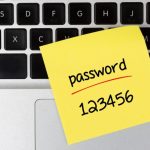
There’s no excuse for having a ridiculously weak account password, and yet many folks continue to make no effort at all on the security front in this respect, according to a new piece of research.
BT.com highlighted a government survey, which was part of the Cyber Streetwise campaign, and found that three quarters of UK citizens used passwords which weren’t secure.
Chrome embraces HTML5 and tells Flash ads to eff off

The writing has been on the wall for Flash for some time now. A web technology loathed for countless reasons -- not least the security issues -- the death knell is now tolling loudly as HTML5 is more widely embraced.
Back in June, Google announced that Chrome would pause Flash ads in its browser by default, helping to eliminate a major online annoyance. Now the company has outlined when this will happen -- and there are only a few days to wait.
Kaspersky launches improved business security for Macs

Macs have around six percent of the business endpoint market and Mac specific malware is on the increase. In the rapidly evolving world of malware and security, Mac users can no longer afford to be complacent when it comes to protecting their systems.
To tackle these threats Kaspersky Lab is updating its Kaspersky Endpoint Security for Business suite with Endpoint Security 10 for Mac. This offers a combination of deep protection, efficiency and manageability, designed to serve the needs of protecting diverse IT environments.
Browsers and privacy: Pay attention to what you search for

Internet browsers are like sports teams. Every IT department and individual has an opinion on which one is the best, and personal preferences often comes down to long standing allegiances.
In the browser’s case, this is due to personal preference or ease of IT administration. Search privacy is not always top of the agenda, but should it be?
TeleSign and Telefόnica team up to cut mobile fraud
Mobile identity specialist TeleSign has announced an agreement with Spanish telecoms giant Telefόnica -- the company behind O2 in the UK and Germany -- to deliver a suite of services to address account security and fraud prevention for enterprises and service providers.
The partnership will use TeleSign's products and infrastructure, along with Telefόnica's consent-based insights, to increase account security, reduce fraud, and improve customer experience for consumers. At the same time it will help to manage costs for service providers across financial services, e-commerce, cloud and social media.
© 1998-2026 BetaNews, Inc. All Rights Reserved. Privacy Policy - Cookie Policy.