Advanced Persistent Threats still go unnoticed by website owners


The term "Advanced Persistence Threat" fills news pages on a regular basis. According to ISACA APT Awareness Study, 93.6 percent of respondents consider APTs to be a "very serious threat" for their companies.
However, many "APT" attacks, do not really fall under the 'advanced' category in terms of the attackers’ sophistication. A very recent exploit, combined with phishing or newly registered domains are rather "low-cost APTs", for which we should probably introduce the new term "LCAPT" or just "LAPT" to distinguish these from genuine APTs.
Samsung Pay launches in Korea in August, US in September


The main thrust of Samsung's Galaxy Unpacked event was to launch the Galaxy Note 5 and Galaxy S6 Edge+, but the company also provided some details about Samsung Pay. With so many similarly-specced smartphones vying for attention, each manufacturer needs to offer something slightly different, and Samsung is hoping that a new digital payment system will prove attractive to people.
Going head to head with Android Pay and Apple Pay is Samsung Pay. As well as offering compatibility with the newly announced Galaxy Note 5 and Galaxy S6 Edge+, Samsung's payment system is supported by many of its older handsets. It will launch in its home country of Korea on August 20, and will spread to the US at the end of September. So why pick this payment system over the alternatives?
Hackers make $100 million profit from stolen news releases

Hackers, predominantly based in Ukraine and Russia, repeatedly infiltrated the networks of Business Wire, Marketwired and PR Newswire over a period of five years in order to gain profitable information.
Nine of the alleged hackers have now been indicted in the US, charged with stealing more than 100,000 news releases, making more than $30 million. In total, it is believed that 32 hackers have made in excess of $100 million via illegal trading of corporate information.
Windows 10 phones home to Microsoft even if you change privacy settings

Many people regret upgrading to Windows 10, and many are put off from making the move to the latest version of Microsoft's operating system, because of concerns about privacy. The answer to privacy worries about Windows 10 features such as Cortana has been 'just don't use them', but it seems that this might not be enough.
Research carried out by Ars Technica shows that even with features disabled and privacy settings activated, Windows 10 continues to send information back to Microsoft. The data is sent by a series of tools including OneDrive, Cortana, and Bing -- even when a local account is used.
The best value breach detection systems


Given the current threat landscape and the fact that attackers are finding new ways to bypass traditional security, it's no surprise that many companies are turning to the use of breach detection to protect their systems.
Independent testing organization NSS Labs has evaluated eight of the leading BDS vendors -- BlueCoat, CheckPoint, Cisco, Fidelis, FireEye, Fortinet, Lastline, and Trend Micro -- for security effectiveness, performance, and total cost of ownership.
Lenovo BIOS tool prevents clean installs of Windows by downloading crapware

Lenovo is no stranger to bloatware, but the latest crapware calamity is cut from a slightly different cloth. In a bid to ensure that its software is installed on its computers, Lenovo BIOSes feature a tool that automatically downloads and installs bloatware even after a clean installation of Windows.
The issue is not entirely new, having been brought to light on Ars Technica's forums, but there is renewed interest in the topic following the launch of Windows 10. Lenovo is making use of a little-known feature called the Window Platform Binary Table which can be used by manufacturers to stealthily install software via the BIOS. The 'feature' is seen by many as amounting to little more than a rootkit, and blame has been laid at the doors of both Lenovo and Microsoft.
Script injection vulnerability leaves Salesforce users open to phishing attacks
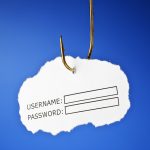
A script injection vulnerability in the popular Salesforce cloud CRM system could have left users open to attack from phishing emails that appear to come from within a trusted domain.
Cloud application security specialist Elastica has released details of the vulnerability -- disclosed to Salesforce in early July -- which opened the door for attackers to use a trusted Salesforce application as a platform to conduct phishing attacks to steal end-users' login credentials and hijack accounts.
Malvertising becomes a billion dollar problem

According to a new report by endpoint security specialist Invincea malvertising is causing more than $1 billion worth of damage each year.
Based on data gathered in the first six months of this year the company detected and blocked approximately 2,100 malvertising attacks against its customers, representing 2.1 million malicious advertisements. Invincea estimates this caused $525 million of damage in repair and recovery expense, excluding the impact of any data breaches.
LastPass switches to freemium model to encourage take up
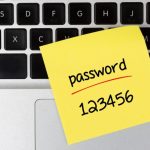
With increasing numbers of credentials being stolen in data breaches it makes sense to use a password manager to protect your online accounts.
Popular password manager LastPass is encouraging users to make the leap by making its service available free on mobile devices, including smartphones and tablets from today.
84 percent of enterprises have considered encrypting all sensitive data

Security professionals are naturally concerned with protecting sensitive data within their organization and elsewhere, particularly given the increasing numbers of threats.
A new survey of more than 100 information security professionals by data security specialist Vormetric and risk management research organization IANS reveals that 84 percent of respondents had considered a security strategy of encrypting all their sensitive data.
HTC and Samsung phones storing unencrypted fingerprints

HTC is having trouble keeping investors happy, reporting its worst quarter in history earlier this month. If that wasn’t enough to contend with, FireEye researchers have found a way to steal fingerprint information from the HTC One Max and Samsung's Galaxy S5.
Fingerprints were stored in an image file named dbgraw.bmp in an open, readable folder. This means anyone that gains access to these files is capable of editing the fingerprints, deleting them and even forcing fake fingerprint scans to pay for items. Malicious apps can utilize the fingerprint files by asking for them in start-up.
Facebook's privacy settings allow for harvesting data through mobile numbers

If you've added your mobile number to your Facebook account, you might want to reconsider in light of a new security exploit. A software engineer was able to access user data just by entering their mobile number. Profile pictures, names and locations were all accessible even for users who had not made their number public.
There is potential for such harvested data to be misused by malicious parties, as it provides an easy way to link a mobile number to an individual. Reza Moaiandin was able to use a special tool to quickly generate tens of thousands of numbers which, when passed through a Facebook API, fed back the associated user profiles.
Security is weakened because random numbers are not random enough

A lot of security systems are based on random numbers, prime numbers, or a combination of the two. But generating random numbers is not as random as you might expect -- or hope -- and it relies on sources of broadly random data that can be used as a starting point. The problem is that these sources of data are not large enough.
The entropy of data generated by Linux servers -- which are the backbone of much of the internet -- is, says security expert Bruce Potter, too low. Speaking at Black Hat USA 2015 -- an event which has already seen the unveiling of the Thunderstrike 2 firmware malware and the Stagefright-beating Certifi-Gate Android vulnerability -- Potter warns that the low entropy problem means that seemingly random numbers could in fact be easier to guess or crack than first thought.
Forget Stagefright, Certifi-Gate vulnerability allows for complete remote control of Android phones

There have been numerous stories in recent days about the threat posed by Stagefright to Android users. A more serious threat has been revealed at Black Hat USA 2015, however -- one that affects hundreds of millions of Android devices. Known as Certifi-gate, a vulnerability has been found in Remote Support Tools which could allow for hackers to take full control of phones.
The security issue was discovered by Check Point, who has notified handset manufacturers of the vulnerability, and launched an app that you can use to see if your handset is affected. Stagefright led to many handset manufacturers announcing a switch to monthly security updates, and some have already issued a fix for Certifi-gate. However, it seems that HTC is a little slow off the mark this time around, particularly when it comes to patching newer phones.
Update Firefox right now to squash file stealing bug

Firefox users are being encouraged to upgrade to the latest version of the browser as soon as possible after the discovery of a serious security flaw in the software. Mozilla was quick to patch the security hole which could result in users' personal files being uploaded to a remote server.
Affecting the Windows and Linux versions of Firefox, the security vulnerability stems from the browser's PDF viewer. It allows for the injection of JavaScript that could be used to locate sensitive files and transfer them to a remote server.
© 1998-2026 BetaNews, Inc. All Rights Reserved. Privacy Policy - Cookie Policy.