NFC can kill passwords for good

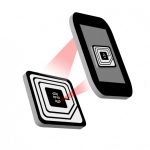
Since the dawn of the digital age, we’ve signed up to the password, trusting in its ability to keep our digital lives safe from thieves and those who would mean us harm.
Moore’s law tells us that every two years computing power doubles -- meaning every two years the amount of time it takes to crack a password using a brute force attack decreases considerably. It’s now reached the point where a password can be cracked in minutes, sometimes in as little as just six seconds. Six seconds to potentially lose your entire digital life.
Tips on staying safe when using free Wi-Fi hotspots [Infographic]

We’ve come along way since 2000. Just think, the only way most people could get online was by hooking up their computers to a phone line or an Ethernet cable. It might surprise you to know then, that the first portable computers were released way back before we learned to unshackle ourselves from all of those annoying cables. The first laptops were released in the 1980s and one of the first was Apple’s Macintosh Portable, weighing in at a lap crushing 7kg. It’s is safe to say we’ve come along way since that inauspicious beginning.
Although Wi-Fi has been around since 1985, it is was only in the 2000s that it became increasingly popular. Today, Wi-Fi is an integral part of our lives, and is often the first thing that we ask for when checking-in at a hotel, or going for a coffee. I’ve even heard children as young as six or seven demanding a Wi-Fi connection whilst at a hotel!
Your PBX has been hacked!


This past week a very large corporation on the east coast was hacked in what seems to naive old me to be a new way -- through its corporate phone system. Then one night during the same week I got a call from my bank saying my account had been compromised and to press #4 to talk to its security department. My account was fine: it was a telephone-based phishing expedition. Our phone network has been compromised, folks, and nobody with a phone is safe.
Edward Snowden was right we’re not secure, though this time I don’t think the National Security Agency is involved.
Thousands of top Android apps found engaging in suspicious activities


Google's Android operating system has matured over the past couple of years. Lollipop -- the latest update -- added fresh paint to give the mobile OS more elegance and provided sophisticated encryption options to make things more secure. But in all these years, Google Play Store -- the marquee Android app store -- has largely remained free from any substantial improvement. In the past, we’ve witnessed plenty of cases where prominently showcased apps in Play Store have been found malicious, riddled with adult content, and spying elements. So it didn't come as a big surprise when this past week a new study uncovered many more of such dubious activities. This time, however, we're looking at apps that many of you are likely using on your devices.
Security researchers from Eurecom tested the top apps from all 25 categories -- summing up to about 2,000 apps -- and found that many of these were connecting to tracking and advertisement websites. Furthermore, many of these apps were pinging even more dubious portals. What’s even more striking is that the owners of these devices have no idea about the activities happening behind the curtain.
WikiLeaks unveils updated anonymous data submission system


WikiLeaks prides itself on bringing information to public attention that might otherwise stay hidden. In order to get this information out in the open, the organization is reliant on a wide range of sources. The sort of stories which WikiLeaks deals with would often not come to light if those breaking the stories could not be guaranteed anonymity.
A few days ago the Sun newspaper revealed that it was using SecureDrop as a way for people to give anonymous tips about stories, and it was touted at the time as being a WikiLeaks-style tool. Now Julian Assange has announced that WikiLeaks has upgraded its own submission tool to offer even greater security.
Mozilla strong-arming websites to drop HTTP


Mozilla plans to phase out HTTP support in Firefox, in a push to make browsing more secure. The organization wants websites to go all-in with HTTPS, revealing that it will leverage access to some of its browser's features and make proposals to The World Wide Web Consortium to get the ball rolling.
Mozilla's move may be seen as a way to strong-arm lots of website administrators into supporting HTTPS, as, after all, Firefox is the third most-popular browser today, with a desktop usage share of 11.7 percent. The protocol requires the purchase of a certificate, increasing website running costs, which can become a problem for smaller businesses.
Antivirus tool stripped of awards after cheating

Antivirus software produced by Qihoo 360 has been stripped of awards by three leading security testers after it was found to have cheated. AV‐Comparatives, AV‐TEST and Virus Bulletin discovered that Chinese company Qihoo 360 submitted one version of its software for testing, but then released a different one.
The publicly released version of the software had a key virus detection engine disabled, resulting in a lower level of protection for users. As a result of the findings, the security testing bodies are not only revoking any awards given to the software this year, but also calling for greater transparency so consumers know what they are getting.
Unpatched PDF readers leave US private PCs open to attack


Adobe Reader 10 has 39 vulnerabilities and is unpatched on 65 percent of private PCs in the US, whilst Adobe Reader 11 with a 55 percent market share has 40 vulnerabilities and remains unpatched on 18 percent of machines.
This is one of the findings of the latest Secunia country report. Additional findings show that 14 percent of PC users in the US (up from 12.9 percent last quarter) have an unpatched operating system, and that Oracle Java once again tops the list of applications exposing PCs to security risks.
Google's open source 'Password Alert' protects your login credentials from phishing attacks


Google is life. Well, not really, but for some people it kind of is. For many of us, a Gmail account became a gateway to an entire Google lifestyle. One password logs us into numerous services, which is super convenient, but also quite scary. Over time, it is easy to let your guard down and fall for phishing sites that pretend to be a legit Google login. If your Google credentials are intercepted, you are going to have a bad time.
Today however, the search-giant releases an open source Chrome browser extension aimed to thwart these stinky phishing goons. Called "Password Alert", it will hopefully protect your credentials and keep the sun shining on planet Google.
Hackers plunder $5 million from the account of Irish airline Ryanair


It's one thing to have your personal bank account hacked, you may lose a few dollars or worse a small fortune. However you would expect corporate accounts to have added security, preventing such a devastating event. That's clearly not the case. While we've seen point-of-sale systems hacked and customer data stolen, this time it was actually a company bank account that was robbed.
Irish airline Ryanair had its corporate account plundered by hackers to the tune of $5 million, or €4.6 million. The money apparently disappeared from accounts used to fund the fueling of the company's planes, not a cheap task and perfect for not immediately ringing alarm bells.
How to set up a passcode on iOS and Android
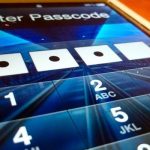
There was a time when phones only contained text messages and contacts that the value of your device had been more important than what it stores. But that period is now long gone. In today’s age of smartphones, information has become more valuable than the device itself, which is why having a PIN on your smartphone has become more important than ever.
Tons of information -- such as your social media accounts, email messages and bank details -- can be accessed from your phone and we all know that security is not something to be ignored in this day and age. Setting up a passcode is an easy task on both Android and iOS smartphones and here’s how it’s done.
Yahoo might use your ear to unlock your phone

Smartphone security takes a number of forms; you might access your phone with a PIN, your fingerprint, or via facial recognition. But if Yahoo's plans gather momentum, you could be using your ear to unlock your phone in the not-too-distant future. The idea builds on the idea of the unique fingerprint we all have, taking advantage of the capacitive touchscreens that are now a standard feature of phones.
There's no need for special sensors as the way different parts of your ears touch the screen when held in the 'talk' position can be used to uniquely identify you. It's all part of Yahoo's Bodyprint program, which is also looking at how the way you hold your phone could be used as an unlock tool.
Kaspersky launches new security solution for small businesses

Security issues affect smaller businesses just as much as big ones, but they're often less equipped to deal with them due to limited resources.
Today Kaspersky Lab is releasing the latest version of its Kaspersky Small Office Security, built specifically for businesses with fewer than 25 employees. It's aimed at providing world-class protection and easy use without the need for specialized IT skills.
This is how the enterprise can keep up with hackers
The days of blissful ignorance are over. With consumers increasingly aware of the security and protection issues relating to their data, companies have been forced to become more transparent. Already the majority of states in the US have passed legislation requiring companies to notify customers when data breaches occur and efforts are also underway to strengthen similar laws across the EU.
Notifying consumers of data breaches is an important consideration in retaining trust but there is an equally important point to bear in mind. Sharing the related breach data to improve endpoint security will be crucial in giving businesses the best chance of repelling future threats. It will also help to limit the reputational and financial damage that such attacks can cause. After all, it is the application, not the notification that will help the enterprise gain the upper hand.
The Sun newspaper launches anonymous Tor-based WikiLeaks-style SecureDrop

The likes of Julian Assange's WikiLeaks have set the standard for blowing the lid on huge stories based on tips from anonymous sources. Whistle-blowers such as Edward Snowden have brought to public attention stories which would otherwise have been kept hidden from the public, and it has been with the help of newspapers such as the Guardian that this information has been disseminated around the world.
Other newspapers are keen to ride on the coattails of those blazing a trail in the world of investigative journalism, and the latest to join the party is The Sun. Today, Murdoch-owned News Corp's newspaper and website launches SecureDrop -- a way for whistle-blowers to anonymously leave tip-offs that can be further investigated.
© 1998-2026 BetaNews, Inc. All Rights Reserved. Privacy Policy - Cookie Policy.