CommVault launches endpoint protection for mobile enterprises

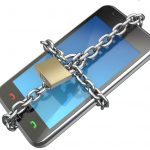
The growth of mobile workforces means that employees are often reliant on data that's stored outside the protection of the normal IT infrastructure.
With global data breaches having an average cost of $3.5 million, according to a study by the Ponemon Institute, due to lost or unrecoverable data on employee devices, organizations are beginning to embrace centrally managed platforms that can be used to address data protection, collaboration, regulatory, and eDiscovery requirements in a secure manner.
Bushel makes Apple mobile device management available to smaller businesses
Mobile device management is becoming essential for more and more businesses, but solutions are often complex and difficult for enterprises without specialist IT staff to adopt.
Software company JAMF which produces MDM solutions for iOS devices has launched a low cost, easy-to-use solution called Bushel aimed at small and medium businesses.
Ban encrypted messaging apps? You'd have to be an idiot to think it workable


Wherever you are in the world, it's quite likely that your government wants to monitor your communication, be it online or via phone. Following the tragic events in France, politicians have voiced a desire for greater snooping powers. UK Prime Minister David Cameron has suggested that he would ban encrypted messaging tools if he wins the next election.
He has said that he would move to block the use of methods of communication that could not be intercepted and read by security services. With tools such as iMessage, WhatsApp and Snap Chat providing encrypted messaging options, could their days be numbered? Or is this an idiotic and unworkable way of looking at things?
Silk Road Reloaded ditches Tor for I2P


The notorious online black market Silk Road Reloaded has left the Tor web browser to join a more anonymous network known as I2P.
Following the decision, Silk Road Reloaded has also made a number of policy changes, including ending its exclusivity with bitcoin. The site now allows transactions to take place with other cryptocurrencies such as dogecoin and anoncoin.
Google patch policy leaves over 900 million Android users out in the cold

When a version of Windows reaches the end of its normal support, as Windows 7 has today, Microsoft continues to provide security patches for an extended time.
Google it seems prefers to take a tougher line and is not issuing patches for versions of Android prior to 4.4 KitKat, leaving millions of users of older versions out in the cold.
What security threats will enterprises face in 2015? [Q&A]

Last year saw a number of high profile security incidents hit businesses. From attacks on individual companies to bugs like Heartbleed that had the potential to affect large numbers of organizations.
Can we expect more of the same in 2015 or will the threat landscape continue to evolve? We spoke to Mark Bermingham, director of global B2B marketing at Kaspersky Lab, to find out.
2015 will be the year when nothing happens


This was supposed to be time for my technology predictions for 2015, which I’ll get to yet, I promise, but first I want to explain the major trend I see, that 2015 will become known as The Year When Nothing Happened. Of course things will happen in 2015, but I think the year of truly revolutionary change will be 2016, not 2015. It takes time for trends to develop and revolutionary products to hit the market. I’d say the trends are clear, it’s the products and their manufacturers who aren’t yet identifiable.
So here are three areas where I’ll disagree with most of my peers and say I don’t expect to see much visible progress in 2015.
'Islamic State' hacks US Centcom Twitter feed, YouTube channel


US Central Command's Twitter account appears to have been hacked by CyberCaliphate, a hacker group claiming association with ISIS.
The Twitter feed has since been taken down, but posted messages included "AMERICAN SOLDIERS, WE ARE COMING, WATCH YOUR BACK. ISIS. #CyberCaliphate", "Pentagon Networks Hacked! China Scenarios", and "Pentagon Networks Hacked. Korean Scenarios". These last two posts came with military maps and information relating to the countries in question.
Tick tock, tick tock -- Obama says customers need to be told faster about security breaches

President Obama is calling for more honesty from tech companies when it comes to telling customers about security breaches. Specifically, he wants people to be informed in a more timely fashion whenever a security issue puts their data at risk.
The proposed Personal Data Notification and Protection Act would require companies to contact customers within 30 days of a security breach if personal data has been stolen. The call comes in the wake of several high profile cases in which customers' data was exposed for some time before those affected were informed.
Gotcha! Google angers Microsoft by exposing Windows vulnerability

At the end of last week, Google took the somewhat unusual step of releasing details of a Windows vulnerability before a patch had been produced. Microsoft is unhappy. Very unhappy. The bug, which affects the 32- and 64-bit versions of Windows 8.1 Update, was publicized as part of Google's Project Zero, but Microsoft is calling it a "gotcha".
So angered was Microsoft that Chris Betz, Senior Director of Microsoft Security Response Center hit out at Google in a strongly worded blog post. Citing the war against cyberattacks, Betz expresses anger that Google made public a security issue about the elevation of privileges in Windows user accounts, saying that companies should "come together and not stand divided".
Cloud security becomes a boardroom concern

Moving systems and data to the cloud is increasingly common, but it inevitably leads to concerns about security and those worries are now reaching the boardroom.
This is according to new research by the non-profit Cloud Security Alliance which looks at how companies are currently approaching the cloud, including their views on shadow IT, obstacles preventing cloud adoption, and security priorities.
Can an 'anonymous' social network using Facebook login ever be trusted?

Despite its unwavering popularity, Facebook continually finds itself under fire for one thing or another. We've had debate about the social network's real names policy, a raft of people thinking they can rewrite the rules, advertising woes, and constant complaints when changes are made to how timelines operate. But one thing crops up time and time again -- people's desire for privacy.
This may seem rather at odds with use of a social network (there's a clue in the name there), but a new contender thinks it has the answer. Social X describes itself as a social platform where users can set up numerous identities, including an anonymous one. There's one problem -- Facebook credentials are used to sign into Social X, and this is undeniably going to be a massive stumbling block.
Toshiba releases its first DVR for 960H resolution security cameras


Home security is always in demand, and many people pay to have alarms systems installed and monitored. These systems can call the police when intrusion is detected or the fire company if there's smoke. Cameras are one of the newer additions to this home arsenal, though they've been around for a while. However, they come with an added complication -- the recording and saving of the video. After all, it's useless if you can't see what happened.
For this recording of video, you generally have two options -- a DVR or the cloud. Both have advantages and disadvantages. The DVR is obviously local and allows for more control and less chance of your video being hacked. Now Toshiba is looking to provide you with that solution, announcing the new EAV16-480 DVR, built for 960H resolution cameras.
Qualcomm's Snapdragon 810 packs hardware kill-switch -- Android, Windows Phone users rejoice!


Mobile devices equipped with a kill switch are starting to become fairly common, in no small part thanks to Apple and Google, which have added this nifty security feature to their respective operating systems, iOS and Android. Now, US chip maker Qualcomm is also joining the party, albeit using a different approach, which, on paper at least, appears to be superior.
That's because Qualcomm has decided to go for a hardware kill-switch, which will first ship in its flagship mobile processor, Snapdragon 810. The main selling points? Users will be able to take advantage of it no matter which operating system runs on their Snapdragon 810-powered device, or whether the operating system offers such a feature or not.
Android users, sign up now to beta test a smart deadbolt lock for your home


One of my favorite television programs is the Andy Griffith Show. True, it is way before my time, but that is the point; I yearn for a simpler time. From the moment I wake up in the morning until my head hits my pillow, I am on a PC, tablet or smartphone. Quite frankly, I do not know how the entire world doesn't have ulcers and gray hair from all of the stress. Andy Griffith could relax, go fishing or eat a home-cooked meal with Aunt Bee and Opie; foreign concepts to many of us.
While those aforementioned things can still be achieved today, there is something from the show that can't. What, you ask? Leaving the doors of your house unlocked. Sadly, unlike the fictional Mayberry, the world is now a dangerous place; we must lock our doors both when at home and while away. A deadbolt is a great way to secure a door, but the concept is very old school. But what if you could mix the safety of a deadbolt, with the convenience of your Android smartphone or tablet? A new such solution is in the works, and BetaNews readers can apply for an opportunity to beta test it with Betabound by Centercode.
© 1998-2026 BetaNews, Inc. All Rights Reserved. Privacy Policy - Cookie Policy.