One in five businesses loses data to mobile device theft


The results of a new survey from Kaspersky Lab show that the rate of mobile device theft is increasing but over the same period the time taken for IT departments to respond has increased.
Part of this is down to employees taking longer to report mobile loss or theft. Only half report the theft of a mobile device within a day with 38 percent taking up to two days and nine percent waiting between three and five days.
Mystery fake cellphone towers discovered across America

Fake mobile phone 'towers' dotted across the US could be listening in on unsuspecting smartphone users according to recent reports. And -- tin foil hats on, everyone -- nobody knows who's behind them.
Security company ESD America discovered 17 of the fakes called 'interceptors' whilst testing its secure Android phone. The towers can attack devices via the baseband chips that allow them to communicate with their networks and can, says ESD, eavesdrop or even install spyware.
LinkedIn introduces data export option and new security features

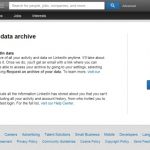
LinkedIn, the social network for professionals looking to stay connected, today introduces a few new features to give users greater control over their accounts. Like Google, Facebook, Yahoo and other online services, it is now possible to check which devices you are signed in on. This is not just something that satisfies a curiosity; the ability to terminate unrecognized sessions means that should you spot that you’re still signed in on a computer you're not using, you can remotely sign out of it -- more importantly, it also makes it possible to boot out anyone who has gained unauthorized access to your account.
You can head to the Settings page of your account and click the See where you are logged in link -- alternatively, you can jump straight to the session management page. The page shows a list of all of the sessions that are currently active and provides details such as the associated IP address, the browser that's in use, and the approximate location of the session. Spot something that you don’t recognize or looks a little untoward? Just hit the Sign out link. You can also sign out of all sessions in one fell swoop if you prefer.
Easy Solutions adopts DMARC to fight phishing attacks
Phishing attacks attempting to steal user credentials have become a common occurrence in recent years and made people wary of trusting anything they receive in email.
Fraud protection specialist Easy Solutions is aiming to help restore that trust by adopting the DMARC (Domain-based Message Authentication, Reporting & Conformance) specification to allow its customers to improve productivity and speed detection of phishing sites.
Secure your Apple iCloud account by enabling two-step verification

Unless you've been completely avoiding the news over the past few days, you will have heard about Apple's little problem with nude photos being stolen from celebrity accounts. The company has strongly denied that there has been a security breach, but in a statement it advised its customers to check the strength of their passwords as well as enabling two-step verification.
Two-factor authentication -- also known as two-step verification -- is a stronger method of security because it relies not only on something you know (your password), but also something you have (like your iPhone). Sounds good, but how do you do about doing it for your Apple account?
Open-Xchange launches in-browser encryption to combine security with ease of use [Q&A]

Data security used to be primarily about physically controlling where information was stored. But over the last few years the move towards greater use of mobile devices and increasing reliance on email for business communication has made securing information much more of a challenge.
The solution many organizations have turned to is encryption, particularly for emails, but is this the answer? Cloud collaboration specialist Open-Xchange is launching OX Guard, a fully integrated email security and encryption add-on to its OX App Suite.
Apple confirms that celebrity accounts were compromised in targeted attack

Since a cache of nude photos of celebrities appeared online, Apple has remained fairly tight-lipped about what may or may not have happened. Right from the start rumors were flying around that Apple's iCloud service may have been comprised or that Find My iPhone may have been to blame. The company said that it was "actively investigating" the suggestions but then things went quiet again. The FBI became involved, but it has been a frustrating 48 hours for anyone trying to find out what happened. Now Apple has issued a statement making it clear that a security attack did indeed take place.
Entitled Update to Celebrity Photo Investigation the statement reads:
Tired of privacy breaches? How to remove yourself from social networks

The leaking of celebrity photos which may have come from iCloud is just the latest in a series of high profile security and privacy breaches that are leading many people to question how safe their data is online.
For those who have decided enough is enough, secure transaction specialist Imprima has produced an infographic guide to "unfriending the internet" which covers how to take your personal profiles off the main social networking sites.
Yo, about that security! We're good, right?


In case you haven't heard of Yo, it's the latest breakout mobile app to go viral. Despite its single-feature capability, or perhaps because of it, the app struck a chord and rocketed to the top of Apple's App Store. Even Yo's own developers describe the app as "a fine line between stupid and genius".
While Yo was basking in the unexpected spotlight at the top of the apps chart, the next thing that happened was also unexpected. Yo got hacked. Three college students exploited a way into the app, snagged 300,000 Yo users and engaged in message spoofing. Yet Yo is hardly the first app, nor will it be the last, to get hacked.
Your personal porn is public


The Internet is buzzing about celebrity nude photos pilfered from iCloud. The problem is bigger than Apple's security, if breached, which I doubt. Behavior is the larger concern, and how people adapt during the contextual cloud computing era. If your phone automatically syncs pictures or videos to any cloud service -- Google Photos, iCloud, OneDrive, or another -- you must assume that nothing is private.
That personal nude video you shoot on the HandyCam is very different from the one taken on Galaxy S5, iPhone 5s, or another device. I should be stating the obvious, but given pervasive attitudes about the Internet -- where people feel safe browsing in the sanctity of their domicile or WiFi coffee shop -- carelessness must be the presumption. These leaked celeb nudes, if real rather than Photoshopped, are good example. Simple rule: Don't shoot any photos or videos on a cloud-connected device you don't want everyone to see.
Mozilla loses more user info, this time data of 97,000 customers goes out through Bugzilla


It's been a bad month for Mozilla, as the company seems to be shedding user data left and right. The problems are apparently not over as new information has come to light regarding the loss of another 97,000 emails and passwords that were left exposed.
The latest issue comes via Bugzilla, and the organization has reset all user passwords in an attempt to alleviate the issues. However, that didn't stop customer data from being exposed for about three months.
GlassWire is an easy-to-use network monitor

Whether you're concerned about security, or just hoping to optimize your PC’s performance, understanding what's accessing your internet connection can be very helpful.
Network monitors will tell you more, but they're often targeted at experts, weighed down with complex details which -- even if you understand them entirely -- you may not really need. GlassWire is an interesting free network monitor aimed at a more general audience. It’s easy to use, looks great and provides in-depth reports, but they’re easy to follow and focus on only the most important information.
What’s wrong with my next-generation firewall?

Next-Generation Firewalls (NGFWs) are a foundational component for many traditional network security strategies. While nothing is technically wrong with today's NGFWs, much is wrong with the approach. Most solutions in the market today do exactly as advertised -- combine traditional packet filtering with some application control and rudimentary IPS layered on top. While these capabilities are still important, traditional NGFWs were designed for a more simple time, before advanced threats began burrowing into enterprises through new and innovative means.
Today's sophisticated attacks leverage an array of threat vectors that can take endless form factors. We are now seeing attacks that we couldn't have anticipated just a few years ago. The traditional network security approaches in place to address these challenges have been built from disparate point technologies, amounting to considerable complexity, that create gaps in these defenses that attackers exploit.
Dropbox Pro gains new sharing controls and bumps storage to 1TB

Today Dropbox Pro users gain access to a raft of new features including automatically expiring shared links, password-protected sharing, and adjustable permissions. In recent times, Dropbox has moved away from being just a simple cloud storage platform into a cloud-based collaboration tool. Password-protected files sharing is the first line of security that's now available, but it has been bolstered by the ability to have the share automatically stop after a set period. This is something that is particularly useful for sensitive data, and is a helpful addition to the manual disabling of a shared link -- a set-it-and-forget-it option.
Catching up with other file collaborative tools, Dropbox Pro now also takes into account the fact that you might want to share files with others without giving them the option to edit those files. The new ability to add view-only permissions to files and folders has this covered so it is possible to share sensitive files without worrying about them being changed. For anyone using Dropbox on mobile devices, there is always the fear of losing a handset; a new remote wipe feature takes care of this.
The top 10 security software design flaws and how to avoid them

It's a fact that most software has bugs of some sort when it gets released. More significant are fundamental flaws in the design, yet whilst bugs generally get fixed, design flaws are often overlooked.
In an effort to address this professionals organization IEEE is bringing together leading figures from Google, HP, Twitter and Cigital to form a Center for Secure Design group with the aim of tackling serious design flaws in software.
© 1998-2026 BetaNews, Inc. All Rights Reserved. Privacy Policy - Cookie Policy.