What motivates modern hackers?


Ever wondered why hackers do what they do? Thycotic, a software firm specializing in privileged access password protection, conducted a survey of 127 hackers at Black Hat USA 2014 to try and understand their thinking.
The company found that more than half of the hackers (51 percent) were driven by the fun/thrill, while 19 percent were in it for the money. Few hackers fear getting caught with 86 percent confident they will never face repercussions for their activities.
Intellectual property loss affects 21 percent of manufacturing businesses in the past year


In ever more competitive global markets the success or failure of a business can rest on insights and solutions that allow it to operate more efficiently than its competitors.
If this information falls into the hands of a competitor advantage is lost. Yet the results of a new study by Kaspersky Lab show that one in five manufacturing businesses has suffered a loss of intellectual property in the last 12 months.
How malware could be used to predict future world conflicts


In terms of usefulness, we typically think of malware as somewhere between a volcano eruption and the Ebola virus. But researchers from security firm FireEye have developed a technique by which the spread of malware could predict upcoming world conflicts.
According to researchers who monitored millions of malware messages sent over the past 18 months, the amount of communications sent by malware programs spiked dramatically in the lead-up to the conflict between Russia and Ukraine over the future of Crimea. A similar spike was seen in malware attacking Israel in the days before its recent hostilities with Hamas in Gaza.
Edward Snowden claims NSA caused the 2012 Syrian internet outage

Edward Snowden has claimed that the US accidentally took most of Syria off the Internet while attempting to bug the country's online traffic.
Speaking to National Security Agency journalist James Bamford for Wired, the whistleblower claimed that a US intelligence officer told him that the NSA was responsible for Syria's disconnect from the web in late 2012, and not the Assad regime.
Panda 2015 consumer range now available

Panda Security has announced the launch of its 2015 consumer range, claiming that it’s "lighter, safer and easier to use than ever before".
Protection is improved with the new XMT (Extreme Malware Terminator) Smart Engineering engine. This isn't just marketing spin, either: the latest AV-Test and AV-Comparatives reports both saw XMT-powered products at the top of the list.
Four simple steps for securing your smartphone or tablet

A friend of mine bought a new iPhone 5s recently, used it for just over a week, and then 'lost it'. It might have been stolen or simply misplaced, she has no idea. All she knows for certain is she no longer has it in her possession. That’s bad enough, but she spent much of the first week copying over photos and other personal data to it from her old phone, but didn’t devote any time -- at all -- to protecting the device.
So in other words, if someone else has her iPhone now -- which it’s pretty safe to assume is the case -- they also have access to everything on it, which could be potentially catastrophic for her. The thing is, it’s so easy to protect a smartphone these days it amazes me so many people don’t bother to take the following simple steps:
Gmail enables unicode recognition to block links to suspicious sites


Email can be inherently dangerous, as less savvy users can, and do, click links that can lead to nefarious locations on the web. The links are frequently a bit hidden -- characters are slightly altered, such as "0" instead of an "O".
Last week Google rolled out support for non-Latin characters, a great addition, but one that enhances this problem, as well. With that in mind, the company is attempting to protect its email customers, by now enabling recognition of bad links through Unicode checks.
It's a cyber stick-up -- state of infection report reveals rise in ransomware
Ransomware is on the rise according the the latest report from enterprise threat protection specialist Damballa, with an increase in average daily infections of the Kovter infection of 153 percent between April and May this year.
Kovter is "police ransomware" that displays fake legal warnings about pornography. At its peak of activity in June it was recording almost 44,000 infections per day. But while Kovter was thriving CryptoLocker was dealt a blow by the taking down of the GameOver Zeus botnet.
Synolocker exploits vulnerability in Synology servers

Both businesses and home users now utilize server technology, it's a great way to backup files and keep things safe. But, perhaps it isn't quite as secure as many unsuspecting customers had thought. Synology, one of the leaders in the market, is now dealing with a Crytolocker-like threat, this one aptly name "Synolocker".
Much like its namesake, the software is ransomware, prepared to extort money from unsuspecting NAS customers. While this sounds like doom and gloom, it's actually only compatible with older versions of DiskStation Manager.
How effective is security software at blocking exploits?

Much of the malware in circulation now focuses on using exploits in popular applications such as browsers and office packages in order to remotely execute code. Security suites and specialized anti-exploit tools are aimed at blocking these but how well do they work?
A new study by testing lab PCSL commissioned by Malwarebytes has set out to find the answer. It looks at the exploit mitigation capabilities of 12 different products: Avast Internet Security, AVG Internet Security, Bitdefender Internet Security, Enhanced Mitigation Experience Toolkit from Microsoft, ESET Smart Security, HitmanPro.Alert3, Kaspersky Internet Security, Malwarebytes Anti-Exploit Premium, McAfee Internet Security, Norton Internet Security, Panda Internet Security and Trend Micro Titanium Maximum Security.
Computrace back door could make millions of PCs vulnerable

Almost all recent PCs have Absolute Computrace embedded in their BIOS. It's a product designed to allow companies to track and secure all of their PCs from a single cloud-based console.
But researchers at Kaspersky lab have revealed that it often runs without user-consent, persistently activates itself at system boot, and can be exploited to perform various attacks and to take complete control of an affected machine.
Super-secure Blackphone rooted at DefCon conference

The Blackphone, billed as a super-secure consumer alternative to standard smartphones, has been successfully hacked.
The hack comes not long after Blackphone sparred with BlackBerry after the latter called the secure device "unacceptable" for enterprise and petty customers.
IT professionals lack confidence in managing compliance

Companies operating in industries like healthcare, financial services and retail inevitably come in for a hard time if they don’t take good care of their data.
Yet a new survey by Dimensional Research for Dell Software shows the rather startling result that almost all of the IT professionals surveys in these industries lack confidence in their organizations' ability to manage governance, risk and compliance.
Google's Nest Thermostat can be easily hacked to spy on owners
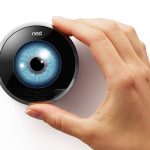
When Google bought Nest Labs for $3.2 billion seven months ago, I described the move as the start of a home invasion. Google already knows a lot about you, including where you live, what your interests are, where you go on the Internet and in the real world (via Android), and its acquisition of Nest, which makes smart thermostats and (not so smart) smoke detectors, meant it would potentially also know what you get up to in your own home.
As it turns out, Google using Nest products to find out what customers are doing is just one worry. A team of researchers has discovered an easy hack that allows anyone to gain control of Nest’s smart thermostat and turn it into a spying device which can reveal when you’re at home or away, and even divulge your Wi-Fi credentials.
Bring your own ID to simplify access to systems
One of the problems with relying on technology for so many things is that you end up with a whole raft of user IDs, for work, banking, shopping, social media and more.
A new study by the Ponemon Institute and IT management specialist CA Technologies looks at the idea of simplifying things through the use of Bring Your Own Identity (BYOID) initiatives, where social networking or digital IDs are used for application login.
© 1998-2026 BetaNews, Inc. All Rights Reserved. Privacy Policy - Cookie Policy.