Virtual smart card solution offers improved security at an affordable price


Traditional authentication methods like passwords are vulnerable to data breaches as well as being difficult to remember and manage. But although tokens and physical smart cards provide better protection they're expensive to implement and maintain.
Security company Wave Systems Corp has a new virtual smart card solution that emulates the functionality of physical smart cards or tokens, but offers greater convenience to users, lower total cost of ownership, and a reduced risk of unauthorized use.
Honesty is the best policy when it comes to security


It has never been harder for businesses to build and preserve a relationship of trust with their customers. The rise of increasingly sophisticated, and targeted, cyber-attacks means there are more threats to watch out for than ever before. But letting just one slip through the net could spell disaster and damage even the strongest of partnerships, beyond repair. Just ask any major organization that has lost confidential customer data through a security breach.
When online retailer eBay reported that its network had been compromised earlier this year, it's no wonder that its message to customers was "the trust and security of eBay members is our top priority". The need to maintain trust in the face of a successful hack is critical.
Microsoft anti-malware support for Windows XP is counting down...


Microsoft stopped supporting Windows XP on April 8, which means the aging operating system no longer receives security updates and non-security hotfixes, potentially putting die-hard users at serious risk.
Although XP is no longer eligible to receive security updates, Microsoft is, however, still providing users with updates to its anti-malware signatures and engine, and will continue to do so until July 14, 2015.
Want to launch your own DDoS attacks on a website? $200 will get you everything you need
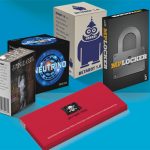
Cybercriminals don’t have to make their own malware these days, they can simply purchase ready-made kits. They don’t need to take out a bank loan to do so either -- malware is more affordable than you might think.
Trustwave’s security researchers did a little digging and found that depending on the type, malware can cost as little as two hundred dollars on the black market, and the tools on offer are pretty sophisticated too. Got your wallet ready? Here’s a price list of just some of the currently available malware:
Self-destructing content service ensures shared data stays private

When you send a file to someone else there’s always a risk that it could be copied or forwarded, even if it's intended to remain private -- as many a snapper of naked selfies has found to their cost.
There have been attempts to solve this problem in the past of course with services like Snapchat and Yahoo's Blink, that allow content to be viewed for only a short time, but none of these are aimed at business users.
Internet Explorer vulnerabilities have increased more than 100 percent since 2013

Bromium Labs today issued its "Endpoint Exploitation Trends" report that shows Internet Explorer set a record high for reported vulnerabilities in the first half of 2014, and also leads in publicly reported exploits.
According to Bromium, "Internet Explorer took the cap for historic high number of security patches in over a decade, and that feat was accomplished in the first six months of 2014!" It's not all bad news for users of Internet Explorer though. While the browser was easily the most exploited tool, Microsoft has been reacting much quicker to plug vulnerabilities. The company took more than 90 days to release its first patch for IE9, yet IE11’s first critical patch emerged just five days after the new browser was generally available.
Comodo SecureBox always assumes the worst to strengthen endpoint security
Cybercriminals are constantly targeting end users via phishing and social engineering attacks in attempts to access sensitive information or corporate data and bypass traditional endpoint security. Often these attacks are delivered from devices outside the enterprise, belonging to customers or suppliers for example.
Internet security specialist Comodo is launching a new product aimed at plugging the security gap and guarding against, keylogging, SSL sniffing, remote screen viewing, memory scraping, man-in-the-middle attacks, zero-day malware and more.
How to protect your company data without inspecting SSL
Since the start of this year, it has felt like Armageddon within the cyber-security arena. Attacks are coming thick and fast, with resultant breaches hitting the headlines. Advanced malware -- it’s clever, almost always relentless, and it's increasingly encrypted!
In every organization there are two types of traffic -- inspected traffic and non-inspected traffic. There’s a reason for that. Well, actually, it’s one of three reasons: performance, scalability or cost.
The greatest threats to the Android ecosystem

All mobile apps can be hacked. A group of hackers with enough time and dedication can gain access to, and reverse engineer, even the most secure app environment.
Android represents 80 percent of the smartphone OS market, according to ABI research, and its open development environment exposes the platform to certain unique threats from hackers and malware.
Verifying identity is the key to securing corporate data

As more and more data moves to the cloud and to distributed environments this stretches the ability of traditional endpoint security solutions to keep it safe.
Access management specialist Ping Identity has released an infographic showing how existing security technology falls short when it comes to protecting vital information housed by businesses and enterprises.
Microsoft account Android app simplifies using two-factor authentication

While two-factor authentication acts as an effective security barrier against malicious attacks, it also makes the login process more cumbersome for legitimate users by requiring them to type in security codes, on top of usernames and passwords. Luckily, there are dedicated apps that can make things easy.
One such app is Microsoft account (the choice of name is not particularly inspired), which was just released by the software giant to allow its Android users to manage -- validate or deny -- log in requests, when two-factor authentication is turned on for their Microsoft accounts.
Kaspersky Internet Security 2015: An accurate and reliable security suite [Review]

Kaspersky Internet Security 2015 is a capable product which delivers everything you’d expect from a security suite: antivirus, firewall, browsing protection, a spam filter and more. The technology scores highly with the independent testing labs, too, so we were interested to see what the new build had to offer.
Installation was quick and easy. Unlike some of the competition, you’re not forced to remove anything else vaguely security-related: Kaspersky warns you about possible conflicts, but whether you uninstall any problem programs is up to you.
Search engine Indexeus can tell you if your passwords are available to hackers online
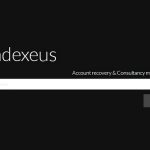
While the rest of the world is debating the rights and wrongs of the "right to be forgotten" in the European Union, one Portuguese entrepreneur with remarkably few scruples has been making a fast buck out of the idea. Indexeus, designed by 23-year-old Jason Relinquo of Portugal, is a search engine that boasts a searchable database of "over 200 million entries available to our customers".
The site allows anyone to search through millions of records from some of the larger data breaches of late -- including the recent massive breaches at Adobe and Yahoo! -- listing huge amounts of information such as email addresses, usernames, passwords, Internet address, physical addresses, birthdays and other information that may be associated with those accounts.
How to keep your smartphone safe in the age of industrialized hacking

The use of mobile devices for work purposes is on the up, creating all sorts of new opportunities for the modern worker. In fact, according to a recent report from Juniper Research, the number of employee-owned smartphones and tablets in the work place could exceed one billion by 2018. It is now possible to access your company resources whenever you need to, whether working from your living room, sat in a restaurant or chilling in the park.
When you do need to work from the office, smartphones and tablets are often a lot more convenient to use than a bulky laptop. The benefits of having a computer that fits in your pocket or bag are hard to ignore, especially for people who are always going from meeting to meeting.
Do Not Track is bolstered by EFF's Privacy Badger extension


Online security and privacy are hotter topics than ever. Just this weekend, Edward Snowden made an appearance at the Hope X 2014 hacker event, and called for those in attendance to help make encryption tools easier to use. Another fierce advocate of online privacy is the EFF (Electronic Frontier Foundation), and today the group released a beta version of Privacy Badger, a beautifully named extension for Chrome and Firefox designed to stop a number of tracking techniques used online. The idea of tracking cookies is something that will be familiar to most, but tracking takes many forms, including advertising and social media. Privacy Badger aims to block this tracking.
Peter Eckersley, EFF Technology Projects Director, said: "Widgets that say 'Like this page on Facebook' or 'Tweet this' often allow those companies to see what webpages you are visiting, even if you never click the widget's button. The Privacy Badger alpha would detect that, and block those widgets outright. But now Privacy Badger's beta version has gotten smarter: it can block the tracking while still giving you the option to see and click on those buttons if you so choose".
© 1998-2026 BetaNews, Inc. All Rights Reserved. Privacy Policy - Cookie Policy.