New gateway offers secure communication for the Internet of things


The growth of the Internet of things is set to place much greater demands on the web as a whole with thousands of extra devices needing to connect.
Not least of the challenges is ensuring that everything stays secure. IoT pioneer KAAZING has used the HTML5 Developer Conference in San Francisco to launch its new secure gateway.
Facebook listens to feedback and tightens up privacy settings -- a bit

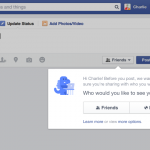
Privacy. It's something that we're all concerned about, particularly online. Facebook is one of many companies that comes in for scrutiny and criticism for the way it handles user privacy, and there have long been complaints about the fact that statuses and uploaded photos are made publicly accessible by default. Today that changes. After years of pestering, Facebook has listened to its user base and changed the default visibility setting to "Friends only". At least this is the case for brand new users.
Anyone signing up for a new Facebook account -- can there be many people left who do not yet have one? -- will be able to avoid accidentally sharing private photos with the world. "Going forward, when new people join Facebook, the default audience of their first post will be set to Friends. Previously, for most people, it was set to Public," says Facebook in a blog post. The first time a post is made, users will be asked whether it should be made public or limited to a smaller audience. If no selection is made, it will default to Friends.
Warning to Android users -- Outlook.com app stores emails unencrypted

Reverse engineering apps is an interesting field of work. On one hand, it can be used by software engineers to determine how an app works so they can copy it. On the other, the method can be used by those with malicious intent to track down weaknesses that can then be exploited. But there's also a third hand. Reverse engineering can also be used to highlight security problems with a view to not only alerting those affected, but also addressing the problem.
Researchers at Include Security, whilst practicing their reverse engineering skills, turned their attention to the Outlook.com app for Android and discovered a potentially worrisome security issue.
Forget about fast lanes, who is worrying about secure lanes?


The FCC voted recently to approve a proposal allowing select companies the ability to pay a premium price to their ISPs in order to deliver their content with a faster service, or 'fast lane' when transiting their networks. There has been considerable discussion both for and against the proposal with respect to how it adheres to the philosophy of net neutrality and how it might impact competition among businesses, particularly small entrepreneurial ventures without the resources to afford premium delivery service.
Unfortunately, the debate’s focus on faster delivery has failed to contemplate the growing need for other types of premium offerings such as 'secure services' and some vitally important questions have been overlooked in the discussion: How will this proposal alter the security threat landscape? Has the security impact of faster delivery services been fully considered and are mitigation technologies prepared to deal with potential threats introduced by this new asymmetry? Why are customers content to pay for the delivery of DDoS attacks and cyber threats under the current unsecure delivery model, and why would they pay for them to be delivered even faster than ever before? It seems counterintuitive.
How not to handle a security breach, the eBay way

You can’t have failed to notice by now that eBay has had a bit of a problem relating to leaked user data. The mainstream media was all over the story yesterday -- you know things are bad when the TV news takes notice of IT matters.
To reprise the facts it seems that attackers gained access to a number of eBay employee login credentials which allowed them to access the auction site’s systems. This may have happened as long as three months back but the company only became aware of it around two weeks ago.
BullGuard Mobile Security for Android debuts cloud-based antivirus engine

BullGuard has unveiled BullGuard Mobile Security for Android, its latest all-in-one security package for Android mobile devices.
The $19.95 (3 devices, 1 year) release introduces a new cloud-based antivirus engine, which should improve accuracy while removing the hassle of regular updates, improving performance and keeping battery-draining system load to a minimum.
Many security experts do not encrypt storage devices

New research has found that half of security professionals don't bother to secure data on portable devices.
The findings, uncovered by an iStorage survey which questioned 500 attendees at Infosec 2014, revealed that 50 per cent of security pros don't bother with security measures or encryption when it comes to data on USB sticks or portable hard drives.
XMPP-based instant messaging services embrace encryption

Various instant messaging services are on the verge of blocking unencrypted chat messages thanks to the roll out of a XMPP upgrade that has been in the pipeline for some time.
The XMPP Standard Foundation confirmed that the 70 services that are part of the public XMPP network turned on mandatory encryption for client-to-server and server-to-server connections.
eBay users to be asked to change passwords

An announcement on the PayPal Forward blog says that eBay will be asking users to change their passwords later today.
It says that this is due to, "...a cyber attack that compromised an eBay database containing encrypted eBay passwords and other non-financial information".
How five Chinese hackers stole secrets from some of America's largest companies

208 Datong Road is a nondescript concrete high rise on one of Shanghai's busiest roads. Amid the lingering smog rising like mist off the honking lines of traffic, and the trains screeching to a halt in the nearby main railway station, this building doesn't look like much. But this is exactly where five members of an elite People's Liberation Army group codenamed Unit 61398 were assigned to hack into some of the largest companies in the United States of America.
According to an indictment unveiled on Monday, "the co-conspirators used email messages known as 'spearfishing' messages to trick unwitting recipients into giving the co-conspirators access to their computers”.
Bad habits still compromise passwords

The more we do online the more passwords we have to remember and it's tempting to take shortcuts. A new survey by security specialist F-Secure reveals that 43 percent of respondents use the same password for more than one important account.
The sheer number of accounts we have is a problem also. 58 percent of poll respondents say they have over 20 password-protected online accounts or simply too many to keep track of -- 27 percent have between 11 and 20 password-protected accounts and 15 percent have under 10. Despite this though only 40 percent use a password manager to keep track of them.
Malwarebytes Anti-Malware makes scan results easier to read, fixes major bugs


Malwarebytes Corporation has shipped Malwarebytes Anti-Malware 2.0.2, a minor -- but important -- update to its security tool that provides a second layer of protection against malware, potentially unwanted programs and malicious websites.
Version 2.0.2 includes a number of minor improvements, one of which should make analyzing scan results and logs clearer thanks to revised terminology. It also fixes a significant number of issues, one of which could cause a BSOD error when scanning for rootkits.
China bans Windows 8 from government PCs with twisted logic, and embraces Linux

Microsoft may have been granted permission to launch its Xbox One console in China in September, but a decision by the Chinese government could impact severely on sales of Windows 8. China's official state news agency, Xinhua reports that the latest version of Microsoft's operating system will be banned from governmental computers, although there are to be no restrictions placed on home computers. The reason for the ban on Windows 8? Well it's not quite clear, but it's put down to something to do with energy-saving -- although this seems unlikely.
The website of China's Central Government Procurement Center posted an 'Important Notice' entitled, catchily, "Agreement to supply information about the class of energy-saving products complement the mandatory tender notice". A list of criteria then follows including, at number 5 "all computer products are not allowed to install Windows 8 operating system". This is slightly at odds with the news agency's suggestion -- the official news agency, remember -- that Windows 8 is being banned from new government PCs in "a move to ensure computer security after the shutdown of Windows XP".
Insiders continue to put corporate data security at risk

Although there's greater awareness of the risks that insiders pose to information security, many companies still struggle with how to control them.
The findings of a new report by defense systems and cyber security company Raytheon, show that people with access to privileged data such as health care records, sensitive company information, intellectual property or personal records frequently put that information at risk.
Norton promises 100 percent virus removal for small businesses

Businesses increasingly rely not just on PCs but on smartphones and other devices to access information and carry out transactions.
But this also means that they face ever more complex security threats and for smaller organizations that can be a big problem. To help protect businesses with fewer than 20 employees Symantec is launching Norton Small Business aimed at simplifying security for smaller enterprises.
© 1998-2026 BetaNews, Inc. All Rights Reserved. Privacy Policy - Cookie Policy.