Beware! Women are more dangerous than men (in search results)


The Internet can be a dangerous place if you aren't careful. There are viruses, malware and Trojans just waiting to ruin your day. Unwary computer users can significantly increase their chances of infection by searching for questionable things, and even seemingly innocuous search terms can be unsafe.
As proof, today McAfee announces that searching for actress Lily Collins will result in a "nearly one-in-seven chance of landing on a malicious site" -- yikes!
F-Secure’s 2014 lineup adds new banking, Facebook tools

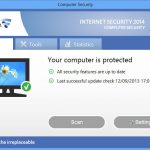
F-Secure has today launched its revamped range of security products, including F-Secure Anti-Virus 2014 and F-Secure Internet Security 2014.
Top of the new Internet Security features list is probably the extended Banking Protection feature. This automatically kicks in at online banking and payment sites, and, the company says, "elevates security settings" so that "consumers can be sure that their banking transactions are safe and private".
BullGuard Identity Protection safeguards your personal data


Where once malware was aimed at disrupting your computer, today it's more likely to be out to steal your personal information and get access to your finances. BullGuard has a track record of guarding against this type of threat with products like Premium Protection 13 its complete security package.
But the company's latest release, BullGuard Identity Protection, is designed to work alongside your existing security suite -- of any brand -- and ensure that your personal information and social networking activities are protected against threats.
Google files amended transparency petition in push to publish FISA order details


Google's unofficial motto has long been 'do no evil' and the company is keen to be seen to stick to it. Jumping into bed with Nestle may have raised a few eyebrows and rattled a few cages, but in a blog post, Richard Salgado, Director of Law Enforcement & Information Security, and Pablo Chavez, Director of Public Policy and Government Affairs show the search giant is eager to stay on the right side of customers.
Google has filed petition in the US Foreign Intelligence Surveillance Court asking that they be allowed to publish details of FISA orders. The petition is very similar to others that we have seen in recent months in the wake of the NSA surveillance revelations, and is really just a follow-up to the We Need To Know letter from back in July in which a number of leading companies wrote to, amongst others, President Obama to "urge greater transparency around national security-related requests".
The trouble with relying on passwords for security

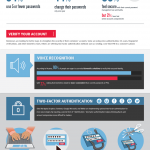
One of the key features of the new Apple iPhone 5S is the fingerprint sensor built into the home button. This allows users to unlock the device, and even authorize iTunes purchases, simply by pressing a digit against the laser cut sapphire crystal. So now when someone steals your phone, they’ll have to also steal one of your fingers at the same time.
It’s another attempt to replace the password and PIN, and we’ve seen a few of those over the years. Windows 8 even lets you sign in using a picture as an alternative. But the truth is, as exciting as fingerprint scanners and other forms of futuristic security measures seem, the password is here to stay for a while yet. And that’s a problem.
AVG's 2014 range adds new privacy tools, better disk cleanup
AVG has announced the public availability of its 2014 product range, including AVG AntiVirus FREE 2014, AVG AntiVirus 2014, AVG Internet Security 2014, AVG Premium Security 2014 and AVG PC TuneUp 2014.
All the security applications now include a File Shredder, which allows users to securely delete files or folders so that they can't be recovered at some later date.
Norton updates its core security products

In time for the release of Windows 8.1, Norton has announced new versions of Norton 360, Norton Internet Security and Norton AntiVirus. In addition to Windows 8.1 compatibility these include some under the skin changes to improve protection, performance and usability.
Gerry Egan, senior director, product management, Symantec says, "According to Symantec research, Web attacks increased 30 percent in 2012, driven by the easy availability of malware toolkits and the high frequency of unpatched vulnerabilities on websites. As a result, consumers can be attacked even when they visit a legitimate website, an attack that puts their devices and personal information at risk. With the latest Norton releases, we are delivering the comprehensive security required to protect today's devices against new and evolving threats, without impacting performance".
Nymi NFC bracelet brings 3-factor authentication to your devices -- for a price
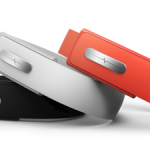
We've already seen an NFC (Near Field Communication) ring and it looks like a full complement of body adornments may soon be available. The latest addition to the jewelry box is an NFC bracelet from Nymi which will, when it sees the light of day, give owners the ability to unlock their smartphone with their heartbeat.
This might sound a little wacky but, just like your fingerprint, your heartbeat has a unique pattern to it meaning it can be used to uniquely identify you. Being a bracelet, the Nymi is worn around the wrist and when you need to authenticate to unlock your phone, a simple press of the sensor on top is all it takes. Of course, you need not limit yourself to unlocking your phone. The bracelet could also be used to replace car keys, make payments in stores and to open hotel doors.
5 big myths surrounding computer security and HIPAA compliance


For those in the States, the mad dash to compliance is unquestionably on. After years of taking a "wait and see" approach to Health Insurance Portability and Accountability Act (HIPAA) regulations surrounding medical office technology, healthcare providers (and related covered entities) are scrambling to get their systems and procedures in order. Big Brother has officially set a September 23, 2013 deadline for most new rules that put into place heightened protocols for how patient information (PI) is shared as well as how notifications about breaches need to be handled, among other things.
Naturally, a lot of my consulting clients in the healthcare industry are reaching out for professional help on how to get their IT systems in line as these deadlines approach. One of the biggest facets of the new HIPAA laws, which affects companies like mine that provide hands-on IT consulting, is that for the first time ever we are being considered "covered entities" in the same boat as the healthcare outlets themselves.
The most popular stories on BetaNews this past week

Looking at the biggest stories on BetaNews from August, 25 - 31, 2013. For the second week running, Microsoft managed to steal many of the headlines. After going gold, RTM, or however Microsoft now wants to refer to it, Windows 8.1 was released to OEMs. Depsite reaching this important milestone, developers were… irked, shall we say, to learn that they will not be able to get their hands on the completed code until it is released in October. At least that would be the case had the bits not leaked online very quickly. It was a Chinese version that was made available for unofficial download first, but an English version wasn't far behind.
I have previously pondered the popularity (or otherwise) of the Surface Pro, and this week Derrick stood firmly behind Windows RT positing five reasons it is destined to succeed.
Microsoft and Google (don’t really) want to tell you more about government data requests

Sounds nice, doesn't it? Two big names have listened to the concerns of the people that matter -- their customers -- in the wake of the NSA debacle, and want to share more information with the public about precisely what information the government is asking them to hand over. If only it were that simple.
In a blog post on TechNet, Microsoft General Counsel Brad Smith reveals that both Microsoft and Google filed lawsuits back in June to try to force the government to permit them to publish details of data requested under Foreign Intelligence Surveillance Act (FISA) orders. Smith says they [the two companies] believe they have a "clear right under the US Constitution to share more information with the public".
Bitdefender Antivirus Free adds Windows 8.1 support, squashes bugs

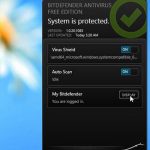
Anti-malware developer Bitdefender has released Bitdefender Antivirus Free Edition 1.0.20, a minor refresh of its free Windows anti-malware tool. Version 1.0.20 is notable for adding support for the upcoming Windows 8.1 release, due October 18.
Version 1.0.20 also squashes a few bugs and improves compatibility with Outpost Firewall Pro 8.1 too, resolving an issue with slow boot when both apps were installed alongside each other.
Enterprise security at risk in the post-PC era
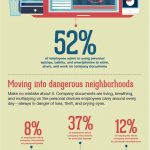
Almost three quarters (73 percent) of US-based office workers with enterprise-issued tablets have used them to download personal software and apps. A new survey carried out for content collaboration specialist Huddle by IPSOS-Mori reveals this and other potential security risks resulting from blurred lines between personal and enterprise devices.
The nationwide survey of 2,000 US office workers shows that 62 percent download personal software to company-owned smartphones and 45 percent do the same on laptops. The majority of the 44 percent of office workers using company-issued devices download personal software such as iTunes, Spotify and Dropbox. In addition 52 percent admit to storing, sharing and working on work documents via their personal smartphones, tablets and laptops.
Over 7,000 dangerous apps in third-party Android stores

Long-term research by AV-Comparatives shows a growing risk of malware infecting Android phones via third-party app stores. Conducted between November 2012 and May 2013 on 20 major Android stores, the study found 7,175 malware and greyware programs.
Most were hosted in Chinese-based markets with the lowest incidence of malware being on European stores. With 95 percent of malware and greyware apps hosted in Asian stores the findings reflect the market's rapid growth. European and US markets with growth in a steadier phase are now considered secondary targets but that doesn't mean you should let your guard down.
Facebook reveals details of government data requests from around the world

We’ve known for a while that governments around the world have been gathering data about Internet users, monitoring online communication via instant messaging, email and much more. Numerous websites and social networks have received requests from government bodies for information relating to their customers and users. Now, Facebook reveals for the first time just who has been asking for data.
The Global Government Request Report covers the first six months of 2013, and is introduced with the words "Transparency and trust are core values at Facebook". Although the report is not especially detailed -- it is likely that it was not legally possible to be -- it does show which countries have asked for data, the number of requests each country made, the number of user accounts inquired about, and (perhaps most interestingly) the percentage of requests that Facebook was legally obliged to comply with.
© 1998-2026 BetaNews, Inc. All Rights Reserved. Privacy Policy - Cookie Policy.