Is your anti-malware software doing its job? AMTSO launches tools that may reveal all


The importance of having virus and malware protection installed is something that is drummed into every computer user. There are countless security tools to choose from these days, and numerous reviews to help you to decide between them. But how can you be sure that the software you have opted to use is doing its job properly?
AMTSO (the Anti-Malware Testing Standards Organization) has a series of tools that can help you to find out whether your computer really is protected. Does the fact that your system seems to be free from malware mean that your security software is offering suitable protection, or that you have just been lucky so far?
Box adds extra security layer with CipherCloud

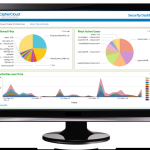
You are moving to the cloud, regardless if you want to or not. The world is just headed that way, and Box is one of the frontrunners in this race. To stay in front the company today announces new security measures, using CipherCloud. This is in response to a growing need to prevent malware in this burgeoning market.
Weisen Li of Box, tells us "I’m excited to announce the availability of CipherCloud Data Loss Prevention (DLP) for Box. CipherCloud DLP for Box helps admins apply corporate DLP policies on content in Box while keeping it simple for end users".
Cybercriminals party like it’s 2008 as retro-threats make a comeback


Antivirus company McAfee's latest threat report, covering the first quarter of 2013, highlights comebacks for a number of older threats as the growth of newer malware goes into decline. Recent trends towards Android malware, and ransomware are slowing with growth rates slipping back, although actual numbers still show a slight increase. The number of fake antivirus products detected also shows a decline in growth over the previous quarter.
Instead it seems the cybercrime community has served up a blast from the past by resurrecting some old friends. The report shows a global increase in spam volume for the first time in three years. It’s a big increase too with spam volume almost doubling globally in the first quarter of this year. There’s a twist to this though as spammers seem to be targeting specific regions in the hope of snaring new victims. Popular spam topics in this new wave are pump-and-dump stock schemes and growth hormone drugs.
Protect your PC from malicious threats with Emsisoft Anti-Malware

Emsisoft has released minor updates for its commercial and free anti-malware tools with the publications of Emsisoft Anti-Malware 7.0.0.25 and Emsisoft Emergency Kit 3.0.0.6. Although minor, both updates are strongly recommended for existing users.
Emsisoft Anti-Malware 7.0.0.25 builds on the improvements introduced with the release of version 7 last September. Major new features in that build included a second malware scanning engine -- Bitdefender -- being added alongside Emsisoft’s own along with performance tweaks for advanced users who wished to control how many system resources should be given over to the program.
Evernote promises improved security
It seems that security has become a daily news story now, with multiple high-profile attacks. Evernote has had previous security problems, but today the company wishes to alleviate a few of those issues. Having already been apart of one of the headlines, the note-taking service would rather not be included as part of the crowd in the future.
Today the company announces three new security features, beginning with two-factor verification. This requires a verification code whenever you are asked to provide your username and password. This will usually only happen when you log into Evernote Web or install it on a new device. It simply means that you will receive a new text message on your phone with a code that must be entered, in addition to your password -- something that many other services like Google, Microsoft and Facebook already do, and that Twitter does poorly. The feature is optional.
Keep your passwords secure with Dashlane for Windows, Mac and Android

Dashlane, Inc has launched Dashlane 2.0 for desktop and Dashlane for Android 2.0.1, major new updates of its secure password management tool that allows users to securely store sensitive personal details such as online passwords and credit card information via free desktop and mobile apps.
Both builds gain a complete new user interface, the promise of a "massive jump" in product quality and support for two-factor authentication via Google Authenticator. In addition the desktop build gains a new Security Dashboard feature, while the Android version expands support for tablets and adds in-app browsing.
PeStudio lets you analyse suspicious programs for malware


If you find a program on your PC which you think might be malware, then checking it with an antivirus tool is a good first step -- but it’s not the only option. You could also try "static analysis", which involves examining the executable file itself to learn more about it. Most static analysis tools are aimed at developers and extremely complex, but the free PeStudio is an interesting exception: it offers plenty of low-level detail, but also has more straightforward features that just about anyone can use.
It’s easy to get started with the program. Just download and unzip it, launch PeStudio.exe, and drag and drop your suspect executable onto the PeStudio window. Wait a few seconds for the program to run its analysis, and a detailed report then appears.
Symantec phases out PC Tools security software

Symantec has dropped the PC Tools range of security software, leaving the Australian company that it acquired in 2008 to concentrate on its system tuning products.
Buying PC Tools gave Symantec a budget brand with the Internet Security, Spyware Doctor and Spyware Doctor with Antivirus products slotting in below the more upmarket Norton range. Now as part of Symantec CEO Stephen Bennett’s restructuring of the company, the PC Tools security products are being quietly streamlined out of existence.
DNSQuerySniffer shows all the DNS traffic on your system

NirSoft has announced the public availability of DNSQuerySniffer, a tiny (130KB, including a Help file) network sniffer which detects and displays your DNS traffic.
If you think this sounds just a little technical, then you’re right, but the program does have some interesting applications. Malware will often use DNS traffic to communicate with its operators, for instance, and so taking a closer look at your own system may reveal the signs of an infection (a large number of failed lookups to domains you don’t recognize, say).
STOP: Twitter two-factor verification can be hacked in less than 140 characters

Fans of social media were reassured this week as Twitter finally rolled out two-step verification, ostensibly making the service more secure for its millions of customers. This is a feature that other major companies like Microsoft, Google, and Facebook have already implemented and, on the surface, seemed a victory.
Not so fast. Security researchers at F-Secure are taking a closer look and deem the implementation "not great". The problem, according to Sean Sullivan, is that "an attacker could use SMS spoofing to disable 2FA if he knows the target's phone number".
KillEmAll helps you stamp out stubborn malware

Removing malware used to be fairly easy, at least in principle. Detect the infection, kill any running processes and files, and that’s it -- finished.
These days, unfortunately, life can be more difficult. Some malware will actively try to block any attempts to remove it, perhaps preventing you from running antivirus tools, locking its files, maybe restarting itself if necessary. This can be frustratingly effective, too, but there are ways to fight back. And KillEmAll is a great place to start.
Kim Dotcom does the patent two-step to fund his trial


Kim Dotcom enters the spotlight once again after claiming that Google, Facebook, Citibank and Twitter, among others, infringe upon his patent for two-factor authentication. The man is one of the founders of controversial Megaupload and Mega cloud storage lockers and is currently under indictment in the US for copyright infringement.
Dotcom decided to reveal the alleged wrongdoing and mention the patent yesterday, after Twitter enabled the security feature: "Twitter introduces Two-Step-Authentication. Using my invention. But they won't even verify my Twitter account?!". The patent in question was filed in 1998 by Kim Schmitz (Dotcom's birth name) and is named "Method for authorizing in data transmission systems".
Twitter follows the flock, introduces two-factor authentication

After a number of high-profile account hijacks and criticism from both its users and the tech media, Twitter finally decides to take security seriously. Today, the popular social network introduces two-factor authentication which, when enabled, requires users to type in an additional six-digit passcode received via SMS in order to log in.
Sadly, as I learned, not every user can actually enable the new security feature. Twitter says that folks must have a "verified phone number and confirmed email address", the former of which is still incompatible with my mobile operator: "Sorry, we don't have a connection to your carrier yet!". Other local mobile operators are supported, but not mine.
BullGuard launches Premium Protection 2013 -- guards the person as well as the PC

Any old security suite can protect your PC with a firewall and an antivirus product so the big players are increasingly looking for new angles to try to get us to buy their products. BullGuard’s flagship offering already has parental controls, spam filtering and PC tuning tools, so the latest release -- out today -- goes for the personal protection approach.
No, it doesn’t come with a goon in a dark suit and sunglasses to follow you around. It offers safeguards against identity theft and data leaks, plus it has social media protection. As an added bonus the amount of online backup space included with the package is increased to 25GB.
Spybot +AV adds full antivirus protection to Home and Professional editions

Irish security firm Safer-Networking Ltd has announced the release of Spybot +AV 2.1, a major reinvention of the package which sees the addition of virus protection for the Home ($13.99) and Professional ($25.99) versions (the free build removes malware and rootkits only).
A great deal of this new release is about delivering the framework necessary to support the antivirus engine. An update mechanism delivers antivirus signature files multiple times a day, for instance. The system offers real time protection, too, although this can optionally be turned off if there’s a chance of it conflicting with something else.
© 1998-2026 BetaNews, Inc. All Rights Reserved. Privacy Policy - Cookie Policy.