Kaspersky PURE 3.0 Total Security protects virtual keyboards from keyloggers

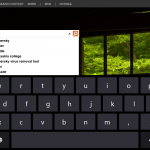
Kaspersky Labs has released Kaspersky PURE 3.0 Total Security, the latest edition of their extremely comprehensive security suite.
And although you might have thought the package already included just about every security option you could possibly want, the company has found several ways to improve the new build.
Dell unveils the Latitude 10 Enhanced Security tablet

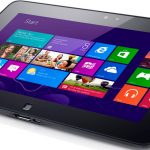
Dell has rolled out a new, more secure iteration of the 10-inch, business-oriented Windows 8 tablet it originally launched five months ago.
The Latitude 10 in stock trim, retails from $449 as an "essentials" model, but the American computer manufacturer has government agencies, financial institutions and healthcare organizations in its sights with the more expensive Enhanced Security model, which is available for $779, a not so insignificant difference.
Microsoft rolling out updates today for various Windows platforms and IE


Although it's Tuesday, it's not "Patch Tuesday", which means we shouldn't expect any updates from Microsoft, but the software giant is rolling out patches none-the-less. The updates are across a broad spectrum of platforms too -- Windows 7, Windows 8, Windows Server, and even Windows RT are included in this update.
Curiously, many of the Windows updates are listed as "non-security". The company generally only pushes out-of-cycle updates when there is a major security flaw that cannot wait for the next month. In the case of today's patches, many are listed as a fix for "issues in Windows".
Samsung fortifies BYOD with Knox for Galaxy devices

On Monday, South Korean electronics manufacturer Samsung unveiled a new "end-to-end secure solution" aimed at boosting the company's BYOD (Bring Your own Device) credentials among businesses. Called Knox, the product beefs up the Samsung For Enterprise (also known as SAFE) program by adding improved security and increased manageability into the mix.
This time around Samsung forgoes the acronyms. Unlikely to be just a simple coincidence, Knox bears a military connotation as it hints at the iconic Fort Knox US Army post in Kentucky. Luckily, Samsung's Knox only deals with defense. The enterprise solution packs Security Enhanced (SE) Android, which is developed by the NSA (United States National Security Agency) to improve security within green droid land, and integrity management services that are implemented in the Android framework and the hardware alike.
Save big bucks and protect your PC! Hurry! Deals end Feb. 28

We’re now well in to the new year, with the February software offers live through the Downloadcrew Software Store.
You may have picked up a brand new Windows 8 computer during the festive season. If so, the first thing you’ll want to do is pick up a security suite to keep your system secure. The Downloadcrew Software Store is packed full of security offers from Bitdefender, AVG, Kaspersky, Avira and other brands.
Mac malware invades Microsoft, too


How's this for a helluva endorsement for Windows security over OS X? Today, Microsoft acknowledged falling prey to "similar security intrusion" as Apple and Facebook. They got nabbed by a Java exploit affecting Apple's OS.
"We found a small number of computers, including some in our Mac business unit that, were infected by malicious software using techniques similar to those documented by other organizations", says Microsoft security chief Matt Thomlinson.
Expect more-sophisticated Bank DDoS attacks this year

What's the end of February without some scare tactics? Gartner warns that one-quarter of distributed denial of service attacks this year will be against applications. Really? That low? I'm surprised the number isn't higher. After all, as enterprises shore up the network perimeter, HTTP remains open wide enough to drive a freight train through and for that long duration.
The attacks seek to overtax CPUs, disrupt applications and, ultimately, distract IT and security personnel. While they look over there, the bad boys are work over here. Gartner sees DDoS attacks as part of a larger trend singling out financial institutions.
Please don't file for divorce -- I didn't mean to nuke my wife's data

I do not generally use our desktop computer. I prefer my laptop, but my wife likes that desktop and uses it daily. She also keeps her precious files on it, and I have the folder set to backup to Crashplan automatically, as well as to sync with the home server. However, she also uses a small four gigabyte USB drive for files -- I assumed ones that she just wishes to move around with her. I was wrong.
I am not making excuses for myself. Even if I had known the files were backed up I would not have deleted them -- I had no reason to wipe her drive. The truth is that it was in the wrong place at the wrong time and was a victim of my own oversight.
Instantly block inappropriate websites with DNS Angel

Parental controls software is normally bulky, complex, and the kind of application which can take some considerable time to configure. There may be lots of files to install, resident components which must always be running in the background, user profiles to create, content filters to customize, and the list goes on.
If your child protection needs are simple, though, you may not have to worry about any of this, as DNS Angel can provide a reasonable amount of protection with a single click.
Protect your Windows 8 PC with Panda Cloud Antivirus


Spanish security company Panda Security Ltd has released Panda Cloud Antivirus Free 2.1.1, a minor update to its free cloud-based security tool for Windows. Version 2.1.1 is the first release to secure a Windows 8 compatible logo after passing the eligibility requirements laid down by Microsoft.
Panda Cloud Antivirus, also available with built-in firewall in Pro form, is primarily a maintenance release, building on the major improvements found in version 2.1, which included real-time protection for Windows 8 Store apps and anti-exploit technology.
If Apple can't protect itself from malware, how can you trust it to protect you?
Apple may be perceived as a bastion of security and users generally feel safe from the plagues that us Windows users suffer, but market share plays a large part in that perception. The bigger target gets more attention. Well, the party may be over, folks, because the fruit-logo company has a problem, and it is one that is incredibly familiar to Windows users -- Java. The Oracle software platform may be one of the most exploited ones on computers.
Today Reuters reports that Apple, a company largely known for never admitting error -- think "You're holding it wrong" -- released a statement describing "the widest known attacks targeting Apple computers used by corporations". The same exploit had been used to attack social networking giant Facebook.
Jawbone warns MyTalk hacked

There are days that cloud computing really sucks. The problem is trust. You trust Sites X, Y and Z to protect your data and log-in credentials, then they don't. Last week, Twitter rudely informed me that my password had to be reset, which is passive way of admitting that mine was one of the 250,000 pilfered accounts. This morning Jawbone greeted with email about an "isolated attack" that snagged my MyTalk information.
Funny thing, I don't even use MyTalk. I opened an account years ago while testing a Jawbone Bluetooth earpiece. Supposedly there was a firmware update and MyTalk registration the only way to get it. Fooled! No update. Now the dormant account is hacked. Interestingly, I see no official statement on Jawbone's website, but the email absolutely looks authentic.
Do you run third-party antimalware on Windows 8?

Call me stupid. Someone typically does in comments. But let me give you reason: I don't run third-party malware detector in Windows 8. Should I? I asked my colleagues what they use, and the general consensus is nothing -- just rely on Microsoft Defender. Are we all nuts, or is there no cause for using something else?
Today is my 12th day using Surface Pro as primary PC and first serious commitment to Windows 8, which I really like on this machine. I didn't rush to install antimalware, like earlier versions. Somehow, I feel safe using Windows 8 Pro. My question: Do you?
Security firm Bit9 gets 'bit' after failing to install its own software

The anti-virus and security business is a tough one, fraught with competition and cutting-edge technology designed to not only stop current threats, but predict future ones via heuristics. It is also a place where minor errors can become high-profile issues. Like last year when Sophos detected its own files as a virus and began systematically deleting them, rendering its software useless to customers.
The latest blow below the waist for a security firm involves Bit9. In what can only be termed as "embarrassing", the company failed to install its very own security software on computers within its corporate network. The vulnerable systems were soon compromised.
LastPass improves security and launches new Windows 8 app

Browser password manager LastPass 2.0.20 has been released for all major web browsers. The new release, also available for 64-bit versions of Windows is accompanied by the LastPass for Windows 8 app, which gives users access to their LastPass account directly from the Modern UI interface in Windows 8.
Version 2.0.20 now automatically calculates the user’s security score and displays it next to the Security Challenge link in the user’s vault. It also extends support -- albeit in beta -- to the Maxthon web browser.
© 1998-2026 BetaNews, Inc. All Rights Reserved. Privacy Policy - Cookie Policy.