Are you a defense contractor? Beware the Elderwood Project!


The Hydraq (Aurora) Trojan horse is in the spotlight, courtesy of a hacking group that uses it to wreak havoc with the security of numerous renowned industries. While these hacking maneuvers were pretty high profile and as a result got a lot of coverage, it is the said group’s hacking activities, and patterns, that have caught the eye of a lot of security pundits and writers.
Zero-day exploits, another term brought to fame by these hackers who took the computer spy software game up a few notches, has been used by the group to not only penetrate the security of the targeted organization, but also the manufactures that were servicing the said company in their cross hairs.
DeepSound protects your files from prying eyes


When you have personal documents that you’d like to keep safe from snoopers then your first thought might be to encrypt them. But this isn’t always the best idea. Just seeing a “Mysterious.doc” file that they can’t open will be enough to tell others that you’ve something to hide.
The free DeepSound, though, offers a different approach. In just a few clicks it’ll take your documents and conceal them within WAV or FLAC files. And if anyone checks, now, all they’ll see is regular audio files that play as usual: there’s nothing to be suspicious about.
GoDaddy is down!


As I write, domain registrar and web hoster GoDaddy is inaccessible -- and a heap load of websites with it. Typically when sites go dark like this, they are under a direct denial of service attack. Anonymous claims responsibility, via Twitter, but there is yet no official word from GoDaddy as to the cause and whether there might be a security breach.
About 90 minutes ago, GoDaddy tweeted: "Status Alert: Hey, all. We're aware of the trouble people are having with our site. We're working on it". Then 5 minutes ago: "So many messages, can't get to you all... Sorry to hear all your frustration. We're working feverishly to resolve as soon as possible". Well, I guess that confirms Twitter isn't hosted by GoDaddy.
Antisec, PROVE Apple UDIDs came from FBI


The list of more than a million unique device identifiers (UDIDs) which hacktivist collective #Antisec said it had stolen from the Federal Bureau of Investigation may have originated from publishing company BlueToad Inc., researcher David Schuetz found over the weekend. Following the FBI's initial denial of #Antisec's claims and Schuetz's research, BlueToad on Monday announced it believed its systems were the ones compromised. It is still unclear who compromised Blue Toad's system, and where #Antisec actually obtained the list.
"I’m still not completely clear on all the technical details," Schuetz wrote in his research blog. "Was BlueToad really the source of the breach? How did the data get to the FBI (if it really did at all)? Or is it possible this is just a secondary breach, not even related to the UDID leak, and it was just a coincidence that I noticed? Finally, why haven’t I noticed any of their applications in the (very few) lists of apps I’ve received?"
AVG Internet Security 2013 review

AVG Internet Security has always been a likeable security suite, with all the core components you need to keep your PC safe: antivirus, firewall, spam filter, browsing protection and more.
But of course it’s not perfect, and so it’s good to see AVG Internet Security 2013 doesn’t waste time introducing irrelevant new features, and instead largely concentrates on addressing many fundamental issues. The new release aims to accelerate scanning performance, for instance, reduce memory consumption, cut your boot time and improve core modules like the firewall and spam filter, which sounds great to us.
AVG releases 2013 security software

AVG Technologies has today announced the release of its 2013 product range, including new versions of AVG AntiVirus Free, AVG AntiVirus ($39.99) and AVG Internet Security ($54.99).
And the most obvious change to the lineup is the very Windows 8-like interface, where plain green tiles provide easy access to each program’s features and functionality.
Symantec releases Norton 2013 security suites

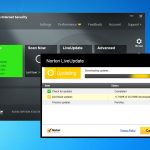
Symantec has released brand new versions of its Norton security packages for Windows, Norton Anti-Virus 2013, Norton Internet Security 2013 and Norton 360 2013. It’s the first time all three packages have been updated simultaneously, while the branding has also been amended to remove all references to a date, simply naming each Norton Anti-Virus, Norton Internet Security and Norton 360, respectively.
The 2013 versions come with what Symantec describes as “five layers of patented protection”, which include stronger social networking and anti-scam protection. There’s also full, certified support for Windows 8 and the promise of better performance on multi-core CPUs.
Hacktivist group #Antisec releases a million Apple device IDs, wonders why FBI had them

#Antisec, The loosely-organized black hat security collective formerly known as Lulzsec has released a file containing a million and one (1,000,001) Apple Unique Device Identifications (UDIDs), and their related APNs (Apple Push Notification Service) tokens, as well as a certain amount of personal user information. The group claims the information was not taken from Apple directly, but rather though a vulnerability exploit on FBI Agent Christopher K. Stangl last March.
The group claims there were actually more than twelve million UDIDs on Stangl's Dell Vostro notebook, as well as an incomplete list of zip codes, mobile phone numbers, home addresses, and whatever personal detail fields could be obtained. Antisec said there were no other files in the same folder that mention the list or its purpose.
You don't need Java


Java is one of those technologies that you find installed on the majority of computer systems despite the fact that average users do not come across many Java-powered websites or desktop applications. Sure, some may use desktop applications like JDownloader or the game Minecraft (which both require Java), but on the Internet? Seriously, when was the last time you went to a website that required the Java Runtime Environment to be installed for core functionality?
Statistics can be misleading, but according to Statowl, Java is installed on roughly 70 percent of Web browsers, which makes it the second most popular plugin behind Adobe Flash, and places it before heavyweights such as Quicktime, Windows Media Player, or Silverlight.
Republicans: Friends of Technology?

In case you haven't already noticed, it's the quadrennial presidential election season in the United States; the time when the two dominant political parties state their goals and methods of attaining them, and work to put their chosen party leader into the office of President of the United States.
At the Republican National Convention this week, the Republican party both nominated Mitt Romney as its candidate for president, and outlined its platform, its "statement of who we are and what we believe."
Kaspersky Internet Security 2013 review

If you like your security suites to be hassle-free then Kaspersky Internet Security 2013 should impress you immediately. Installation was quick and easy, no complicated options to consider and the program was up and running in under a minute on our test PC.
The simplicity continues, at least for those familiar with the 2012 interface, because apart from a few minor tweaks the suite looks and feels very much the same: a clean and clear display keeps you to-to-date with current threats, update status, licence details and more, while a scrolling toolbar provides easy access to the program’s various modules.
Dropbox offers 2-step verification

If you want to keep your online accounts safe on the Internet from all those hacking threats, phishing and malicious software, one of the best options to do so comes in the form of 2-step verification. This system adds a second layer of authentication to the sign-in or connection process to effectively protect accounts against many forms of attacks. An attacker would not only need to have access to the account username and password, but also to the security code that is generated after username and password have been entered on the sign in page.
Companies use a variety of 2-step authentication methods. PayPal for instance uses a hardware device that displays a code when you activate. Other companies like Google or Facebook may send verification codes to a registered email address, or provide you with an authentication app that you run on your mobile phone.
Go back to school with one of these 25 downloads


After a brief vacation, it’s time for another software roundup to catch up on the biggest and best releases from the last week. We’ll start by taking a look at some of the apps that have been release for mobile device.
Facebook for iOS 5.0 is a release largely concerned with improving the performance of the app with news load times being improved and a new tappable banner making it possible to load new posts without the need to refresh. Android users have Facebook for Android 1.9.8, which now includes the ability to create events and allows for faster sharing of photos.
Kaspersky releases 2013 security suites -- get them NOW!

The betas are over, the final bugs squashed (well, hopefully), and Kaspersky Lab has just revealed the final versions of Kaspersky Anti-Virus 2013 and Kaspersky Internet Security 2013.
And while outwardly the new packages look very similar to the previous versions, explore a little further and there are some useful additions and improvements to be found.
AVG Secure Search offers website safety ratings
The Internet can be a dangerous place, and there are countless websites just waiting to serve up a dose of malware. Everyone knows the importance of having antivirus and anti-malware software installed, but simply browsing the Internet can direct you straight to web pages that could wreak untold damage to your computer. AVG Secure Search is a security tool that is constantly on the lookout for you, showing you safety rating for any sites you search for.
This browser plugin can be used with Internet Explorer, Firefox and Chrome, and it uses a custom Google search to let you know whether sites that appear in your search results are safe, risky or dangerous. You are not prevented from visiting sites that have been flagged up as being dangerous -- mistakes do happen, after all, and there will inevitably be times when you need to access a site from the dark side – but warnings are displayed to strongly discourage you from going through with it.
© 1998-2026 BetaNews, Inc. All Rights Reserved. Privacy Policy - Cookie Policy.