Rev up this week's 20 exciting software downloads


There are a number of worthy highlights this week, including the long awaited Opera 12 release, iTunes support for iOS 6 devices and a relatively major update to Skype for Windows and Mac.
The major release this week must be Opera 12. After months of beta-testing, the browser is finally available, along with an interesting twist, in the form of the first native 64-bit build. Whether a 64-bit version of a web browser makes a huge difference is another matter entirely. Opera 12 ships with numerous speed improvements, including basic support for hardware acceleration. It’s not all good news though as gone are the widgets and other features such as Opera Voice. Download Opera 12, Opera 12 (64-bit) and the separate Opera Portable 12, which you can take on the road.
That Facebook account verification email in your inbox is a scam

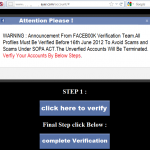
If the scary email or app notification, and subsequent webpage, is to be believed, you have only a few days to verify your Facebook account or you’ll be out of luck. But don’t worry, a few days later you will magically get a few more days to verify, and so the scam goes.
A Twitter follower with the handle of @chasapple sent us a tip on an app message they received, here’s a screenshot of what happens if you clicked the link.
Broken trust: Nation-state malware has a negative impact on GDP

The slow drip of revelations about Flame have kept this piece of malware in the news for more than two weeks so it is worth reminding people that most antivirus programs now protect against Flame (ESET products detect it as Win32/Flamer.A). The coverage of Flame was boosted last week by a conveniently-timed assist from leaks that put Stuxnet back in the headlines.
Frankly, many antivirus experts were underwhelmed by reports that anonymous officials in the US. government were asserting that the industrial-sabotage malware known as Stuxnet was developed as part of attacks on Iran's industrial infractructure sanctioned by the President of the United States (a lot of us already assumed that was the case). There has also been a longstanding presumption of Israeli involvement in Stuxnet and so it was no surprise to hear "Stuxnet is our baby; Obama disclosed it for his reelection campaign" coming from Mossad agents. The third unsurprising revelation is that part of the Flame code is nearly identical to code found in Stuxnet.
AVG Family Safety alternative browser launches on Windows Phone, updates on iOS


Security software company AVG has taken an active role in providing security apps for the popular mobile platforms like iOS and Android, and has garnered approximately 114 million active users across them all.
Today, AVG has released its free alternative Web browser AVG Family Safety for Windows Phone, following yesterday's update to the software for iOS.
Get Bitdefender Parental Control Beta for Android and Windows
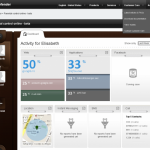
Most security companies don’t seem to place much value in parental controls, usually demoting them to an underpowered module in the darkest recesses of their security suite. But maybe that’s about to change. Bitdefender has just made available the first public beta of its standalone Parental Control package, and at first glance it looks really quite impressive.
You can of course use the program to prevent particular actions. In just a few clicks it’s possible to filter inappropriate web content, for instance. You’re able to restrict the use of particular applications, block instant messages from anyone other than a list of allowed contacts, and ensure the child can only use the internet at the times you define.
FreeFixer finds malware other apps miss
Conventional antivirus tools are fine when they’re pitted against established threats, well-known malware with a match in their signature database. If you’ve been hit by something new, though, you may need to go hunting for the culprit manually – and FreeFixer is an excellent tool to help you along the way.
Launch a scan with the program and it’ll examine 39 key areas that may contain signs of malware. These include Browser Help Objects, your HOSTS file, AppInit_DLLs, Windows services, Namespace service providers, shell extensions, running processes, Winlogon modules, Firefox extensions, and more.
Worried your PC has malware? Try Kaspersky Lab Security Scan 2.0

Kaspersky Lab has released Security Scan 2.0, a simple and free tool designed to scan a PC for security issues.
The program can run either a quick or full system scan to detect any malware; it will also check to see whether the computer is properly protected with antivirus software; and you’ll even get a report on possible problems with Windows settings (Security Scan will check Internet Explorer’s configuration options, for instance).
The 25 worst pins and passwords

At a time when password breaches like the one at LinkedIn are once more making the news, there's plenty of good advice around about how to select a strong password as opposed to the sort of stereotyped easy-to-remember-but-stupendously-easy-to-guess password that turns up again and again in dumped lists of hacked passwords.
So if your favorite, much-used password (or something very like it) is in the following list, it might be a good idea to stop reading this now, go to the link on how to select a strong password and use it as a basis for changing all your passwords to something safer (then come back and think about the PINs you use). The list is abstracted from one compiled by Mark Burnett, representing the most-used passwords in a data set of around 6 million:
Use a 'code book' to protect (and to recall) your online passwords

With the recent announcements of password breaches at LinkedIn, and warnings from Google about state-sponsored attacks on Gmail accounts, it seems like a good idea now to review some password security basics. Then there is report today that someone hacked presidential candidate Mitt Romney's Dropbox and Hotmail.
In this post, we’re going to take a look at a rather low-tech solution to a decidedly high-tech problem: How to guard against password reset attacks, and where to securely store the answers to your password reset questions.
How will the LinkedIn hack affect you?

This morning when I logged into LinkedIn I was greeted with several front page references to the reported hacking of the site, and instructions for changing my password, which I did immediately. This is a good time to change all of your social media passwords, making sure you create a fresh password that is hard to guess and unique to each site. It is not unusual for malicious parties who grab a bunch of passwords from one site to try those same passwords on other sites.
Over 6.5 million account passwords showed up on a Russian forum in SHA-1 (hashed) format to prove that the hackers had indeed succeeded in penetrating LinkedIn. There is a good chance that if the hacker(s) achieved access to LinkedIn passwords then they also know the corresponding LinkedIn usernames, i.e. the matching email address of the account owner.
LinkedIn hack is much worse than you think


Today's LinkedIn hack, exposing more than 6 million encrypted passwords, is more serious than it might appear and reveals one of the biggest security shortcomings social networks pose: Linked or shared data. Literally linked-in accounts expose information from others -- then there is the sheer amount of personal data hackers can siphon.
LinkedIn hasn't confirmed the hack, but is investigating. Meanwhile the stolen data already is available on the Internet. Cyber-security expert Robert David Graham says he has confirmed "this hack is real". The stolen data was published as password hashes. He created a SHA-1 hash of his password and found it in the dumped data. "The password I use for LinkedIn is in that list", he explains. "I use that password nowhere else. Furthermore, it's long/complex enough that I'm confident nobody else uses the same password.
Change your LinkedIn password NOW: 6.5 million accounts at risk

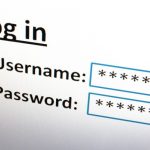
LinkedIn users are advised to change their passwords after it was revealed that more than 6.5 million encrypted passwords were posted to a Russian hacker website. The hackers are attempting to enlist help to crack the encryption, and 300,000 accounts are already compromised.
Security experts who have seen the data say the encryption appears weak and will likely be broken in short order. This means millions more will soon be at risk of having their accounts compromised. While the social network has yet to confirm the breach, it did say it was "looking into reports".
Google warns you when you're under cyber attack from the state

With the recent talk of state-sanctioned malware like Stuxnet and Flame, Google on Tuesday announced it has taken measures to alert its users when it believes they are the target of state-sponsored cyber attacks.
Google Vice President of Security Engineering Eric Grosse said on Tuesday that targeted users will receive an alert like the one pictured above. This alert warns when Google's internal analytics have sniffed out patterns that look like their email is the target of phishing or malware.
Stuxnet is a gift to criminals and nation states with malicious intent

A week ago the big malware news was the code known as Flame, Flamer, or sKyWIper (detected by ESET as Win32/Flamer.A), then on June 1, this news broke: "A damaging cyberattack against Iran’s nuclear program was the work of US and Israeli experts and proceeded under the secret orders of President Obama" (Washington Post). Clearly, the antivirus community is going to have a lot to say about this news and there will probably be several posts on the topic from ESET researchers.
Just to give some background, the attack was Stuxnet, a piece of malware that was documented in detail in the ESET white paper Stuxnet Under the Microscope. The goal of Stuxnet was to attack and sabotage Iran’s nuclear program, and as the New York times puts it: "the last of that series of attacks, a few weeks after Stuxnet was detected around the world, temporarily took out nearly 1,000 of the 5,000 centrifuges Iran had spinning at the time to purify uranium".
Passware Encryption Analyzer hunts down hidden archives

If you manage one or more PCs then you’ll know it can be difficult to make sure they’re all being used as you might like. Should someone want to conceal files from you, say, then if they zip them up and password-protect the archive then there’s very little chance of you ever finding out.
It doesn’t have to be that way, though, not if you install Passware Encryption Analyzer Free, a simple tool that will scan whatever areas of a PC you define and highlight almost any encrypted or password-protected files.
© 1998-2026 BetaNews, Inc. All Rights Reserved. Privacy Policy - Cookie Policy.